Skimmia
Skimmia japonica
Shrubs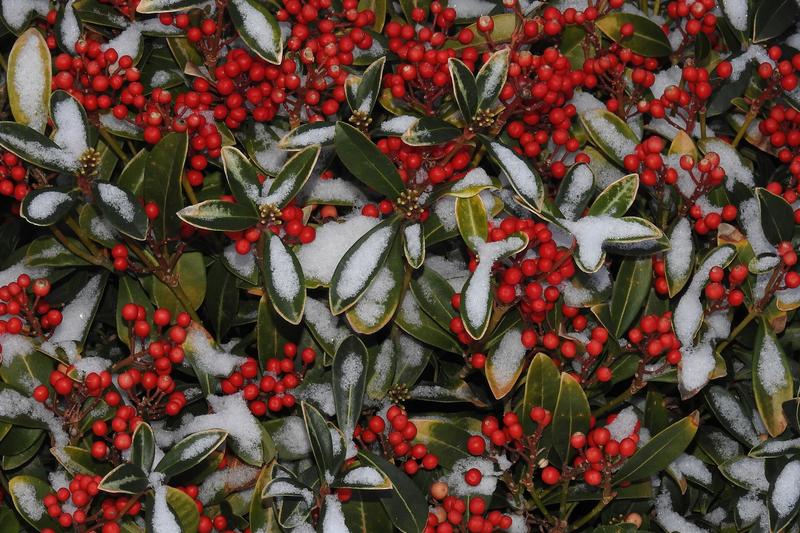
Quick facts
- Watering
- Weekly during dry spells
- Sunlight
- Partial shade
- Soil
- Moist, acidic, well-drained
- Humans
- Toxic
- Cats
- Toxic
- Dogs
- Toxic
- Height
- 100–150 cm
- Spread
- 100–150 cm
- Spacing
- 100–120 cm apart
- RHS recognition
- Award of Garden Merit
About Skimmia
Skimmia is a compact, evergreen shrub native to Japan and China, prized for its glossy dark green foliage, fragrant spring flowers, and bright red berries that persist through winter. UK gardeners value it as a reliable, low-maintenance shrub for shaded borders, containers, and woodland gardens. Most varieties are dioecious, requiring both male and female plants for berry production, though hermaphrodite cultivars are available. Its tolerance of pollution and shade makes it particularly popular in urban and suburban British gardens.
UK fact: Skimmia japonica 'Rubella' holds the RHS Award of Garden Merit and is one of the most widely planted varieties in British gardens, valued for its red-edged leaves and dark pink flower buds that provide winter interest before opening in spring.
Watering Skimmia
Water newly planted skimmias weekly during their first growing season to establish a deep root system. Established plants are relatively drought-tolerant but perform best with consistent moisture, particularly during dry spells in spring and summer. Container-grown specimens require more frequent watering, especially in summer. Avoid overhead watering to prevent fungal issues, and ensure good drainage as skimmias dislike waterlogged conditions.
Sunlight requirements
Plant in partial to full shade, avoiding hot, sunny positions which can scorch the foliage and cause yellowing. North or east-facing aspects are ideal in British gardens. Skimmia tolerates deep shade better than most flowering shrubs, though flowering may be reduced in very dark positions.
Soil and feeding
Plant in acidic to neutral soil with a pH of 5.5 to 7.0, enriched with ericaceous compost or well-rotted leaf mould. Heavy clay soils should be improved with grit and organic matter to ensure adequate drainage. Skimmias are lime-hating plants and will develop chlorosis (yellowing leaves) in alkaline conditions. For container cultivation, use ericaceous compost and refresh the top layer annually.
Apply a slow-release ericaceous fertiliser in early spring to support flowering and foliage health. Container-grown plants benefit from monthly liquid feeds with an ericaceous formula during the growing season. Avoid general-purpose fertilisers which may be too alkaline and cause nutrient deficiencies.
Pruning Skimmia
Skimmia requires very little pruning and naturally forms a neat, rounded shape. Remove any dead, damaged, or crossing branches in late spring after flowering has finished. Avoid heavy pruning as this can reduce berry production and spoil the plant's natural form. If necessary to control size, trim lightly after flowering, but be aware this may remove developing berries on female plants.
Propagating Skimmia
The most reliable method is semi-ripe cuttings taken in late summer to early autumn. Cuttings should be 7-10 cm long, taken from the current season's growth. Rooting typically takes 6-8 weeks with bottom heat and high humidity. Layering is also successful for low-growing branches, though it takes longer to produce independent plants.
Common problems
Skimmia is generally pest and disease-free, though scale insects and vine weevil can occasionally affect plants, particularly those in containers. Chlorosis (yellowing leaves with green veins) is the most common problem, caused by alkaline soil or hard water, and should be treated with sequestered iron and ericaceous feeding. Poor berry production usually results from lack of pollination, requiring both male and female plants, or from pruning at the wrong time which removes flower buds.
Spot a problem with your plant? Photograph the affected area using the Loam app and it will suggest the most likely cause and treatment.
Safety
- Humans
-
Toxic
All parts of skimmia are toxic if ingested, containing alkaloids that can cause stomach upset, nausea, and vomiting. Keep berries away from children.
- Cats
-
Toxic
Toxic to cats if ingested, causing vomiting, drooling, and gastrointestinal upset. The berries are particularly attractive but poisonous.
- Dogs
-
Toxic
Toxic to dogs if ingested, causing vomiting, diarrhoea, and abdominal pain. The bright red berries may attract curious dogs.
Toxicity information is for general guidance only. If a person or pet has been exposed to this plant and you are concerned, seek advice from a medical professional or vet.
Seasonal care calendar
Monthly care guide for Skimmia in the UK, based on average conditions.
| Month | Care tasks |
|---|---|
| January | Enjoy the winter berries and emerging flower buds. Check container plants haven't become waterlogged during wet weather. |
| February | Apply a mulch of ericaceous compost around the base. Male varieties begin to show colour in their flower buds. |
| March | Feed with ericaceous fertiliser. Flowers begin to open on male plants, releasing fragrance. |
| April | Peak flowering period. Female plants produce small white flowers. Plant new specimens or move existing plants if needed. |
| May | Flowering finishes. Remove any dead or damaged growth. Water regularly during dry spells. |
| June | Green berries begin to form on female plants. Maintain consistent watering, especially for container specimens. |
| July | Continue watering during dry weather. Feed container plants with liquid ericaceous fertiliser. |
| August | Take semi-ripe cuttings for propagation. Berries begin to colour on female plants. |
| September | Continue taking cuttings if needed. Berries ripen to bright red. Reduce watering as growth slows. |
| October | Berries at their best. Good time to plant new specimens. Clear fallen leaves from around the base. |
| November | Berries provide colour through autumn. Protect container plants from excessive winter wet. |
| December | Enjoy the winter berries and evergreen foliage. Flower buds visible on male varieties, providing structure. |
Frequently asked questions
- Why are my skimmia leaves turning yellow?
- Yellowing leaves with green veins (chlorosis) indicate iron deficiency, usually caused by alkaline soil or watering with hard tap water. Treat with sequestered iron, feed with ericaceous fertiliser, and mulch with ericaceous compost. Use rainwater for watering if possible.
- How do I know if my skimmia is healthy?
- Healthy skimmia should have glossy, dark green leaves and compact growth. Watch for yellowing leaves (iron deficiency), browning leaf edges (watering issues), or poor flowering (incorrect soil pH or insufficient light). The Loam app can help diagnose specific problems through photo analysis and provides personalised care reminders based on your garden conditions to keep your skimmia thriving year-round.
- When should I feed my skimmia?
- Feed skimmia in spring and early summer using an ericaceous fertiliser to maintain the acidic soil conditions it requires. Apply a slow-release ericaceous feed in March, or use liquid ericaceous fertiliser monthly from April to August. Avoid feeding after late summer as this encourages soft growth vulnerable to frost damage. An annual spring mulch of ericaceous compost also provides nutrients whilst improving soil acidity.
Got a question about growing Skimmia that isn't covered here? Ask the Garden Advisor in the Loam app. It knows your saved plants and local conditions.
Related plants
This page was compiled with AI assistance and reviewed by our team. .