Aucuba
Aucuba japonica
Shrubs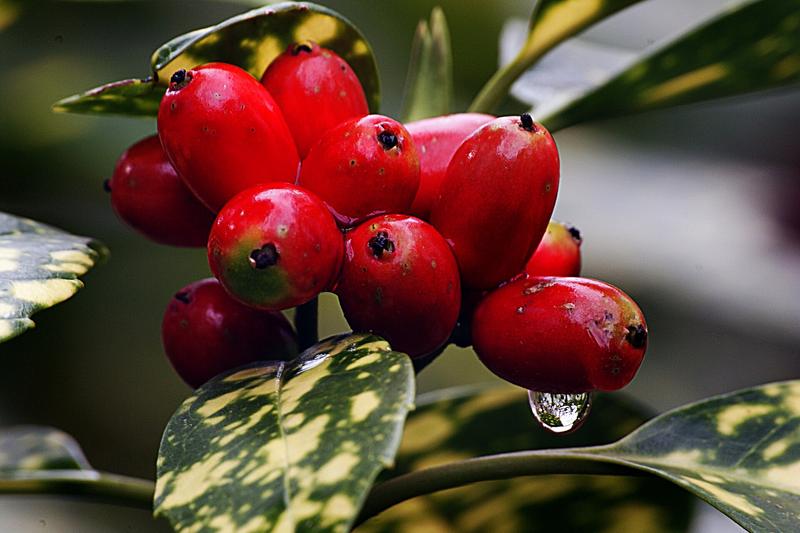
Quick facts
- Watering
- Weekly during establishment
- Sunlight
- Partial to full shade
- Soil
- Moist but well-drained
- Humans
- Toxic
- Cats
- Toxic
- Dogs
- Toxic
- Height
- 150–300 cm
- Spread
- 150–300 cm
- Spacing
- 150–200 cm apart
- RHS recognition
- Award of Garden Merit
About Aucuba
Aucuba is an evergreen shrub native to Japan, prized for its glossy, often variegated foliage and remarkable tolerance of deep shade. The most popular cultivar, 'Crotonifolia', features bold yellow-spotted leaves that brighten dark corners of British gardens year-round. Female plants produce attractive red berries in autumn when a male pollinator is nearby. Its resilience to pollution and neglect has made it a stalwart of Victorian shrubberies and contemporary urban gardens alike.
UK fact: Aucuba japonica 'Crotonifolia' holds the RHS Award of Garden Merit and became a Victorian favourite after its introduction to Britain in 1783, earning the nickname 'spotted laurel' in cottage gardens across the country.
Watering Aucuba
Newly planted aucubas require weekly watering during dry spells for their first two growing seasons. Once established, they develop deep roots and rarely need supplementary watering, even during typical British summers. In containers, water when the top 5 cm of compost feels dry, reducing frequency in winter. During prolonged autumn or winter droughts, an occasional deep soak helps maintain glossy foliage.
Sunlight requirements
This is one of the best shrubs for deep shade in British gardens, tolerating even the gloomiest north-facing walls. Variegated cultivars maintain their leaf colour in shade, though they can also tolerate partial sun. In hot, sunny positions, leaves may scorch, particularly during dry spells, so shadier spots are preferable throughout the UK.
Soil and feeding
This adaptable shrub grows in virtually any soil that isn't waterlogged, from heavy London clay to light sandy loam. It tolerates both acidic and alkaline conditions (pH 5.5–7.5) without complaint. For container growing, use a loam-based compost such as John Innes No. 3 for stability and nutrient retention. Good drainage is important to prevent root rot, so improve heavy clay with organic matter or grit before planting.
Feed established plants each March with a general-purpose granular fertiliser such as Growmore or blood, fish and bone, scattered around the root zone. Container-grown specimens benefit from a liquid feed every four to six weeks during the growing season. Avoid high-nitrogen feeds in late summer, as soft growth is more vulnerable to frost damage.
Pruning Aucuba
Aucuba requires minimal pruning but tolerates hard cutting back if overgrown. The best time is late April or May, after the inconspicuous spring flowers fade. Remove any frost-damaged shoot tips and cut out entirely green shoots on variegated cultivars, as these will outcompete patterned growth. To rejuvenate an old specimen, cut back hard to 30–60 cm in spring; it will regenerate vigorously from old wood.
Propagating Aucuba
Semi-ripe cuttings taken in August or September offer the most reliable propagation method for aucuba. Select healthy, non-flowering shoots of the current season's growth and root them in a free-draining compost mix. Cuttings typically root within eight to twelve weeks with gentle bottom heat. Hardwood cuttings taken in winter are also successful but slower to establish.
Common problems
Aucuba is remarkably trouble-free but can occasionally suffer from leaf spot diseases, causing brown or black blotches on foliage; remove affected leaves and improve air circulation. Sooty mould may develop on honeydew excreted by scale insects, which appear as brown bumps on stems; treat with a plant oil wash in spring. Frost damage can blacken shoot tips in severe winters, but plants usually recover with spring pruning. Waterlogged soil causes root rot, so ensure adequate drainage at planting time.
Spot a problem with your plant? Photograph the affected area using the Loam app and it will suggest the most likely cause and treatment.
Safety
- Humans
-
Toxic
All parts of aucuba are mildly toxic if ingested, causing stomach upset, nausea and vomiting. The berries are particularly attractive to children but should not be eaten.
- Cats
-
Toxic
Aucuba contains toxins that can cause vomiting, diarrhoea and drooling in cats if ingested. Keep cats away from berries and foliage.
- Dogs
-
Toxic
Ingestion can cause vomiting, diarrhoea and abdominal pain in dogs. The berries pose the greatest risk due to their attractive appearance.
Toxicity information is for general guidance only. If a person or pet has been exposed to this plant and you are concerned, seek advice from a medical professional or vet.
Seasonal care calendar
Monthly care guide for Aucuba in the UK, based on average conditions.
| Month | Care tasks |
|---|---|
| January | Check for frost damage on shoot tips. Protect container-grown plants during severe cold snaps. |
| February | Observe for early flowers on established plants. Plan any hard renovation pruning for spring. |
| March | Apply slow-release fertiliser around the base. Mulch with compost or well-rotted manure to retain moisture. |
| April | Small purple flowers appear. Plant new specimens and water regularly during dry spells. |
| May | Prune to shape after flowering finishes. Remove any all-green shoots on variegated cultivars. |
| June | Water newly planted shrubs weekly. Check for scale insects and treat if necessary. |
| July | Continue watering young plants during dry weather. Foliage looks its glossiest now. |
| August | Take semi-ripe cuttings for propagation. Green berries begin forming on female plants. |
| September | Continue taking cuttings early in the month. Berries start turning red on female plants. |
| October | Enjoy the display of bright red berries. Plant new container-grown specimens while soil is still warm. |
| November | Berries provide colour through autumn. Clear fallen leaves from around the base to prevent fungal issues. |
| December | Evergreen foliage and red berries provide winter interest. No maintenance required. |
Frequently asked questions
- When should I prune my aucuba?
- The best time to prune aucuba is in late April or May, after the risk of hard frost has passed. This allows the plant to regenerate vigorously throughout the growing season. You can do light shaping at any time, but avoid autumn pruning as new growth may be damaged by winter cold. For hard rejuvenation pruning, cut back to 30–60 cm from the ground in late spring.
- Why are the leaves on my aucuba turning brown?
- Brown leaf edges usually indicate frost damage, wind scorch or drought stress. These symptoms can look similar, making diagnosis tricky. The Loam app can help you identify the specific cause by analysing your plant's conditions and photos. Prune affected shoots in spring and ensure adequate watering during dry spells. In exposed sites, provide shelter from cold winds.
- How do I propagate aucuba from cuttings?
- Take semi-ripe cuttings in late summer (August–September). Choose healthy, non-flowering shoots about 10–15 cm long, remove the lower leaves, and dip the cut end in hormone rooting powder. Insert into pots of gritty compost and keep in a sheltered, shaded cold frame. Cuttings root slowly over winter and should be ready to pot on by the following spring.
Got a question about growing Aucuba that isn't covered here? Ask the Garden Advisor in the Loam app. It knows your saved plants and local conditions.
Related plants
This page was compiled with AI assistance and reviewed by our team. .