Sweet Box
Sarcococca hookeriana
Shrubs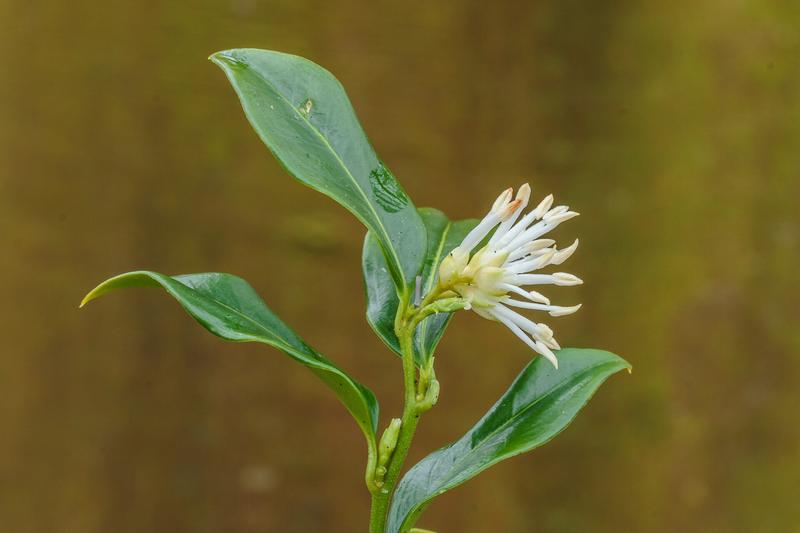
Quick facts
- Watering
- Weekly when establishing
- Sunlight
- Partial to full shade
- Soil
- Moist, well-drained, humus-rich
- Humans
- Toxic
- Cats
- Toxic
- Dogs
- Toxic
- Height
- 100–150 cm
- Spread
- 60–100 cm
- Spacing
- 60–80 cm apart
- RHS recognition
- Award of Garden Merit
About Sweet Box
Sweet Box is a compact evergreen shrub native to the Himalayas and western China, prized by UK gardeners for its intensely fragrant white flowers that bloom in the depths of winter. Growing to around 1.5 metres tall, it produces glossy dark green leaves and small black berries following the flowers. This shade-tolerant shrub is particularly valued for bringing welcome scent to British gardens during January and February when little else is in bloom. Its ability to thrive in dry shade beneath trees makes it an invaluable choice for difficult spots in UK gardens.
UK fact: Sarcococca hookeriana var. digyna holds the RHS Award of Garden Merit and has become a staple of British winter gardens, with its honey-scented flowers capable of perfuming entire courtyards and pathways during the coldest months when gardeners venture outside least often.
Watering Sweet Box
Water newly planted Sweet Box weekly during its first growing season to establish a strong root system, particularly during dry spells between April and September. Once established, this shrub is remarkably drought-tolerant and rarely requires watering, even during typical UK summers. Plants growing in very dry shade beneath mature trees may benefit from occasional deep watering during prolonged droughts. Avoid waterlogging, as Sweet Box prefers consistent moisture rather than saturated soil.
Sunlight requirements
Sweet Box thrives in partial to full shade, making it ideal for north-facing borders and beneath tree canopies where many plants struggle. In the UK, it tolerates deep shade remarkably well, though it will also grow happily in dappled sunlight. Avoid planting in full sun, particularly in southern England, as the foliage may scorch during hot summers.
Soil and feeding
Sweet Box performs best in moist, well-drained soil enriched with organic matter, though it adapts to most soil types including clay, loam, and chalk. It tolerates a wide pH range from slightly acidic to alkaline (pH 5.5-8.0), making it suitable for most UK gardens. Improve heavy clay soils with well-rotted compost or leaf mould before planting to enhance drainage. For dry shade conditions, incorporate plenty of organic matter to help retain moisture around the roots.
Apply a balanced slow-release fertiliser or a generous mulch of well-rotted compost around the base in early spring. Alternatively, use a general-purpose shrub feed in March to encourage healthy growth and abundant winter flowers. Avoid overfeeding, as Sweet Box is not a heavy feeder and excessive nitrogen may promote foliage at the expense of blooms.
Pruning Sweet Box
Sweet Box requires minimal pruning and is best left to develop its natural rounded shape. If necessary, lightly trim after flowering in late February or March to remove any damaged, dead, or crossing branches and to maintain a tidy appearance. Avoid hard pruning, as this can reduce flowering the following winter. Older, congested plants can be rejuvenated by removing up to one-third of the oldest stems at the base every few years.
Propagating Sweet Box
Sweet Box is easily propagated from semi-ripe cuttings taken in late summer (July to September). Select healthy, non-flowering shoots around 10-15cm long, remove the lower leaves, and insert into pots of gritty compost in a cold frame or sheltered spot. Division of established clumps in early spring is also successful, carefully separating rooted suckers from the parent plant. Seed propagation is possible but slow, requiring stratification over winter, so vegetative methods are preferred by most UK gardeners.
Common problems
Sweet Box is generally trouble-free and resistant to most pests and diseases common in UK gardens. Occasionally, aphids may appear on new growth in spring but rarely cause significant damage. Poor flowering is usually due to excessive shade, overly dry soil, or hard pruning that has removed flowering wood. In waterlogged conditions, root rot can occur, so ensure adequate drainage when planting. The berries, while attractive, can self-seed and produce unwanted seedlings in favourable conditions.
Spot a problem with your plant? Photograph the affected area using the Loam app and it will suggest the most likely cause and treatment.
Safety
- Humans
-
Toxic
All parts of Sweet Box, particularly the berries, are toxic if ingested and may cause nausea, vomiting, and stomach upset. Keep berries away from children.
- Cats
-
Toxic
Sweet Box berries and foliage are toxic to cats and may cause gastrointestinal upset if ingested.
- Dogs
-
Toxic
All parts of Sweet Box are toxic to dogs, with berries posing the greatest risk. Ingestion may cause vomiting, diarrhoea, and abdominal pain.
Toxicity information is for general guidance only. If a person or pet has been exposed to this plant and you are concerned, seek advice from a medical professional or vet.
Seasonal care calendar
Monthly care guide for Sweet Box in the UK, based on average conditions.
| Month | Care tasks |
|---|---|
| January | Enjoy the fragrant white flowers at their peak. Check plants after frost and firm in any lifted roots. |
| February | Continue to enjoy the winter blooms. Plan any new plantings for next month. |
| March | Prune lightly after flowering if needed. Apply slow-release fertiliser or mulch with compost. Plant new specimens. |
| April | Water newly planted shrubs weekly. Watch for aphids on new growth and treat if necessary. |
| May | Continue watering young plants during dry spells. Mulch to retain moisture. |
| June | Water during dry periods, particularly plants in dry shade. Monitor for pests. |
| July | Take semi-ripe cuttings for propagation. Water young plants as needed. |
| August | Continue taking semi-ripe cuttings. Ensure plants don't dry out completely in prolonged heat. |
| September | Final opportunity for taking cuttings. Black berries begin to ripen on female plants. |
| October | Plant new Sweet Box shrubs. Prepare planting holes with organic matter. |
| November | Continue planting if soil conditions allow. Tidy around established plants. |
| December | Flower buds begin to swell. Cut a few stems for indoor fragrance. |
Frequently asked questions
- Why is my Sweet Box not flowering?
- Sweet Box may fail to flower due to excessive shade, overly dry soil, or hard pruning that removed flowering wood. Ensure the plant receives at least dappled light, water during dry spells, and only prune lightly after flowering in late winter. Plants can take 2-3 years to establish before flowering reliably.
- When should I prune my Sweet Box and how much can I cut back?
- Prune Sweet Box lightly in late February or March, immediately after flowering finishes. Remove only damaged or crossing branches to maintain shape. The Loam app can send you timely pruning reminders based on your local conditions and track your plant's flowering pattern to optimise timing.
- Can Sweet Box grow in dry shade under trees?
- Yes, Sweet Box is one of the best shrubs for dry shade in UK gardens and thrives beneath tree canopies where many plants struggle. Improve the soil with organic matter at planting and water regularly during the first year to establish strong roots. Once established, it tolerates dry conditions remarkably well.
Got a question about growing Sweet Box that isn't covered here? Ask the Garden Advisor in the Loam app. It knows your saved plants and local conditions.
Related plants
This page was compiled with AI assistance and reviewed by our team. .