Mahonia
Mahonia aquifolium
Shrubs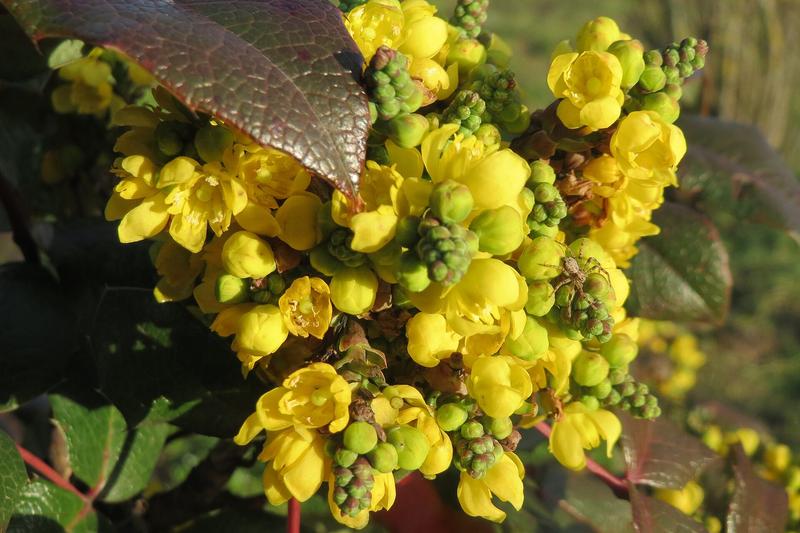
Quick facts
- Watering
- Fortnightly when establishing
- Sunlight
- Partial shade to full sun
- Soil
- Moist, well-drained, humus-rich
- Humans
- Safe
- Cats
- Safe
- Dogs
- Safe
- Height
- 100–150 cm
- Spread
- 100–150 cm
- Spacing
- 100–120 cm apart
- RHS recognition
- Award of Garden Merit
About Mahonia
Mahonia is an evergreen shrub prized for its architectural, holly-like foliage and clusters of fragrant yellow flowers that brighten late winter and early spring. Native to North America, it has become a staple in British gardens for its year-round structure, wildlife value, and tolerance of shade. The flowers are followed by ornamental blue-black berries in summer, and the glossy leaves often develop attractive bronze or purple tints in winter.
UK fact: Mahonia aquifolium holds the RHS Award of Garden Merit and is particularly valued in British gardens for providing nectar to early-emerging bumblebees when few other plants are in flower.
Watering Mahonia
Newly planted mahonias require watering every 10–14 days during dry spells in their first year, ensuring the root ball doesn't dry out completely. Once established (typically after two years), they cope well with typical UK rainfall and rarely need supplementary watering except during prolonged summer droughts. In containers, water when the top 5 cm of compost feels dry, reducing frequency in winter. Avoid waterlogging, which can lead to root rot, particularly in heavy clay soils.
Sunlight requirements
In the UK, mahonia performs best in partial shade where it develops the richest foliage colour and most reliable flowering. It tolerates full sun in northern regions or when given adequate moisture, though leaves may scorch during hot, dry summers in southern England. Avoid deep shade, which reduces flowering and can lead to leggy growth.
Soil and feeding
The ideal soil is a moisture-retentive loam enriched with organic matter, with a pH between 5.5 and 7.0 (slightly acidic to neutral). Mahonia tolerates clay soils provided drainage is adequate—incorporate grit and compost when planting in heavy ground. It also grows in sandy soils if mulched regularly to retain moisture. Avoid very chalky or alkaline soils above pH 7.5, which can cause chlorosis (yellowing leaves). Enrich poor soils with well-rotted compost or leaf mould at planting time.
Feed established mahonias in March with a general-purpose granular fertiliser such as blood, fish and bone or Growmore, scattering a handful around the base. A 5–7 cm mulch of well-rotted compost or leaf mould applied in spring provides ongoing nutrients and helps retain moisture. Container-grown specimens benefit from a liquid feed every 4–6 weeks during the growing season.
Pruning Mahonia
Mahonia requires minimal pruning but benefits from tidying after flowering in April or May. Remove any frost-damaged, dead, or crossing stems, and cut back leggy growth to a healthy bud or junction to promote bushiness. On mature plants, cut one in three of the oldest stems down to ground level to rejuvenate growth and prevent bare bases. Wear gloves, as the spiny leaves can be sharp. Avoid autumn or winter pruning, which removes the developing flower buds.
Propagating Mahonia
The easiest method is to detach rooted suckers that naturally form around the base of established plants, severing them with a sharp spade in October or March and replanting immediately. Semi-ripe cuttings taken in August or September also root reliably: select 10–15 cm shoots with a heel, dip in hormone rooting powder, and insert into gritty compost in a cold frame. Seed propagation is possible but slow, requiring cold stratification over winter.
Common problems
Mahonia is generally trouble-free but can suffer from mahonia rust, a fungal disease causing orange pustules on leaf undersides, particularly in humid conditions—remove affected leaves and improve air circulation. Powdery mildew may appear in dry summers on stressed plants. Aphids occasionally colonise new growth in spring but rarely cause lasting damage. Leaf scorch can occur in full sun during hot, dry weather, especially on young plants, so ensure adequate watering during establishment.
Spot a problem with your plant? Photograph the affected area using the Loam app and it will suggest the most likely cause and treatment.
Safety
- Humans
- Safe
- Cats
- Safe
- Dogs
- Safe
Toxicity information is for general guidance only.
Seasonal care calendar
Monthly care guide for Mahonia in the UK, based on average conditions.
| Month | Care tasks |
|---|---|
| January | Enjoy the fragrant yellow flowers beginning to open. Protect blooms from severe frost with fleece if necessary. |
| February | Peak flowering period. Deadhead spent flower clusters if desired, though this is not essential. |
| March | Apply slow-release fertiliser and mulch with compost. Plant new specimens or transplant suckers. |
| April | Prune after flowering to shape and remove damaged growth. Watch for aphids on new shoots. |
| May | Complete any pruning. Blue-black berries begin to form. Water newly planted specimens during dry spells. |
| June | Berries ripen. Ensure adequate watering for young plants. Monitor for powdery mildew in dry weather. |
| July | Water during prolonged dry spells. Berries provide food for birds. |
| August | Take semi-ripe cuttings for propagation. Continue watering young plants as needed. |
| September | Continue taking cuttings early in the month. Foliage may begin developing bronze tints. |
| October | Plant new mahonias or divide and replant suckers. Leaves develop attractive winter colour. |
| November | Tidy around the base and remove fallen leaves. Flower buds visible for next spring. |
| December | Enjoy the evergreen structure and winter foliage colour. Early flowers may appear in mild winters. |
Frequently asked questions
- When should I prune mahonia?
- Prune immediately after flowering in April or May. This allows the plant to produce new growth that will carry next year's flowers. Avoid autumn or winter pruning, which removes the flower buds that form in summer.
- Why are my mahonia leaves turning yellow?
- Yellowing leaves (chlorosis) often indicate alkaline soil with a pH above 7.5, which prevents the plant absorbing iron. Apply ericaceous fertiliser and mulch with acidic compost. Alternatively, waterlogging or poor drainage can cause similar symptoms—improve soil structure with grit. The Loam app can help diagnose nutrient deficiencies and provide personalised care recommendations based on your soil conditions.
- How do I propagate mahonia from cuttings?
- Take semi-ripe cuttings in late summer (July to September), choosing healthy side shoots about 10–15 cm long. Remove lower leaves, dip the cut end in rooting hormone, and insert into pots filled with a mix of equal parts peat-free compost and sharp sand. Cover with a plastic bag to maintain humidity and place in a sheltered spot out of direct sunlight. Roots should develop within 8–12 weeks.
Got a question about growing Mahonia that isn't covered here? Ask the Garden Advisor in the Loam app. It knows your saved plants and local conditions.
Related plants
This page was compiled with AI assistance and reviewed by our team. .