Pieris
Pieris japonica
Shrubs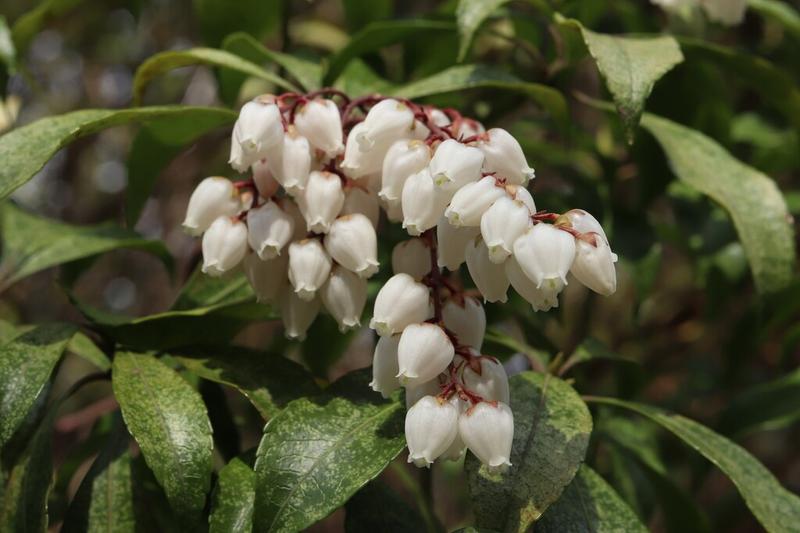
Quick facts
- Watering
- Weekly during dry spells
- Sunlight
- Partial shade
- Soil
- Moist, acidic, well-drained
- Humans
- Toxic
- Cats
- Toxic
- Dogs
- Toxic
- Height
- 150–300 cm
- Spread
- 120–250 cm
- Spacing
- 120–150 cm apart
- RHS recognition
- Award of Garden Merit
About Pieris
Pieris is an evergreen shrub native to Japan and eastern Asia, prized for its cascading clusters of urn-shaped flowers and brilliant red or bronze new growth in spring. Growing to around 1.5–3 metres tall, it thrives in acidic soil and partial shade, making it ideal for woodland gardens and shaded borders across the UK. The glossy, dark green foliage provides year-round structure, whilst the early spring flowers—typically white, pink, or red—offer valuable nectar for pollinators. British gardeners value pieris for its low-maintenance nature and spectacular seasonal interest, particularly in acid-soil regions.
UK fact: Many pieris cultivars, including 'Forest Flame' and 'Flaming Silver', have received the RHS Award of Garden Merit, reflecting their exceptional performance in British gardens and their popularity in UK garden centres since the 1970s.
Watering Pieris
Water regularly during the first two growing seasons to establish a deep root system, particularly during dry periods in spring and summer. Once established, pieris is relatively drought-tolerant but benefits from weekly watering during prolonged dry spells, especially when flowering or producing new growth. Use rainwater where possible, as pieris dislikes alkaline tap water in hard-water areas. Mulch annually with ericaceous compost to retain moisture and keep roots cool.
Sunlight requirements
Pieris performs best in partial shade or dappled sunlight, particularly in sheltered positions that protect the tender new growth from late frosts and cold winds. In the UK, an east- or north-facing border is ideal, avoiding hot afternoon sun which can scorch the foliage. Morning sun encourages good flowering whilst shade during the hottest part of the day prevents leaf burn.
Soil and feeding
Pieris requires acidic soil with a pH of 4.5–6.0, making it unsuitable for chalky or alkaline soils unless grown in containers with ericaceous compost. The soil should be rich in organic matter, moisture-retentive yet well-drained, similar to conditions preferred by rhododendrons and camellias. In heavy clay, improve drainage by incorporating plenty of leaf mould or composted bark. Container-grown specimens need ericaceous compost and must be watered with rainwater or softened water to prevent lime-induced chlorosis.
Feed in early spring with a slow-release ericaceous fertiliser formulated for acid-loving plants, applying according to manufacturer's instructions. Avoid general-purpose feeds which may contain lime and cause nutrient deficiencies. A second light feed after flowering can support the production of vibrant new growth.
Pruning Pieris
Pieris requires minimal pruning, but deadhead spent flower clusters immediately after flowering to maintain a tidy appearance and encourage better blooms the following year. Remove any frost-damaged shoots in late spring once the risk of hard frost has passed. Lightly shape the plant if needed after flowering, but avoid heavy pruning as pieris flowers on the previous year's wood. Remove any plain green shoots on variegated cultivars promptly to prevent reversion.
Propagating Pieris
Propagate pieris from semi-ripe cuttings taken in late summer (July to September), selecting healthy non-flowering shoots around 7–10 cm long. Dip the cut ends in hormone rooting powder and insert into pots of ericaceous compost mixed with perlite or sharp sand. Keep in a sheltered cold frame or propagator with bottom heat, maintaining humidity until rooted—this typically takes 6–10 weeks. Alternatively, layer low-growing branches in autumn by pegging them to the soil surface and severing once rooted the following year.
Common problems
Pieris is susceptible to pieris lace bug, a common UK pest that causes silvery mottling on the upper leaf surface with brown spotting underneath; inspect regularly from late spring and treat with organic insecticides if necessary. Phytophthora root rot can occur in poorly drained or waterlogged soils, causing wilting and dieback—ensure good drainage and avoid overwatering. Leaf spot diseases may appear in damp conditions but are rarely serious. Chlorosis (yellowing leaves) indicates alkaline soil or hard water use; remedy by applying sequestered iron and using rainwater for irrigation.
Spot a problem with your plant? Photograph the affected area using the Loam app and it will suggest the most likely cause and treatment.
Safety
- Humans
-
Toxic
All parts of pieris are toxic if ingested, containing grayanotoxins that can cause nausea, vomiting, low blood pressure, and breathing difficulties. Keep away from children.
- Cats
-
Toxic
Toxic to cats; ingestion can cause vomiting, drooling, weakness, and cardiac problems. Seek veterinary attention immediately if consumed.
- Dogs
-
Toxic
Toxic to dogs; ingestion can cause vomiting, diarrhoea, drooling, weakness, and potentially fatal heart arrhythmias. Seek veterinary attention immediately if consumed.
Toxicity information is for general guidance only. If a person or pet has been exposed to this plant and you are concerned, seek advice from a medical professional or vet.
Seasonal care calendar
Monthly care guide for Pieris in the UK, based on average conditions.
| Month | Care tasks |
|---|---|
| January | Check for frost damage on exposed plants and provide fleece protection during severe cold snaps. |
| February | Flower buds begin to swell; protect from late frosts with horticultural fleece if necessary. |
| March | Flowering begins; apply slow-release ericaceous fertiliser around the base and refresh mulch. |
| April | Peak flowering period; deadhead spent blooms and watch for vibrant new red or bronze foliage emerging. |
| May | Deadhead remaining flowers and prune out any frost-damaged shoots once risk of hard frost has passed. |
| June | Monitor for pieris lace bug and water during dry spells, especially newly planted specimens. |
| July | Continue watering during dry weather; take semi-ripe cuttings for propagation. |
| August | Take semi-ripe cuttings; continue monitoring for lace bug and water as needed. |
| September | Reduce watering as temperatures cool; layer low branches for propagation if desired. |
| October | Apply autumn mulch of ericaceous compost or leaf mould to protect roots over winter. |
| November | Tidy around the base and remove fallen leaves to reduce disease risk. |
| December | No action needed; evergreen foliage provides winter structure in the garden. |
Frequently asked questions
- Why are my pieris leaves turning yellow?
- Yellowing leaves (chlorosis) on pieris typically indicate alkaline soil or watering with hard tap water, which prevents iron uptake. Remedy by applying sequestered iron, mulching with ericaceous compost, and using rainwater for irrigation. If the soil pH is above 6.0, consider growing pieris in containers with ericaceous compost instead.
- When should I prune my pieris and how much can I cut back?
- Prune pieris lightly immediately after flowering in late spring, removing spent blooms and any frost-damaged shoots. Avoid heavy pruning as pieris flowers on the previous year's wood. The Loam app can send you timely reminders for deadheading and pruning based on your local conditions and the specific cultivar you're growing.
- Can I grow pieris in a pot?
- Yes, pieris grows very successfully in containers, which is ideal if you have alkaline soil. Use ericaceous compost, ensure the pot has drainage holes, and water exclusively with rainwater or softened water. Choose a container at least 40 cm in diameter and repot every 2–3 years, refreshing the compost to maintain acidity.
Got a question about growing Pieris that isn't covered here? Ask the Garden Advisor in the Loam app. It knows your saved plants and local conditions.
Related plants
This page was compiled with AI assistance and reviewed by our team. .