Enkianthus
Enkianthus campanulatus
Shrubs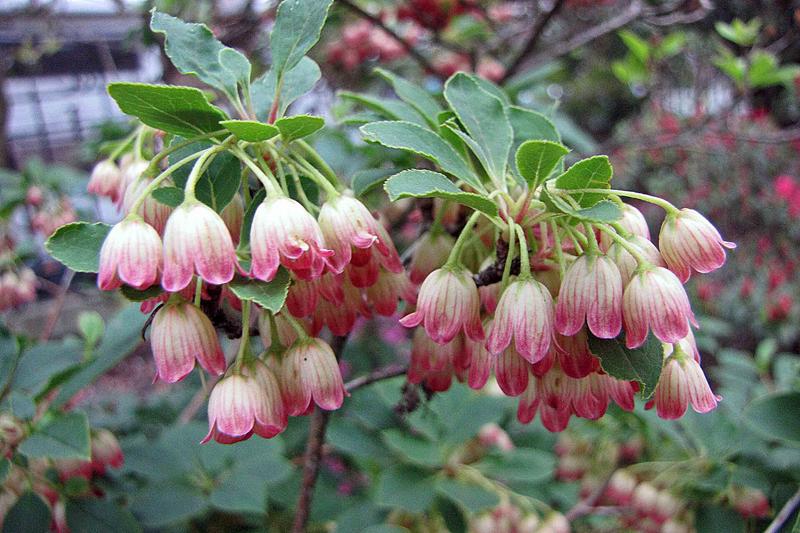
Quick facts
- Watering
- Weekly during dry spells
- Sunlight
- Partial shade to full sun
- Soil
- Moist, acidic, well-drained
- Humans
- Unknown
- Cats
- Unknown
- Dogs
- Unknown
- Height
- 200–400 cm
- Spread
- 150–300 cm
- Spacing
- 200–250 cm apart
- RHS recognition
- Award of Garden Merit
About Enkianthus
Enkianthus is a deciduous shrub native to Japan, prized by UK gardeners for its delicate bell-shaped flowers in late spring and spectacular autumn colour. The creamy-white to pink flowers hang in clusters beneath tiered branches, creating an elegant layered effect. In autumn, the foliage transforms into brilliant shades of red, orange, and yellow, making it an outstanding choice for acid-loving shrub borders and woodland gardens. This slow-growing shrub thrives in the cooler, damper conditions found across much of Britain.
UK fact: Enkianthus campanulatus has held the RHS Award of Garden Merit since 1993, recognising its exceptional performance in British gardens and its reliability in our climate when given acidic soil conditions.
Watering Enkianthus
Water regularly during the first two growing seasons to establish a deep root system, particularly important on free-draining soils. Once established, enkianthus is relatively drought-tolerant but benefits from weekly watering during prolonged dry periods in summer. The shallow, fibrous root system appreciates consistent moisture, so apply a 5-8cm mulch of leaf mould or composted bark to retain soil moisture. Avoid waterlogging, which can lead to root rot, particularly on heavier soils.
Sunlight requirements
Enkianthus performs best in partial shade or dappled sunlight, particularly in southern England where protection from intense midday sun helps prevent leaf scorch. In Scotland and northern regions, full sun is tolerated well. An east- or west-facing position is ideal, providing morning or afternoon sun whilst avoiding the hottest part of the day.
Soil and feeding
Enkianthus requires acidic soil with a pH of 4.5-6.0, making it an excellent companion for rhododendrons, camellias, and pieris. The soil should be rich in organic matter, moisture-retentive yet well-drained – a humus-rich woodland soil is ideal. On neutral or alkaline soils, enkianthus will develop chlorosis (yellowing leaves) and fail to thrive. If your garden has alkaline soil, grow in large containers filled with ericaceous compost rather than attempting to acidify borders.
Apply a balanced ericaceous fertiliser in early spring as new growth emerges, following manufacturer's instructions. A 5-8cm mulch of composted pine needles, leaf mould, or ericaceous compost applied annually in March provides slow-release nutrients whilst maintaining soil acidity. Avoid high-nitrogen feeds which promote soft growth at the expense of flowers and autumn colour.
Pruning Enkianthus
Enkianthus requires minimal pruning and resents hard cutting back, so prune only to maintain shape or remove damaged wood. If necessary, prune immediately after flowering in late May or early June, as flower buds form on the previous year's growth. Remove any dead, diseased, or crossing branches, and thin congested growth to maintain the plant's naturally tiered habit. Avoid autumn or winter pruning as this removes the developing flower buds for the following spring.
Propagating Enkianthus
Propagate enkianthus from semi-ripe cuttings taken in July or August, using 8-10cm lengths of current season's growth with a heel. Dip in hormone rooting powder and insert into pots of ericaceous compost mixed with perlite or sharp sand. Keep in a cold frame or unheated greenhouse with high humidity until rooted, which typically takes 8-12 weeks. Alternatively, layer low-growing branches in autumn by pegging them to the soil surface and covering with ericaceous compost; they should root within 12-18 months. Seed propagation is possible but slow, requiring cold stratification and taking several years to produce flowering-sized plants.
Common problems
Enkianthus is generally trouble-free when grown in suitable acidic conditions, with few serious pest or disease problems in UK gardens. Chlorosis (yellowing leaves with green veins) indicates alkaline soil or hard water irrigation and requires treatment with sequestered iron or relocation to ericaceous compost. Vine weevil larvae can damage roots in container-grown specimens; apply biological controls in spring and autumn. Occasionally, powdery mildew may affect foliage in dry summers with poor air circulation, though this is rarely serious. Frost damage to emerging spring growth can occur in exposed positions during late frosts.
Spot a problem with your plant? Photograph the affected area using the Loam app and it will suggest the most likely cause and treatment.
Safety
- Humans
-
Unknown
No confirmed toxicity data available for Enkianthus campanulatus; treat with caution and avoid ingestion.
- Cats
-
Unknown
No confirmed toxicity data available; monitor pets and contact a vet if plant material is consumed.
- Dogs
-
Unknown
No confirmed toxicity data available; monitor pets and contact a vet if plant material is consumed.
Toxicity information is for general guidance only. If a person or pet has been exposed to this plant and you are concerned, seek advice from a medical professional or vet.
Seasonal care calendar
Monthly care guide for Enkianthus in the UK, based on average conditions.
| Month | Care tasks |
|---|---|
| January | No action needed; plant is fully dormant. |
| February | Check mulch depth and top up if necessary to protect shallow roots. |
| March | Apply ericaceous fertiliser and refresh mulch as new growth begins to emerge. |
| April | Water during dry spells as flower buds swell and foliage unfurls. |
| May | Enjoy the bell-shaped flowers; remove any dead or damaged wood after flowering. |
| June | Complete any necessary pruning early in the month; water regularly if dry. |
| July | Take semi-ripe cuttings for propagation; maintain watering during dry weather. |
| August | Continue watering during prolonged dry spells to support next year's flower buds. |
| September | Reduce watering as autumn approaches; early autumn colour may begin to develop. |
| October | Enjoy spectacular autumn foliage in shades of red, orange, and yellow. |
| November | Allow fallen leaves to remain as natural mulch or add to compost heap. |
| December | No action needed; plant enters full dormancy. |
Frequently asked questions
- Why are my enkianthus leaves turning yellow?
- Yellowing leaves with green veins (chlorosis) indicate your soil is too alkaline or you're watering with hard tap water. Enkianthus requires acidic soil with pH 4.5-6.0. Apply sequestered iron as a short-term fix, but long-term success requires ericaceous compost or relocating to a container with acidic growing medium. Use rainwater for irrigation where possible.
- When should I prune my enkianthus for the best flowers?
- Prune immediately after flowering in late May or early June, as enkianthus forms next year's flower buds on the current season's growth. The Loam app can send you a timely reminder when your enkianthus has finished flowering, ensuring you prune at exactly the right moment for maximum blooms next spring.
- How long does enkianthus take to develop good autumn colour?
- Young plants typically take 3-5 years to develop their full autumn colour potential, with intensity improving as the shrub matures. Autumn colour is most vibrant when grown in acidic soil with adequate moisture and some sun exposure. Plants in deep shade or alkaline conditions produce less dramatic autumn displays.
Got a question about growing Enkianthus that isn't covered here? Ask the Garden Advisor in the Loam app. It knows your saved plants and local conditions.
Related plants
This page was compiled with AI assistance and reviewed by our team. .