Camellia
Camellia japonica
Shrubs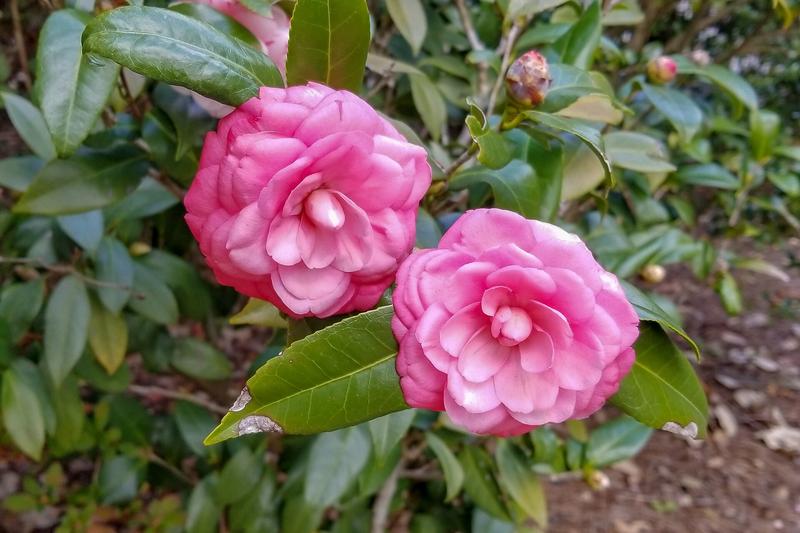
Quick facts
- Watering
- Weekly during dry spells
- Sunlight
- Partial shade
- Soil
- Acidic, moist, well-drained
- Humans
- Safe
- Cats
- Safe
- Dogs
- Safe
- Height
- 200–600 cm
- Spread
- 150–400 cm
- Spacing
- 150–200 cm apart
- RHS recognition
- Award of Garden Merit
About Camellia
Camellia is an evergreen shrub prized for its glossy dark green foliage and spectacular rose-like blooms that appear from late winter through spring. Native to China and Japan, it has been cultivated in British gardens since the 18th century and thrives in our mild, moist climate. UK gardeners value camellias for providing colour during the bleakest months and for their elegant, architectural form that suits both formal and woodland settings. The flowers range from pure white through pink to deep red, often appearing when little else is in bloom.
UK fact: Many Camellia japonica cultivars hold the RHS Award of Garden Merit, and the plant has a special place in British horticultural history, having been introduced to Cornwall and other mild regions where it naturalised in acidic woodland gardens, becoming a signature plant of historic estates like Tregothnan.
Watering Camellia
Water regularly during the growing season, particularly from July to September when flower buds are forming for the following spring. Camellias are shallow-rooted and suffer quickly in dry conditions, so maintain consistent moisture without waterlogging. Use rainwater where possible, especially in hard-water areas, as camellias prefer slightly acidic conditions. Mulch around the base to retain moisture and keep roots cool.
Sunlight requirements
Position camellias in partial shade, ideally with protection from early morning sun which can damage frosted buds and flowers. East-facing aspects should be avoided as rapid thawing causes browning. North or west-facing positions work well in the UK, and in milder regions they tolerate more sun if the soil remains moist.
Soil and feeding
Plant in acidic, humus-rich soil that retains moisture but drains freely. Camellias will not tolerate lime or chalky soils and develop yellowing leaves (chlorosis) if the pH rises above 6.5. In alkaline areas, grow in large containers filled with ericaceous compost. Improve heavy clay with organic matter and grit, and enrich sandy soils with leaf mould or well-rotted compost to boost moisture retention.
Apply a balanced ericaceous fertiliser in March or April after flowering finishes, then again in June to support the formation of next year's flower buds. Avoid high-nitrogen feeds which promote soft growth at the expense of flowers. A spring mulch of composted bark or leaf mould provides gentle, slow-release nutrients.
Pruning Camellia
Camellias require minimal pruning but can be shaped after flowering finishes in April or May. Remove any frost-damaged, dead or diseased wood, and thin out congested growth to improve air circulation. Overgrown specimens can be renovated by cutting back hard into old wood, though this may sacrifice flowers for a season or two. Deadhead spent blooms if practical to keep plants tidy, though this isn't essential.
Propagating Camellia
Semi-ripe cuttings taken in July or August root reliably with bottom heat and high humidity. Layering is a simple alternative that produces larger plants more quickly. Camellias can also be grown from seed, though cultivars will not come true and seedlings take many years to flower. Grafting is used commercially but is rarely practical for home gardeners.
Common problems
Camellias are relatively trouble-free but can suffer from scale insects, which appear as brown lumps on stems and leaf undersides, and vine weevil larvae that damage roots in container-grown plants. Bud drop, where buds form but fall before opening, is usually caused by dry soil during late summer or erratic watering. Yellowing leaves (chlorosis) indicate alkaline soil or hard water use, whilst brown petals result from frost damage or petal blight, a fungal disease more common in mild, wet springs.
Spot a problem with your plant? Photograph the affected area using the Loam app and it will suggest the most likely cause and treatment.
Safety
- Humans
- Safe
- Cats
- Safe
- Dogs
- Safe
Toxicity information is for general guidance only.
Seasonal care calendar
Monthly care guide for Camellia in the UK, based on average conditions.
| Month | Care tasks |
|---|---|
| January | Early cultivars begin flowering. Protect blooms from hard frost with fleece if severe weather threatens. Check mulch is in place. |
| February | Peak flowering period for many varieties. Deadhead spent blooms if practical. Avoid pruning until flowering finishes. |
| March | Late varieties still flowering. Begin light pruning once blooms fade. Apply ericaceous fertiliser towards month end. |
| April | Complete any pruning and shaping. Feed with ericaceous fertiliser. Mulch with composted bark or leaf mould. Plant new specimens. |
| May | New growth emerges. Water during dry spells. Check for scale insects and treat if found. Layer low branches for propagation. |
| June | Apply second feed of ericaceous fertiliser to support bud formation. Water regularly, especially container plants. Maintain mulch. |
| July | Flower buds for next spring begin forming—ensure consistent watering. Take semi-ripe cuttings mid to late month. |
| August | Continue regular watering as bud development is critical now. Take semi-ripe cuttings early in month. Monitor for vine weevil. |
| September | Maintain watering regime. Flower buds clearly visible. Reduce feeding. Check cuttings taken in summer for root development. |
| October | Reduce watering as growth slows. Buds swelling. Clear fallen leaves from around base to prevent fungal issues. Plant new camellias. |
| November | Buds continue developing. Water only if weather is dry. Move container plants to sheltered positions for winter protection. |
| December | Very early cultivars may begin flowering. Protect buds and flowers from severe frost with fleece. Water sparingly if needed. |
Frequently asked questions
- When should I prune my camellia?
- Prune camellias lightly immediately after flowering finishes in April or May. Remove dead, damaged or crossing branches and shape as needed. Avoid autumn or winter pruning as you'll remove the developing flower buds.
- How do I know what's wrong with my camellia?
- Camellias can suffer from various issues including bud drop, yellowing leaves, poor flowering, or frost damage, each requiring different solutions. The Loam app can help diagnose problems from photos, provide personalised care advice based on your conditions, and send timely reminders for watering and feeding to prevent issues before they start.
- How do I propagate camellias from cuttings?
- Take semi-ripe cuttings in July or August, choosing healthy shoots 7–10 cm long. Remove lower leaves, dip in hormone rooting powder, and insert into pots of ericaceous compost mixed with perlite. Cover with a plastic bag or place in a propagator, keep moist, and roots should form in 6–8 weeks. Pot on the following spring.
Got a question about growing Camellia that isn't covered here? Ask the Garden Advisor in the Loam app. It knows your saved plants and local conditions.
Related plants
This page was compiled with AI assistance and reviewed by our team. .