Hamamelis
Hamamelis × intermedia
Shrubs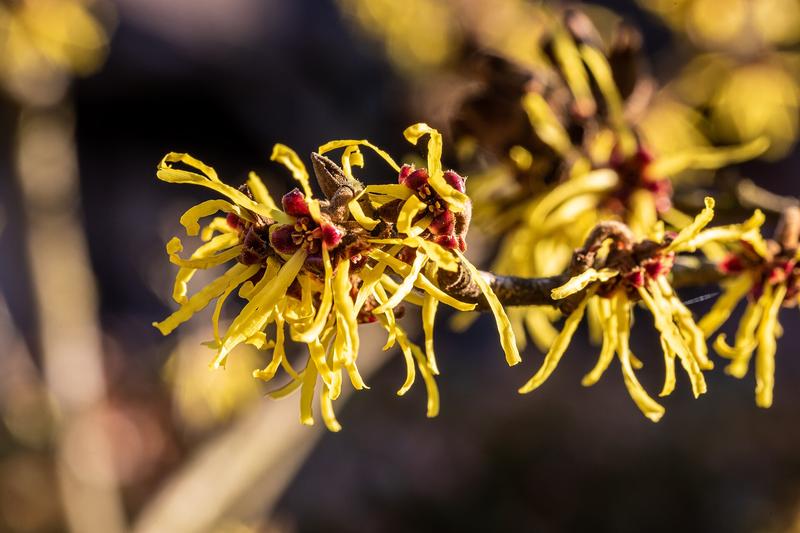
Quick facts
- Watering
- Weekly during establishment
- Sunlight
- Full sun to partial shade
- Soil
- Moist, well-drained, acidic to neutral
- Humans
- Safe
- Cats
- Safe
- Dogs
- Safe
- Height
- 250–400 cm
- Spread
- 250–400 cm
- Spacing
- 300–400 cm apart
- RHS recognition
- Award of Garden Merit
About Hamamelis
Hamamelis × intermedia is a deciduous shrub celebrated for its fragrant, spidery flowers that bloom in the depths of winter, typically from January to March. This hybrid witch hazel produces clusters of ribbon-like petals in shades of yellow, orange, or red, often accompanied by a sweet, spicy scent that carries on cold air. UK gardeners prize it as one of the finest winter-flowering shrubs, offering colour and fragrance when little else is in bloom. The broad, oval leaves turn vibrant shades of yellow, orange, and red in autumn before falling.
UK fact: Many Hamamelis × intermedia cultivars hold the RHS Award of Garden Merit, and the species thrives particularly well in the acidic soils of southern England and Wales, where it has become a staple of winter gardens at RHS Wisley and other major British estates.
Watering Hamamelis
Newly planted hamamelis require consistent moisture to establish a strong root system; water weekly during dry periods for the first two growing seasons. Once established, they are reasonably drought-tolerant but benefit from watering during prolonged dry spells, especially on free-draining soils. In typical UK conditions, natural rainfall is usually sufficient for mature plants, though container-grown specimens need regular watering year-round. Avoid waterlogging, which can lead to root rot.
Sunlight requirements
Plant in a position receiving at least four to six hours of sunlight daily for optimal flowering, though light dappled shade is tolerated. In the UK, a south- or west-facing aspect is ideal, providing good light whilst offering some protection from harsh easterly winds. Avoid deep shade, which reduces flower production and can lead to leggy growth.
Soil and feeding
Plant in rich, humus-rich soil that retains moisture without becoming waterlogged; heavy clay soils should be improved with organic matter and grit to enhance drainage. Hamamelis prefers acidic to neutral conditions (pH 5.5–7.0) and may develop chlorosis (yellowing leaves) on alkaline soils, though this is less common with H. × intermedia than with some species. Mulch annually with leaf mould, well-rotted compost, or ericaceous compost to maintain soil acidity and moisture levels. Avoid shallow, chalky soils where possible.
Feed established plants in March with a general-purpose slow-release fertiliser such as blood, fish and bone, or apply a generous layer of well-rotted organic matter as a mulch. On alkaline soils, use an ericaceous feed to help maintain acidity and prevent nutrient deficiencies. Avoid high-nitrogen fertilisers, which promote leafy growth at the expense of flowers.
Pruning Hamamelis
Hamamelis requires minimal pruning and resents hard cutting back, which can reduce flowering for several years. Remove any dead, diseased, or damaged wood in late February or March, just as flowering finishes and before new growth begins. Thin out crossing or congested branches to maintain an open, vase-shaped habit, but avoid heavy pruning. If necessary, reshape young plants lightly to encourage a balanced framework, but allow mature specimens to develop their natural architectural form.
Propagating Hamamelis
Hamamelis is challenging to propagate from cuttings, with low success rates even for experienced gardeners. Layering is the most reliable method for home gardeners: select a low, flexible branch in autumn, wound the underside, peg it into the soil, and wait 18–24 months for roots to form before severing. Named cultivars are typically grafted onto H. virginiana rootstock in late winter, a technique best left to specialist nurseries. Seed propagation is possible but very slow, taking five to six years to flower, and hybrids will not come true to type.
Common problems
Hamamelis is generally trouble-free but can occasionally suffer from aphids in spring, which distort new growth and secrete sticky honeydew. Coral spot fungus may appear on dead wood, causing pink or orange pustules; prune out affected branches promptly. On alkaline soils, chlorosis (yellowing leaves with green veins) indicates iron or manganese deficiency, remedied by applying chelated iron or ericaceous feed. Hamamelis is rarely troubled by deer or rabbits and has no serious pest or disease issues in the UK.
Spot a problem with your plant? Photograph the affected area using the Loam app and it will suggest the most likely cause and treatment.
Safety
- Humans
- Safe
- Cats
- Safe
- Dogs
- Safe
Toxicity information is for general guidance only.
Seasonal care calendar
Monthly care guide for Hamamelis in the UK, based on average conditions.
| Month | Care tasks |
|---|---|
| January | Enjoy the fragrant winter flowers. Avoid pruning whilst in bloom. |
| February | Continue to enjoy flowering. Prune lightly after flowers fade if necessary. |
| March | Prune out dead or damaged wood as flowering finishes. Apply slow-release fertiliser and mulch. |
| April | New foliage emerges. Water young plants during dry spells. |
| May | Monitor for aphids on new growth. Water if conditions are dry. |
| June | Water during dry periods, especially newly planted specimens. |
| July | Continue watering during prolonged dry spells. No other action needed. |
| August | Water if dry. Flower buds begin to form for next winter. |
| September | Prepare layering if propagating. Reduce watering as autumn rains begin. |
| October | Enjoy autumn foliage colour. Layer branches for propagation if desired. |
| November | Leaves fall. Apply mulch of leaf mould or compost around the base. |
| December | Flower buds swell. Early cultivars may begin flowering in mild winters. |
Frequently asked questions
- When should I prune hamamelis?
- Prune hamamelis immediately after flowering finishes in late winter or early spring (February–March). Remove only dead, damaged, or crossing branches to maintain shape. Avoid heavy pruning, as this reduces flowering the following year and hamamelis naturally forms an attractive structure with minimal intervention.
- How do I know if my hamamelis is getting enough water?
- Hamamelis needs consistent moisture, especially during its first two years and in dry spells. Signs of underwatering include wilting leaves, leaf scorch, and poor flowering. Check soil moisture regularly by feeling 5 cm below the surface—it should be moist but not waterlogged. The Loam app can send you personalised watering reminders based on your local weather and help diagnose moisture-related problems through its plant health scanner.
- What soil does hamamelis need?
- Hamamelis thrives in moist, well-drained, acidic to neutral soil (pH 5.5–7.0). It performs best in humus-rich loam but tolerates clay if drainage is adequate. Avoid shallow chalky or alkaline soils, which cause chlorosis. Improve soil before planting by incorporating ericaceous compost or leaf mould, and apply an annual mulch of acidic organic matter to maintain soil conditions.
Got a question about growing Hamamelis that isn't covered here? Ask the Garden Advisor in the Loam app. It knows your saved plants and local conditions.
Related plants
This page was compiled with AI assistance and reviewed by our team. .