Fothergilla
Fothergilla major
Shrubs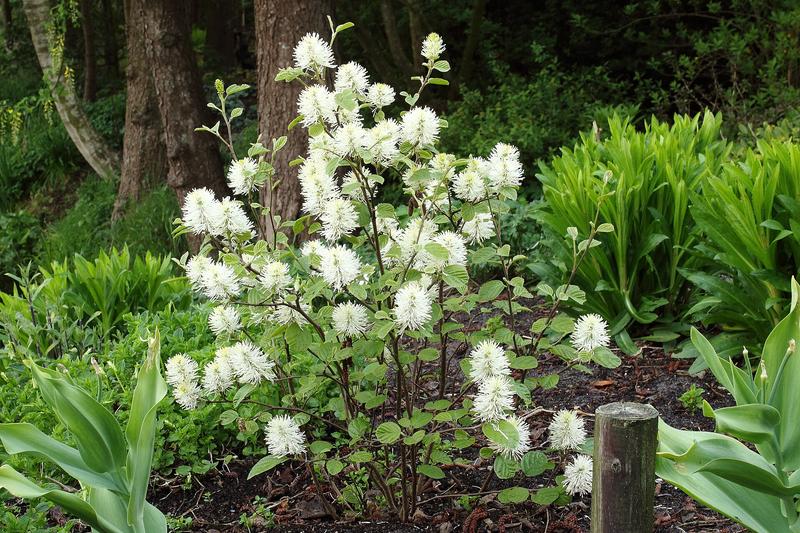
Quick facts
- Watering
- Weekly during establishment
- Sunlight
- Full sun to partial shade
- Soil
- Moist, acidic, humus-rich
- Humans
- Safe
- Cats
- Safe
- Dogs
- Safe
- Height
- 150–200 cm
- Spread
- 150–200 cm
- Spacing
- 150–180 cm apart
- RHS recognition
- Award of Garden Merit
About Fothergilla
Fothergilla is a deciduous shrub native to the southeastern United States, prized by British gardeners for its spectacular spring bottlebrush flowers and outstanding autumn colour. The fragrant white blooms appear before the leaves in April and May, whilst the foliage turns brilliant shades of orange, red, and yellow in October. This compact, slow-growing shrub is ideal for mixed borders, woodland gardens, and smaller plots where year-round interest is valued.
UK fact: Fothergilla major received the RHS Award of Garden Merit in 1993 and remains one of the most reliable shrubs for autumn colour in British gardens, performing particularly well in the acidic soils of Surrey, Sussex, and the West Country.
Watering Fothergilla
Water newly planted fothergillas weekly during their first growing season to establish a deep root system. Once established, they are moderately drought-tolerant but perform best with consistent moisture, particularly during dry spells in May and June when flower buds are forming. In the typically damp British climate, established plants rarely need supplementary watering except during prolonged summer droughts. Apply a 5-8 cm mulch of leaf mould or composted bark to retain soil moisture.
Sunlight requirements
Fothergilla performs best in full sun, which intensifies both spring flowering and autumn colour, though it tolerates partial shade well. In the UK, a south- or west-facing position is ideal, though plants in shadier spots will still flower reliably. Avoid deep shade under large trees, as this reduces flowering and autumn display.
Soil and feeding
Fothergilla requires acidic to neutral soil with a pH of 4.5-6.5 and will not thrive in alkaline conditions. The soil should be moisture-retentive yet well-drained, enriched with plenty of organic matter such as leaf mould, composted bark, or ericaceous compost. Heavy clay soils should be improved with grit and organic matter, whilst sandy soils benefit from generous additions of compost to improve water retention. Fothergilla is an excellent companion for rhododendrons, camellias, and other acid-loving plants.
Apply a balanced slow-release fertiliser formulated for acid-loving plants in early spring, or mulch annually with well-rotted leaf mould or composted pine needles. Avoid high-nitrogen feeds, which promote leafy growth at the expense of flowers and autumn colour.
Pruning Fothergilla
Fothergilla requires minimal pruning and naturally forms an attractive rounded shape. Remove any dead, damaged, or crossing branches immediately after flowering in late May or early June. Avoid heavy pruning, as this removes the following year's flower buds which form on the previous season's growth. Older specimens can be rejuvenated by removing up to one-third of the oldest stems at ground level in late winter.
Propagating Fothergilla
Fothergilla can be propagated from semi-ripe cuttings taken in July or August, rooted in a mix of peat-free ericaceous compost and sharp sand with bottom heat. Layering is often more successful for home gardeners: peg a low-growing branch to the ground in spring, wound the underside lightly, and cover with soil. Roots should form within 12-18 months, after which the new plant can be severed and transplanted. Seed propagation is possible but slow, requiring cold stratification and taking several years to produce flowering plants.
Common problems
Fothergilla is largely trouble-free in UK gardens and suffers from few serious pests or diseases. Chlorosis (yellowing leaves) can occur if planted in alkaline soil or if iron becomes unavailable; treat with sequestered iron and improve soil acidity with sulphur chips or ericaceous compost. Occasionally, aphids may infest new growth in spring but rarely cause lasting damage. Poor autumn colour is usually due to insufficient sunlight, alkaline soil, or excessive nitrogen feeding rather than any pest or disease issue.
Spot a problem with your plant? Photograph the affected area using the Loam app and it will suggest the most likely cause and treatment.
Safety
- Humans
- Safe
- Cats
- Safe
- Dogs
- Safe
Toxicity information is for general guidance only.
Seasonal care calendar
Monthly care guide for Fothergilla in the UK, based on average conditions.
| Month | Care tasks |
|---|---|
| January | No action needed; plant is fully dormant. |
| February | Check mulch depth and top up if necessary with leaf mould or composted bark. |
| March | Apply slow-release ericaceous fertiliser around the base before new growth emerges. |
| April | Enjoy the fragrant white bottlebrush flowers appearing before the leaves unfurl. |
| May | Deadhead spent flowers if desired and prune out any dead or damaged wood after flowering finishes. |
| June | Water during dry spells and complete any light pruning by mid-month. |
| July | Take semi-ripe cuttings for propagation and maintain watering during hot weather. |
| August | Continue watering if weather is dry; layer low branches for propagation if desired. |
| September | Watch for the first hints of autumn colour beginning to develop. |
| October | Enjoy the spectacular autumn foliage in shades of orange, red, and yellow; ideal planting month. |
| November | Plant new specimens while soil is still warm; leaves will have fallen by month's end. |
| December | No action needed; attractive bare stems provide winter structure. |
Frequently asked questions
- Why is my fothergilla not turning red in autumn?
- Poor autumn colour is usually caused by insufficient sunlight, alkaline soil, or excessive nitrogen feeding. Fothergilla needs full sun and acidic soil (pH 4.5-6.5) for the best display. Switch to a low-nitrogen ericaceous feed and ensure the plant receives at least six hours of direct sunlight daily for vibrant orange, red, and yellow tones.
- When should I prune my fothergilla for the best flowers?
- Prune immediately after flowering finishes in late May or early June, removing only dead or crossing branches. Fothergilla flowers on the previous season's growth, so pruning later in summer or autumn removes next year's flower buds. The Loam app can send you a timely reminder when your fothergilla is ready for its annual tidy-up.
- Can fothergilla grow in clay soil?
- Yes, but clay soil must be acidic and improved with plenty of organic matter and grit to ensure good drainage. Dig in composted bark, leaf mould, and horticultural grit before planting, and mulch annually. Fothergilla will not tolerate waterlogged conditions or alkaline clay, so test your soil pH first and amend with sulphur chips if necessary.
Got a question about growing Fothergilla that isn't covered here? Ask the Garden Advisor in the Loam app. It knows your saved plants and local conditions.
Related plants
This page was compiled with AI assistance and reviewed by our team. .