Amelanchier
Amelanchier lamarckii
Trees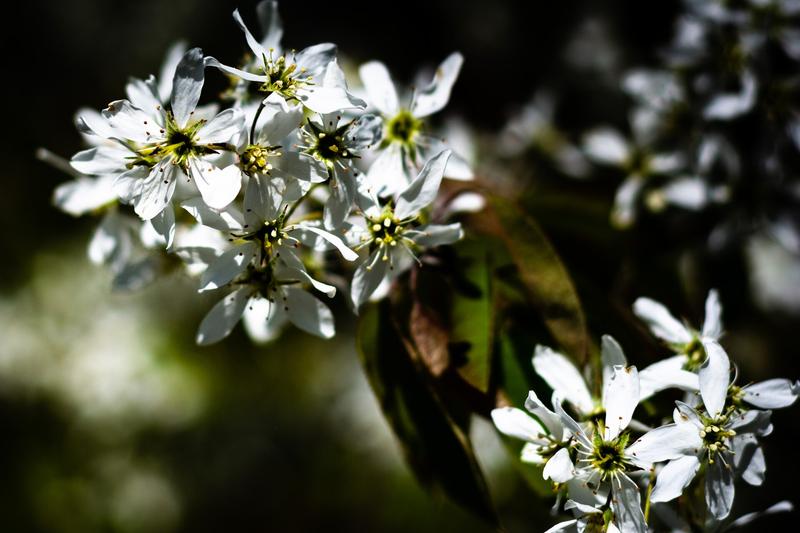
Quick facts
- Watering
- Weekly when young, minimal once established
- Sunlight
- Full sun to partial shade
- Soil
- Moist, well-drained, slightly acidic
- Humans
- Safe
- Cats
- Safe
- Dogs
- Safe
- Height
- 600–800 cm
- Spread
- 400–600 cm
- Spacing
- 500–600 cm apart
- RHS recognition
- Award of Garden Merit
About Amelanchier
Amelanchier is a small deciduous tree prized for its multi-season interest, producing clouds of white star-shaped flowers in spring, edible purple-black berries in summer, and spectacular orange-red autumn colour. Native to North America but naturalised in parts of Europe, this elegant tree typically reaches 6–8 metres in UK gardens. British gardeners value it as an excellent specimen tree for smaller gardens, offering year-round beauty without becoming overly large or demanding.
UK fact: Amelanchier lamarckii holds the RHS Award of Garden Merit and has naturalised in parts of southern England, particularly on sandy heathlands, where it thrives in the acidic soils similar to its native habitat.
Watering Amelanchier
Water newly planted amelanchier weekly during the first growing season to establish a strong root system, particularly during dry spells between April and September. Once established after two years, the tree is remarkably drought-tolerant and requires watering only during prolonged dry periods in summer. In typical UK rainfall conditions, mature specimens rarely need supplementary watering except in exceptionally dry summers in southern and eastern regions.
Sunlight requirements
Amelanchier performs best in full sun, which encourages the most abundant flowering and the finest autumn colour. It tolerates partial shade well, making it suitable for woodland garden settings or east-facing positions. In the UK, avoid deep shade on north-facing walls, as this will reduce flowering and berry production significantly.
Soil and feeding
Amelanchier thrives in fertile, moisture-retentive soil with good drainage and prefers slightly acidic to neutral conditions (pH 5.5–7.0). It performs exceptionally well on sandy or loamy soils and tolerates clay if drainage is adequate. Avoid shallow chalky soils, as the tree may develop chlorosis (yellowing leaves) in alkaline conditions. Enrich planting holes with well-rotted compost or leaf mould to improve soil structure and moisture retention.
Apply a balanced slow-release fertiliser such as blood, fish and bone in early spring around the root zone of young trees. Established amelanchier rarely requires feeding in reasonably fertile soil, though a light mulch of well-rotted compost or leaf mould in autumn will maintain soil health and provide gentle nutrition.
Pruning Amelanchier
Amelanchier requires minimal pruning and is best left to develop its natural graceful shape. Remove any dead, damaged, or crossing branches in late winter or early spring before new growth begins. If necessary, thin overcrowded branches to maintain an open structure and improve air circulation. Avoid heavy pruning, as this can spoil the tree's elegant form and reduce flowering.
Propagating Amelanchier
Amelanchier can be propagated from semi-ripe cuttings taken in late summer (July–August), treated with rooting hormone and placed in a cold frame. Layering is also successful: peg down a low branch in autumn, and it should root within 12–18 months. Seed propagation is possible but requires cold stratification over winter and may take several years to produce flowering specimens. Many cultivated amelanchiers are grafted, so suckers from the rootstock should be removed promptly.
Common problems
Amelanchier is generally trouble-free but can occasionally suffer from fireblight, a bacterial disease causing blackened shoots that should be pruned out and destroyed immediately. Leaf spot and powdery mildew may appear in humid conditions but rarely cause serious harm. Birds are attracted to the edible berries and will often strip the tree before gardeners can harvest them; netting may be necessary if fruit is desired. Aphids occasionally colonise young shoots in spring but are easily controlled with natural predators or a gentle spray of water.
Spot a problem with your plant? Photograph the affected area using the Loam app and it will suggest the most likely cause and treatment.
Safety
- Humans
- Safe
- Cats
- Safe
- Dogs
- Safe
Toxicity information is for general guidance only.
Seasonal care calendar
Monthly care guide for Amelanchier in the UK, based on average conditions.
| Month | Care tasks |
|---|---|
| January | No action needed; tree is fully dormant. |
| February | Prune out any dead, damaged, or crossing branches before buds break. |
| March | Apply blood, fish and bone around the root zone. Mulch with well-rotted compost. |
| April | Enjoy the spectacular white blossom display. Water newly planted trees weekly. |
| May | Continue watering young trees. Watch for aphids on new growth. |
| June | Berries begin to ripen; net if you wish to harvest before birds take them. |
| July | Take semi-ripe cuttings for propagation. Water during dry spells. |
| August | Continue watering young trees if weather is dry. Harvest any remaining berries. |
| September | Reduce watering as temperatures cool. Prepare for autumn colour display. |
| October | Enjoy the stunning orange-red autumn foliage. Good time for planting new specimens. |
| November | Continue planting bare-root trees. Apply autumn mulch of leaf mould. |
| December | No action needed; tree is entering dormancy. |
Frequently asked questions
- When should I prune amelanchier in the UK?
- Prune amelanchier in late winter or early spring (February–March) before new growth begins. Remove only dead, damaged, or crossing branches to maintain the tree's natural graceful shape. Avoid heavy pruning, as amelanchier flowers on the previous year's wood and excessive cutting will reduce the spring blossom display.
- Why are the leaves on my amelanchier turning yellow?
- Yellowing leaves (chlorosis) on amelanchier usually indicate the soil is too alkaline, particularly on chalky soils. The tree prefers slightly acidic to neutral conditions. The Loam app can help you diagnose nutrient deficiencies through photos and recommend soil amendments or feeding schedules tailored to your garden's conditions.
- Are amelanchier berries edible and when can I harvest them?
- Yes, amelanchier berries are edible and sweet when fully ripe, turning purple-black in June and July. They can be eaten fresh or used in jams and pies. However, birds adore them and will often strip the tree before you can harvest, so netting in early June is advisable if you want to enjoy the fruit yourself.
Got a question about growing Amelanchier that isn't covered here? Ask the Garden Advisor in the Loam app. It knows your saved plants and local conditions.
Related plants
This page was compiled with AI assistance and reviewed by our team. .