Cotoneaster
Cotoneaster horizontalis
Shrubs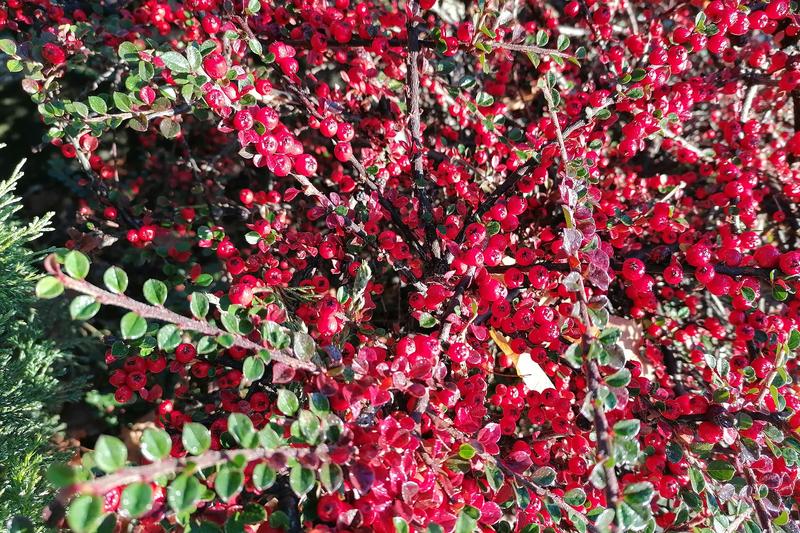
Quick facts
- Watering
- Fortnightly when establishing
- Sunlight
- Full sun to partial shade
- Soil
- Well-drained, any pH
- Humans
- Toxic
- Cats
- Toxic
- Dogs
- Toxic
- Height
- 60–100 cm
- Spread
- 150–200 cm
- Spacing
- 120–150 cm apart
- RHS recognition
- Award of Garden Merit
About Cotoneaster
Cotoneaster horizontalis is a low-growing, deciduous shrub prized for its distinctive herringbone branching pattern and year-round interest. Native to western China, it has become a stalwart of British gardens since its introduction in the late 19th century. UK gardeners value it for its spring flowers, autumn berries that attract birds, and fiery red foliage in autumn. Its spreading habit makes it ideal for ground cover, wall training, or cascading over retaining walls.
UK fact: Cotoneaster horizontalis holds the RHS Award of Garden Merit and is particularly beloved in British gardens for its ability to thrive when trained flat against north-facing walls, bringing colour and wildlife value to challenging spots where few other shrubs will flourish.
Watering Cotoneaster
Water newly planted cotoneasters regularly during their first growing season, typically every 10-14 days during dry spells. Once established (after 12-18 months), they are remarkably drought-tolerant and rarely need watering except during prolonged summer droughts. In typical British conditions with regular rainfall, mature plants are entirely self-sufficient. Wall-trained specimens may need occasional watering during extended dry periods as they receive less natural rainfall.
Sunlight requirements
Cotoneaster horizontalis performs best in full sun, which encourages the most prolific flowering and fruiting, but tolerates partial shade admirably. In British gardens, it's particularly useful on east or north-facing walls where it will still produce good autumn colour and berries. Avoid deep shade, which reduces berry production and can lead to sparse, leggy growth.
Soil and feeding
Cotoneaster horizontalis is exceptionally unfussy about soil, thriving in anything from chalk to clay provided drainage is reasonable. It tolerates a wide pH range from acidic to alkaline (pH 5.5-8.0), making it suitable for virtually any British garden. Poor, stony soils are perfectly acceptable and often produce more compact, attractive growth. The only condition to avoid is waterlogged soil, which can lead to root rot.
Cotoneasters require minimal feeding and often perform better without it. A light application of general-purpose fertiliser or well-rotted compost in early spring is sufficient if growth seems weak, but most established plants need no supplementary feeding at all. Over-feeding can produce excessive leafy growth at the expense of flowers and berries.
Pruning Cotoneaster
Prune cotoneaster horizontalis lightly in late winter or early spring before new growth begins, removing any dead, damaged, or crossing branches. The natural herringbone structure should be preserved, so avoid heavy pruning which spoils the characteristic form. Wall-trained specimens can be trimmed after flowering to keep them flat and tidy. Remove any upright shoots that spoil the spreading habit, cutting back to a horizontal branch.
Propagating Cotoneaster
Cotoneaster horizontalis propagates readily from semi-ripe cuttings taken in late summer (July-August). Take 10-15cm cuttings from the current season's growth, remove lower leaves, and insert into gritty compost in a cold frame. Layering is also highly successful: peg down low branches in autumn, and they'll root within 12 months. Seed propagation is possible but slow, requiring cold stratification over winter, and offspring may not come true to type.
Common problems
Fireblight is the most serious disease affecting cotoneasters in the UK, causing blackened shoots that look scorched; affected branches must be cut back to healthy wood and destroyed. Aphids can colonise new growth in spring but rarely cause lasting damage. Cotoneaster webber moth caterpillars spin webs around shoot tips and can defoliate branches, though this is usually cosmetic. Some cotoneaster species are considered invasive in parts of the UK due to bird-dispersed seeds, though C. horizontalis is less problematic than upright species.
Spot a problem with your plant? Photograph the affected area using the Loam app and it will suggest the most likely cause and treatment.
Safety
- Humans
-
Toxic
Berries contain cyanogenic glycosides and can cause stomach upset if consumed in quantity, though they are not highly toxic. Keep berries away from young children.
- Cats
-
Toxic
Berries can cause vomiting and diarrhoea if eaten. Cats rarely consume them but monitor if planted in areas cats frequent.
- Dogs
-
Toxic
Berries can cause vomiting, diarrhoea, and stomach pain if consumed. Most dogs avoid them but some may be tempted by the bright red colour.
Toxicity information is for general guidance only. If a person or pet has been exposed to this plant and you are concerned, seek advice from a medical professional or vet.
Seasonal care calendar
Monthly care guide for Cotoneaster in the UK, based on average conditions.
| Month | Care tasks |
|---|---|
| January | No action needed; plant is dormant but retains berries for winter interest. |
| February | Check wall ties and supports on trained specimens; plan pruning for late month. |
| March | Prune to remove dead wood and shape; apply light feed if needed. |
| April | New growth emerges; water newly planted specimens during dry spells. |
| May | Pink-tinged white flowers appear; continue watering young plants. |
| June | Flowering continues; bees actively visit blooms. |
| July | Take semi-ripe cuttings; berries begin to form. |
| August | Continue taking cuttings; berries ripen to red. |
| September | Berries at their best; foliage begins autumn colour change. |
| October | Spectacular autumn foliage display; birds feed on berries. |
| November | Leaves fall to reveal herringbone structure; berries persist. |
| December | Bare branches and remaining berries provide winter structure. |
Frequently asked questions
- Why is my cotoneaster not producing berries?
- Lack of berries is usually due to insufficient sunlight, as cotoneasters need at least 4-6 hours of sun for good fruiting. Late spring frosts can damage flowers, preventing berry formation. Over-feeding with nitrogen-rich fertiliser promotes leafy growth at the expense of flowers and berries. Ensure your plant is in a sunny spot and avoid heavy pruning in spring which removes flowering wood.
- How do I know if my cotoneaster has fireblight?
- Fireblight causes shoots to blacken and wilt suddenly, looking scorched or burnt, with leaves remaining attached. The Loam app can help you identify fireblight through photo diagnosis and will remind you to check for symptoms during the high-risk period in late spring and summer, plus guide you through proper pruning and disposal procedures.
- Can I grow cotoneaster horizontalis in a container?
- While possible, cotoneaster horizontalis is not ideal for long-term container growing due to its spreading habit and extensive root system. If you must use a container, choose one at least 45cm wide and deep, use soil-based compost, and be prepared to water regularly. It performs far better planted in the ground or trained against a wall where its natural form can develop properly.
Got a question about growing Cotoneaster that isn't covered here? Ask the Garden Advisor in the Loam app. It knows your saved plants and local conditions.
Related plants
This page was compiled with AI assistance and reviewed by our team. .