Pyracantha
Pyracantha coccinea
Shrubs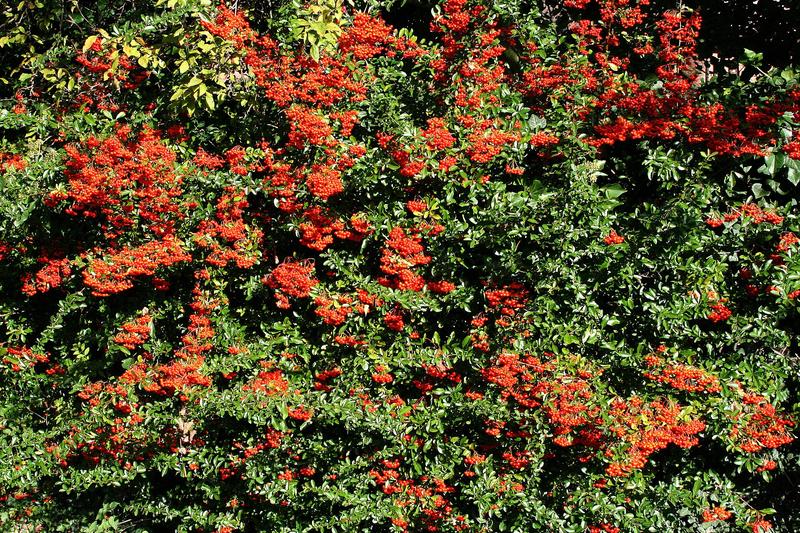
Quick facts
- Watering
- Weekly when establishing
- Sunlight
- Full sun to partial shade
- Soil
- Well-drained, moderately fertile
- Humans
- Toxic
- Cats
- Toxic
- Dogs
- Toxic
- Height
- 200–400 cm
- Spread
- 200–300 cm
- Spacing
- 150–200 cm apart
- RHS recognition
- Award of Garden Merit
About Pyracantha
Pyracantha is a vigorous evergreen shrub prized for its spectacular display of bright orange-red berries that persist from autumn through winter, providing vital food for British birds. Native to southern Europe and Asia Minor, this hardy shrub features glossy dark green leaves, clusters of white hawthorn-like flowers in late spring, and formidable thorns that make it an excellent security hedge. UK gardeners value pyracantha for its year-round interest, tolerance of pollution, and ability to thrive when trained against walls and fences. Its reliable performance in British gardens and wildlife value have made it a staple of suburban and country landscapes alike.
UK fact: Several Pyracantha cultivars hold the RHS Award of Garden Merit, including 'Orange Glow' and 'Saphyr Rouge', recognising their exceptional performance in British gardens and their resistance to the scab disease that commonly affects pyracanthas in the UK's damp climate.
Watering Pyracantha
Water newly planted pyracanthas weekly during their first growing season to establish a deep root system. Once established, typically after 12-18 months, pyracanthas are remarkably drought-tolerant and require watering only during prolonged dry spells in summer. Wall-trained specimens may need more frequent watering as they're often in rain shadows. Avoid overhead watering in humid conditions to reduce the risk of scab and fireblight.
Sunlight requirements
Pyracantha performs best in full sun, which encourages the most prolific flowering and subsequently the heaviest berry crop. In the UK, plants tolerate partial shade well, though berry production may be reduced. South- or west-facing walls are ideal for wall-trained specimens, whilst north-facing aspects will support growth but with fewer berries.
Soil and feeding
Pyracantha thrives in most well-drained soils and is remarkably unfussy about soil type, tolerating clay, loam, chalk, and sandy soils. It prefers a pH range of 5.5-7.5, performing equally well in slightly acidic to slightly alkaline conditions. Avoid waterlogged sites, as poor drainage can lead to root rot. When planting against walls, improve the soil with organic matter and ensure adequate drainage, as these areas are often dry and nutrient-poor.
Apply a balanced general-purpose fertiliser such as Growmore or blood, fish and bone in early spring at 70g per square metre around the base of the plant. Avoid high-nitrogen feeds, which promote soft leafy growth at the expense of flowers and berries. Wall-trained specimens benefit from an annual mulch of well-rotted compost to conserve moisture and provide slow-release nutrients.
Pruning Pyracantha
Prune pyracantha in late spring or early summer after flowering to shape the plant and control size, being careful to preserve developing berries. For wall-trained specimens, trim back side shoots to two or three leaves from the main framework in mid to late summer to expose the ripening berries and maintain a neat profile. Wear thick gloves when pruning due to the vicious thorns. Avoid heavy pruning in autumn or winter, as this removes the decorative berries and reduces the following year's flower display.
Propagating Pyracantha
Pyracantha is most easily propagated from semi-ripe cuttings taken in late summer (July to September). Take 10-15cm cuttings from the current season's growth, remove the lower leaves, and insert into gritty compost in a cold frame or propagator. Cuttings typically root within 6-8 weeks. Alternatively, layer low-growing branches in autumn by pegging them to the ground and covering with soil; rooted layers can be severed and transplanted the following autumn. Pyracantha can also be grown from seed extracted from ripe berries, though seedlings are variable and take several years to flower.
Common problems
Pyracantha scab is the most serious problem in UK gardens, causing dark blotches on leaves and berries, particularly in wet seasons; choose resistant cultivars such as 'Saphyr' series to avoid this. Fireblight, a bacterial disease causing blackened shoots that look scorched, occasionally affects pyracanthas and requires immediate removal of infected growth. Aphids may colonise new growth in spring, and woolly aphid can cause galls on stems. Brown scale insects sometimes infest stems, weakening plants over time. Chlorosis (yellowing leaves) can occur on very alkaline soils.
Spot a problem with your plant? Photograph the affected area using the Loam app and it will suggest the most likely cause and treatment.
Safety
- Humans
-
Toxic
Pyracantha berries contain small amounts of cyanogenic glycosides and can cause stomach upset if consumed in quantity, though they are not considered highly toxic. The sharp thorns pose a greater risk, causing painful puncture wounds.
- Cats
-
Toxic
Berries may cause mild gastrointestinal upset if eaten, though cats rarely consume them. The thorns present a physical hazard.
- Dogs
-
Toxic
Berries can cause vomiting and diarrhoea if consumed in quantity, though serious poisoning is rare. The sharp thorns are the primary concern, potentially causing injury to curious dogs.
Toxicity information is for general guidance only. If a person or pet has been exposed to this plant and you are concerned, seek advice from a medical professional or vet.
Seasonal care calendar
Monthly care guide for Pyracantha in the UK, based on average conditions.
| Month | Care tasks |
|---|---|
| January | Berries provide winter colour and food for birds. Check wall ties and supports on trained specimens. |
| February | Inspect for frost damage to evergreen foliage. Plan any major pruning or training work for spring. |
| March | Apply balanced fertiliser around the base. Mulch with well-rotted compost, keeping clear of stems. |
| April | Watch for aphid infestations on new growth. Water newly planted specimens weekly if dry. |
| May | White flowers appear in clusters. Prune to shape after flowering, preserving developing berries. |
| June | Complete formative pruning. Take semi-ripe cuttings from mid-month onwards. Water during dry spells. |
| July | Berries begin to develop. Trim wall-trained specimens to expose fruit. Continue taking semi-ripe cuttings. |
| August | Berries start to colour. Shorten side shoots on trained plants. Monitor for scab symptoms in humid weather. |
| September | Berries ripen to vibrant orange or red. Plant new specimens. Layer low branches for propagation. |
| October | Berry display at its peak. Birds begin feeding on fruit. Avoid pruning to preserve winter interest. |
| November | Berries continue to provide colour and wildlife food. Check supports on wall-trained plants before winter. |
| December | Evergreen foliage and remaining berries provide structure. No action needed during dormancy. |
Frequently asked questions
- Why is my pyracantha not producing berries?
- Lack of berries is usually due to insufficient sunlight (pyracanthas need full sun for best fruiting), over-pruning in late summer or autumn which removes developing berries, or pruning at the wrong time which cuts off flower buds. Excessive nitrogen fertiliser can also promote leafy growth at the expense of flowers and berries. Ensure your plant receives at least 6 hours of sun daily and prune only after flowering in late spring.
- How can I tell if my pyracantha has scab or fireblight?
- Scab causes dark olive-brown spots on leaves and berries, whilst fireblight makes shoots turn black and look scorched, often with a characteristic shepherd's crook shape at shoot tips. The Loam app can help you diagnose plant diseases through photo identification and provide tailored treatment advice based on your specific symptoms and location.
- Can I grow pyracantha in a large container?
- Yes, pyracantha can be grown successfully in large containers (at least 45cm diameter) filled with John Innes No. 3 compost. Container-grown plants require more frequent watering and annual feeding, and will need root pruning every 3-4 years. Choose compact cultivars such as 'Dart's Red' for best results, and ensure the container has excellent drainage to prevent root rot.
Got a question about growing Pyracantha that isn't covered here? Ask the Garden Advisor in the Loam app. It knows your saved plants and local conditions.
Related plants
This page was compiled with AI assistance and reviewed by our team. .