Photinia
Photinia × fraseri
Shrubs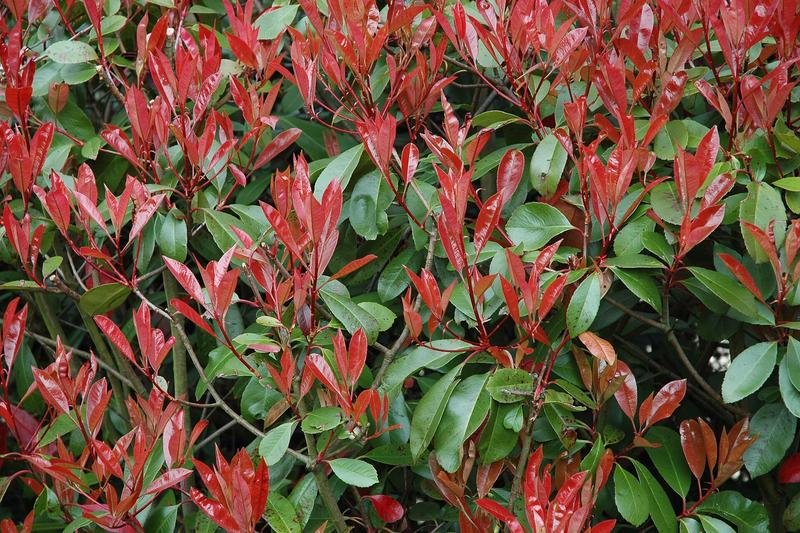
Quick facts
- Watering
- Weekly during establishment, then as needed
- Sunlight
- Full sun to partial shade
- Soil
- Moist, well-drained, fertile
- Humans
- Toxic
- Cats
- Toxic
- Dogs
- Toxic
- Height
- 300–500 cm
- Spread
- 200–400 cm
- Spacing
- 60–90 cm apart
- RHS recognition
- Award of Garden Merit
About Photinia
Photinia is a popular evergreen shrub prized for its brilliant red new growth that emerges in spring, gradually maturing to glossy dark green. This hybrid originated from crosses between Asian species and has become a staple in British gardens since the mid-20th century. UK gardeners value it as a striking hedging plant and specimen shrub, offering year-round structure with seasonal colour interest. The clusters of white flowers in spring and occasional red berries add further ornamental appeal to this versatile garden plant.
UK fact: Photinia × fraseri 'Red Robin' holds the RHS Award of Garden Merit and has become one of the most widely planted hedging shrubs in British gardens since the 1990s, particularly favoured in urban and suburban settings for its tolerance of pollution and ability to create vibrant evergreen screens.
Watering Photinia
Newly planted photinia requires consistent watering throughout the first growing season, particularly during dry spells between April and September. Water deeply once or twice weekly rather than little and often, encouraging deep root development. Established plants are moderately drought-tolerant but benefit from watering during prolonged dry periods in summer, especially when grown as hedging. In typical British conditions with regular rainfall, mature plants rarely need supplementary watering except during exceptional droughts.
Sunlight requirements
Plant in a position receiving at least four to six hours of direct sunlight daily for optimal red colouration of new growth. In the UK, south or west-facing positions are ideal, though photinia will grow successfully in partial shade with morning sun. Avoid deep shade, which results in sparse growth and reduced colour intensity, particularly important in northern regions where light levels are naturally lower.
Soil and feeding
Plant in moisture-retentive but well-drained soil enriched with organic matter such as garden compost or well-rotted manure. Photinia tolerates clay soils provided drainage is adequate, and also grows well in sandy loam if improved with organic material. The ideal pH range is 6.0 to 7.0, though it tolerates slightly alkaline conditions. Avoid waterlogged sites, which can lead to root rot and poor growth, particularly problematic in heavy clay areas during wet British winters.
Apply a general-purpose slow-release fertiliser such as blood, fish and bone or Growmore in March or early April at the manufacturer's recommended rate. For hedging, a second lighter application in June encourages fresh growth after trimming. Mulch annually with well-rotted compost or manure to maintain soil fertility and moisture retention.
Pruning Photinia
For specimen shrubs, prune lightly in late May or June after the spring flush of red growth has matured, removing any dead, damaged or crossing branches to maintain an open structure. Hedges should be trimmed twice annually: once in late spring after the red growth appears, and again in late summer to maintain shape. Avoid heavy pruning in autumn or winter, as this can expose plants to frost damage. Photinia responds well to renovation pruning if overgrown, cutting back hard in April, though this sacrifices one season's display.
Propagating Photinia
Take semi-ripe cuttings in July or August when the current season's growth has begun to firm up but is not fully woody. Cuttings typically root within six to eight weeks with the aid of hormone rooting powder and a heated propagator. Layering is also successful, bending low branches to the ground in spring and allowing them to root before severing from the parent plant the following year. Hardwood cuttings can be taken in winter but are slower to establish.
Common problems
Photinia is susceptible to leaf spot diseases, particularly photinia leaf spot (Entomosporium mespili), which causes red-purple spots on leaves and can lead to defoliation in wet conditions. Powdery mildew may affect plants in dry summers, especially those in partial shade with poor air circulation. Fireblight is a serious bacterial disease that can affect photinia, causing blackened shoots that appear scorched, requiring immediate removal of affected growth. Aphids occasionally colonise soft new growth in spring, and scale insects may infest stems, though neither typically causes serious damage.
Spot a problem with your plant? Photograph the affected area using the Loam app and it will suggest the most likely cause and treatment.
Safety
- Humans
-
Toxic
Photinia leaves and berries contain cyanogenic glycosides which can cause stomach upset if ingested in quantity. Keep away from children.
- Cats
-
Toxic
Contains cyanogenic glycosides that can cause vomiting, diarrhoea and breathing difficulties if consumed. Seek veterinary advice if ingestion is suspected.
- Dogs
-
Toxic
Contains cyanogenic glycosides that can cause vomiting, diarrhoea and breathing difficulties if consumed. Seek veterinary advice if ingestion is suspected.
Toxicity information is for general guidance only. If a person or pet has been exposed to this plant and you are concerned, seek advice from a medical professional or vet.
Seasonal care calendar
Monthly care guide for Photinia in the UK, based on average conditions.
| Month | Care tasks |
|---|---|
| January | No action needed. Avoid pruning during cold weather to prevent frost damage to cut surfaces. |
| February | Check plants for winter damage and remove any broken or diseased branches. Prepare planting sites for bare-root specimens. |
| March | Apply slow-release fertiliser around the base and mulch with well-rotted compost. Plant container-grown specimens and water in well. |
| April | Watch for the emergence of vibrant red new growth. Water newly planted specimens regularly as growth accelerates. Check for aphids on soft shoots. |
| May | Enjoy the display of white flower clusters and brilliant red foliage. Begin light shaping after flowering if needed. Monitor for leaf spot disease. |
| June | Trim hedges after the spring flush of growth has matured. Apply a light feed to encourage further growth. Water during dry spells. |
| July | Take semi-ripe cuttings for propagation. Continue watering established hedges during prolonged dry weather. Watch for powdery mildew. |
| August | Complete second hedge trim if required for formal shapes. Continue taking cuttings early in the month. Maintain watering in dry conditions. |
| September | Reduce watering as temperatures cool. Remove any diseased or damaged foliage. Plant new specimens while soil remains warm. |
| October | Clear fallen leaves from around the base to reduce disease risk. Continue planting container-grown specimens in mild weather. |
| November | Apply autumn mulch to protect roots over winter. Check stakes and ties on young plants and adjust if needed. |
| December | No action needed. Photinia provides valuable evergreen structure in the winter garden with its glossy foliage. |
Frequently asked questions
- When should I prune my photinia hedge?
- Trim photinia hedges twice yearly: first in late May or June after the spring flush of red growth has appeared and matured, and again in late August to maintain shape. Avoid autumn or winter pruning, which can expose fresh cuts to frost damage and reduce the following spring's display.
- Why are the leaves on my photinia covered in red spots?
- Red or purple spots are symptoms of photinia leaf spot disease (Entomosporium mespili), a fungal infection common in wet conditions. Remove and destroy affected leaves, improve air circulation by thinning growth, and avoid overhead watering. The Loam app can help you identify leaf spot disease through photo diagnosis and provide personalised treatment reminders to keep your photinia healthy.
- What type of soil does photinia need?
- Photinia thrives in moist but well-drained soil and tolerates most soil types including clay, loam and sandy soils. It prefers slightly acidic to neutral pH (6.0-7.5) but adapts to mildly alkaline conditions. Improve heavy clay by incorporating organic matter before planting, and ensure good drainage as waterlogged roots can lead to root rot and poor growth.
Got a question about growing Photinia that isn't covered here? Ask the Garden Advisor in the Loam app. It knows your saved plants and local conditions.
Related plants
This page was compiled with AI assistance and reviewed by our team. .