Berberis
Berberis thunbergii
Shrubs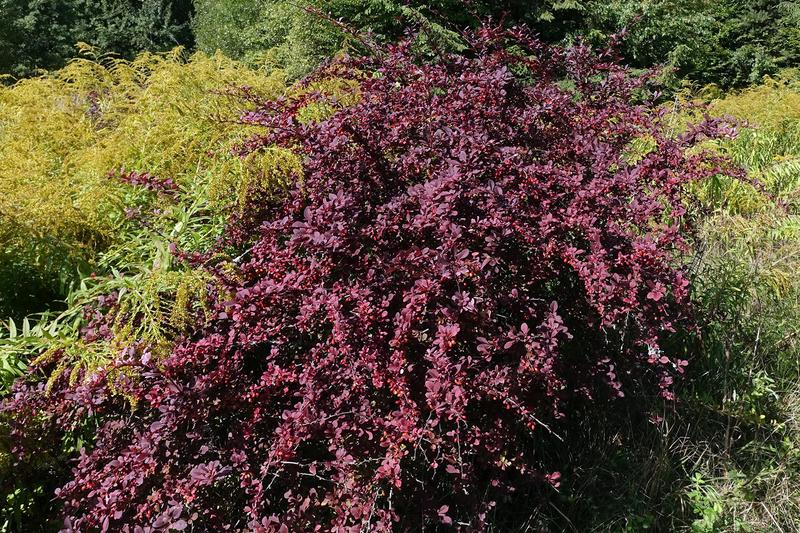
Quick facts
- Watering
- Fortnightly when establishing
- Sunlight
- Full sun to partial shade
- Soil
- Well-drained, any pH
- Humans
- Toxic
- Cats
- Toxic
- Dogs
- Toxic
- Height
- 60–150 cm
- Spread
- 60–150 cm
- Spacing
- 45–60 cm apart
- RHS recognition
- Award of Garden Merit
About Berberis
Berberis thunbergii is a deciduous shrub prized for its vibrant foliage, thorny stems, and excellent autumn colour. Native to Japan, it has become a staple in British gardens for hedging, borders, and specimen planting. Its compact habit and low maintenance requirements make it ideal for UK gardens of all sizes. The small yellow flowers in spring are followed by bright red berries that persist into winter, providing year-round interest.
UK fact: Many Berberis thunbergii cultivars hold the RHS Award of Garden Merit, with purple-leaved varieties like 'Atropurpurea' being particularly popular in British cottage gardens since the Victorian era.
Watering Berberis
Water newly planted Berberis every 10-14 days during dry spells in the first year, ensuring the root ball doesn't dry out completely. Once established, typically after 12-18 months, plants are highly drought-tolerant and rarely need supplementary watering except during prolonged summer droughts. In typical British conditions with regular rainfall, mature plants require no additional watering. Container-grown specimens need watering weekly during summer months.
Sunlight requirements
Plant in full sun for the most intense foliage colour and prolific flowering, particularly important for purple and red cultivars. Berberis will tolerate partial shade and still perform well, making it versatile for north-facing borders or under the canopy of larger trees. In British gardens, avoid deep shade as this reduces autumn colour and berry production.
Soil and feeding
This adaptable shrub grows in virtually any well-drained soil, including poor, sandy, chalky, or clay soils, provided drainage is adequate. It tolerates a wide pH range from acid to alkaline (pH 5.0-8.0), making it suitable for most British gardens. Heavy clay soils benefit from the addition of grit or sharp sand at planting to improve drainage. Berberis actually performs better in moderately fertile soil rather than overly rich conditions, which can produce soft growth prone to disease.
Feed established plants with a general-purpose slow-release fertiliser such as blood, fish and bone in March or early April. A light application of 50-70g per square metre is sufficient. Berberis doesn't require heavy feeding and often performs perfectly well without supplementary fertiliser in average garden soil, making it ideal for low-maintenance planting schemes.
Pruning Berberis
Prune Berberis lightly after flowering in May or June to maintain shape and size, removing any dead, damaged, or crossing branches. For informal hedges, trim once in summer after flowering. Formal hedges can be clipped 2-3 times between June and August for a neat appearance. Berberis tolerates hard pruning if renovation is needed; cut back to 15-30cm above ground in late winter, though this will sacrifice one season's flowers and berries. Always wear thick gloves when pruning due to the sharp thorns.
Propagating Berberis
Semi-ripe cuttings taken in July or August root readily and are the most reliable propagation method for Berberis. Alternatively, layer low branches in autumn by pegging them to the ground and covering with soil; they'll root within 12 months. Hardwood cuttings can be taken in November and inserted into a sheltered border or cold frame. Seed propagation is possible but slow, and cultivars won't come true to type.
Common problems
Berberis is generally trouble-free but can occasionally suffer from powdery mildew in dry conditions, appearing as white powdery patches on leaves. Berberis sawfly larvae may defoliate plants in late spring; inspect regularly and remove by hand or treat with an appropriate insecticide if severe. Honey fungus can affect plants in infected gardens, causing dieback and death. Rust may appear as orange spots on leaves but rarely causes serious harm.
Spot a problem with your plant? Photograph the affected area using the Loam app and it will suggest the most likely cause and treatment.
Safety
- Humans
-
Toxic
Berries contain berberine alkaloids and can cause stomach upset if consumed in quantity. The sharp thorns pose a physical injury risk.
- Cats
-
Toxic
Berries and plant parts contain berberine which can cause vomiting and diarrhoea if ingested, though cats rarely consume them.
- Dogs
-
Toxic
Berries contain berberine alkaloids that can cause vomiting, diarrhoea, and lethargy if eaten in quantity. The thorns also pose injury risk.
Toxicity information is for general guidance only. If a person or pet has been exposed to this plant and you are concerned, seek advice from a medical professional or vet.
Seasonal care calendar
Monthly care guide for Berberis in the UK, based on average conditions.
| Month | Care tasks |
|---|---|
| January | No action needed. Deciduous varieties are dormant, though evergreen species provide winter structure. |
| February | Plant bare-root specimens during mild spells. Carry out any hard renovation pruning before growth begins. |
| March | Apply slow-release fertiliser around the base. Plant container-grown specimens. Mulch with organic matter. |
| April | Watch for new growth and small yellow flowers beginning to appear. Water newly planted specimens during dry spells. |
| May | Enjoy the display of yellow flowers. Light pruning can begin after flowering finishes. Check for sawfly larvae. |
| June | Prune to shape after flowering. Trim hedges for the first time. Take semi-ripe cuttings towards month end. |
| July | Take semi-ripe cuttings for propagation. Water container plants regularly. Trim formal hedges if needed. |
| August | Continue taking semi-ripe cuttings early in the month. Final trim for formal hedges. Red berries begin to develop. |
| September | Enjoy developing autumn colour and ripening berries. Plant new container-grown specimens. Layer low branches for propagation. |
| October | Autumn foliage reaches peak colour. Collect and sow seed if desired. Plant bare-root and container specimens. |
| November | Take hardwood cuttings. Continue planting during mild weather. Leaves fall, revealing bright red berries. |
| December | Berries provide winter interest and food for birds. Plant bare-root specimens in mild spells. Plan new plantings. |
Frequently asked questions
- When should I prune Berberis and how do I do it safely?
- Prune Berberis immediately after flowering in late spring or early summer (May-June) to maintain shape whilst preserving next year's berries. For overgrown plants, hard prune in late winter. Always wear thick leather gloves and long sleeves due to sharp thorns. Remove dead wood and cut back stems to maintain size, making cuts just above an outward-facing bud.
- How can I tell what's wrong with my Berberis leaves?
- Berberis can suffer from various leaf problems including sawfly damage (sudden defoliation), powdery mildew (white coating), rust (orange spots), or colour loss from insufficient light. The Loam app can help you diagnose leaf issues by uploading a photo, and provides personalised care advice based on your specific growing conditions to prevent future problems.
- What soil conditions does Berberis need to thrive?
- Berberis is remarkably unfussy and tolerates most soil types including clay, chalk, sand, and loam. It prefers well-drained soil with a pH of 6.0-7.5 but adapts to both acidic and alkaline conditions. Avoid waterlogged sites. Once established, Berberis is drought-tolerant and requires little maintenance, making it ideal for low-maintenance gardens.
Got a question about growing Berberis that isn't covered here? Ask the Garden Advisor in the Loam app. It knows your saved plants and local conditions.
Related plants
This page was compiled with AI assistance and reviewed by our team. .