Fatsia
Fatsia japonica
Shrubs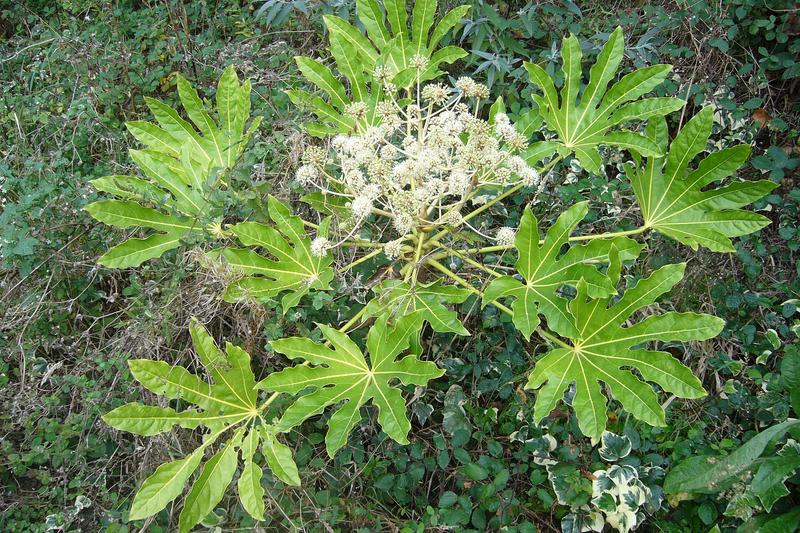
Quick facts
- Watering
- Weekly during growing season
- Sunlight
- Partial shade to full shade
- Soil
- Moist, well-drained, fertile
- Humans
- Toxic
- Cats
- Toxic
- Dogs
- Toxic
- Height
- 150–400 cm
- Spread
- 150–400 cm
- Spacing
- 200–300 cm apart
- RHS recognition
- Award of Garden Merit
About Fatsia
Fatsia is a bold, architectural evergreen shrub prized for its large, glossy, palmate leaves that bring a tropical feel to British gardens. Native to Japan and South Korea, it thrives in shaded urban courtyards and woodland gardens across the UK. Its spherical clusters of creamy-white autumn flowers are followed by small black berries, providing year-round interest. Fatsia is particularly valued for its tolerance of pollution, shade, and coastal conditions, making it an excellent choice for challenging city gardens.
UK fact: Fatsia japonica has held the RHS Award of Garden Merit since 1993 and became a staple of Victorian shrubberies, where it was grown in conservatories before proving surprisingly hardy in sheltered British gardens.
Watering Fatsia
Fatsia requires consistent moisture during the growing season from April to September, particularly in its first two years after planting. Water weekly during dry spells, providing approximately 10-15 litres per established plant. Container specimens need more frequent watering, sometimes twice weekly in warm weather. Reduce watering in autumn and winter, allowing the top few centimetres of soil to dry between waterings, but never let the rootball dry out completely.
Sunlight requirements
In the UK, fatsia performs best in partial to full shade, making it ideal for north-facing walls and under tree canopies. While it tolerates some morning sun, avoid hot south-facing positions where leaves may scorch during summer. In Scotland and northern England, it will accept more sun than in warmer southern regions.
Soil and feeding
Plant fatsia in fertile, humus-rich soil that retains moisture without becoming waterlogged. It tolerates heavy clay soils common in British gardens, provided drainage is adequate—incorporate organic matter such as garden compost or well-rotted manure at planting. The ideal pH is slightly acidic to neutral (6.0-7.0), though it adapts to mildly alkaline conditions. For containers, use a loam-based compost such as John Innes No. 3 mixed with multipurpose compost for improved moisture retention.
Feed established plants in March or April with a general-purpose slow-release fertiliser such as blood, fish and bone or Growmore, scattering approximately 70g per square metre around the base. Container-grown fatsia benefit from monthly liquid feeds with a balanced fertiliser from April to August. A spring mulch of garden compost or well-rotted manure provides additional nutrients and helps retain moisture.
Pruning Fatsia
Fatsia requires minimal pruning but benefits from tidying in April or May after the risk of hard frost has passed. Remove any frost-damaged, diseased, or crossing stems, cutting back to a healthy bud or the plant's base. To control height or encourage bushier growth, cut stems back by up to half their length—new shoots will emerge from below the cut. Wear gloves when pruning as the sap can cause skin irritation in some individuals. Remove spent flowerheads in winter if desired, though the developing berries provide wildlife value.
Propagating Fatsia
The most reliable method is taking semi-ripe cuttings in July or August, selecting healthy non-flowering shoots. Alternatively, mature plants often produce suckers at the base which can be carefully separated with roots attached in March or April. Seed propagation is possible but slow, requiring fresh seed sown in autumn and kept in a cold frame over winter. Cuttings typically root within 6-8 weeks in a propagator or on a warm windowsill.
Common problems
Fatsia is generally trouble-free but may suffer from scale insects, which appear as brown bumps on stems and leaf undersides, causing sticky honeydew and sooty mould. Aphids occasionally cluster on new growth in spring. Leaf spot fungi can develop in prolonged wet conditions, causing brown patches on foliage. Cold winter winds and hard frosts may damage leaves, turning them brown and crispy, though plants usually recover with new growth in spring—protect young plants with horticultural fleece during severe weather.
Spot a problem with your plant? Photograph the affected area using the Loam app and it will suggest the most likely cause and treatment.
Safety
- Humans
-
Toxic
All parts of fatsia contain toxic saponins and can cause stomach upset if ingested. The sap may cause skin irritation or dermatitis in sensitive individuals.
- Cats
-
Toxic
Fatsia contains saponins that can cause vomiting, drooling, and gastrointestinal upset in cats if ingested.
- Dogs
-
Toxic
All parts are toxic to dogs, containing saponins that cause vomiting, diarrhoea, and excessive drooling if eaten.
Toxicity information is for general guidance only. If a person or pet has been exposed to this plant and you are concerned, seek advice from a medical professional or vet.
Seasonal care calendar
Monthly care guide for Fatsia in the UK, based on average conditions.
| Month | Care tasks |
|---|---|
| January | Protect from severe frost with fleece if temperatures below -5°C are forecast. Check container plants haven't become waterlogged. |
| February | Remove any frost-damaged leaves. Plan new planting positions for spring. |
| March | Plant new specimens or divide and replant rooted suckers. Begin watering container plants more regularly as growth resumes. |
| April | Apply slow-release fertiliser around the base. Prune to remove winter damage and shape plants. Mulch with compost. |
| May | Water regularly during dry spells. Watch for aphids on new growth and treat if necessary. |
| June | Maintain consistent watering, especially for container plants. Feed container specimens with liquid fertiliser. |
| July | Take semi-ripe cuttings for propagation. Continue regular watering and monthly feeding of pots. |
| August | Continue taking cuttings if needed. Water during dry periods and feed container plants. |
| September | Reduce watering frequency as temperatures cool. Watch for early autumn flowers beginning to open. |
| October | Enjoy the spherical white flower clusters. Reduce feeding and watering as growth slows. |
| November | Flowers develop into small black berries. Move container plants to sheltered positions for winter. |
| December | Monitor for frost damage in exposed positions. Ensure good drainage around plants to prevent waterlogging. |
Frequently asked questions
- How do I make my fatsia bushier?
- Prune stems back by up to half their length in late spring (April or May), cutting just above a leaf joint. This encourages the plant to produce multiple new shoots from below the cut, creating a bushier, more compact shape. Regular pruning from a young age maintains density.
- Why are my fatsia leaves turning yellow?
- Yellowing leaves can indicate several issues: overwatering and waterlogged soil, nutrient deficiency (especially nitrogen), or too much direct sun. Check soil drainage and reduce watering if the compost feels soggy. Feed with a balanced liquid fertiliser during the growing season. The Loam app can help diagnose the specific cause by analysing your plant's symptoms and growing conditions, then provide personalised care recommendations.
- How do I propagate fatsia from cuttings?
- Take semi-ripe cuttings in late summer (July to September). Choose healthy side shoots about 10-15cm long, remove lower leaves, and dip the cut end in rooting hormone. Insert into pots of moist, gritty compost and cover with a clear plastic bag to maintain humidity. Keep in a shaded, frost-free spot. Roots should develop within 6-8 weeks. Pot on individually once established.
Got a question about growing Fatsia that isn't covered here? Ask the Garden Advisor in the Loam app. It knows your saved plants and local conditions.
Related plants
This page was compiled with AI assistance and reviewed by our team. .