Sea Kale
Crambe maritima
Vegetables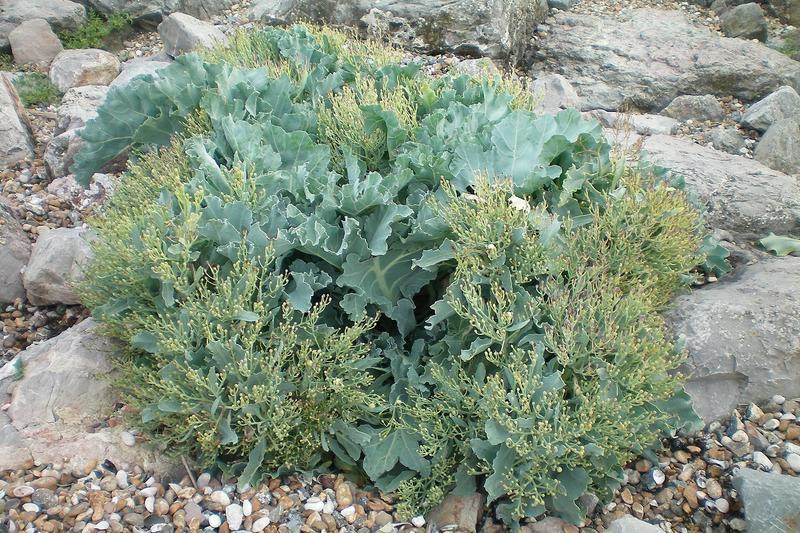
Quick facts
- Watering
- Fortnightly once established
- Sunlight
- Full sun
- Soil
- Well-drained, deep, sandy
- Humans
- Safe
- Cats
- Unknown
- Dogs
- Unknown
- Height
- 60–75 cm
- Spread
- 60–90 cm
- Spacing
- 60–75 cm apart
About Sea Kale
Sea kale is a hardy perennial vegetable native to British coastal shingle beaches, prized for its tender blanched shoots and ornamental blue-grey foliage. This robust plant produces large cabbage-like leaves and clusters of honey-scented white flowers in early summer. UK gardeners value it as a low-maintenance heritage crop that thrives in well-drained soils and tolerates coastal conditions. Once a popular Victorian delicacy, sea kale is experiencing a revival among gardeners seeking unusual, productive perennials.
UK fact: Sea kale was extensively cultivated in Britain during the 18th and 19th centuries, particularly around the Kent and Sussex coasts, where it was forced under terracotta pots to produce blanched stems considered a gourmet delicacy for the Victorian table.
Watering Sea Kale
Water newly planted sea kale regularly during the first growing season to establish deep roots. Once established, plants are remarkably drought-tolerant and typically need watering only during prolonged dry spells in summer, roughly every two weeks. Overwatering can lead to root rot, so err on the side of dryness, particularly in heavy soils. In typical UK conditions, natural rainfall is often sufficient except during extended dry periods.
Sunlight requirements
Sea kale thrives in full sun, reflecting its natural habitat on exposed coastal shingle. In the UK, position plants in an open, sunny spot with good air circulation to promote strong growth and flowering. South or west-facing beds are ideal, though plants tolerate some light afternoon shade in warmer southern regions.
Soil and feeding
Sea kale demands excellent drainage and performs best in deep, sandy or gravelly soils that mimic its native coastal habitat. It tolerates poor, stony ground but benefits from incorporation of organic matter to improve nutrient content. The ideal pH is neutral to slightly alkaline (6.5-8.0), reflecting the chalky or limestone-rich soils of its natural range. Avoid heavy clay or waterlogged conditions, which cause crown rot.
Apply a balanced general-purpose fertiliser in early spring as new growth emerges. Sea kale is not a heavy feeder, but an annual mulch of well-rotted compost or seaweed in March supports vigorous shoot production. Avoid high-nitrogen feeds, which promote leaf growth at the expense of the tender blanched stems.
Pruning Sea Kale
Remove flowering stems after blooming in June to direct energy back into the crown and prevent self-seeding. Cut back all foliage to ground level in late autumn once it has died back naturally, clearing away debris to reduce overwintering pests. In late winter (January-February), cover crowns with large pots, buckets, or purpose-made forcing jars to blanch emerging shoots, checking regularly and harvesting when stems reach 15-20 cm.
Propagating Sea Kale
Sea kale is easily propagated from root cuttings (thongs) taken in late autumn or winter. Lift established plants and select pencil-thick roots, cutting them into 10-15 cm sections with a straight cut at the top and angled cut at the base. Plant thongs vertically in deep pots or directly in prepared beds with the straight end just below soil level, spacing 60 cm apart. Plants can also be grown from seed sown in spring, though germination is slow and plants take three years to reach cropping size.
Common problems
Sea kale is relatively trouble-free but can suffer from flea beetles, which pepper young leaves with small holes; protect seedlings with horticultural fleece in spring. Clubroot may affect plants in brassica-family rotation, so avoid planting where cabbages or related crops have grown recently. Slugs and snails occasionally damage emerging shoots, particularly during forcing. Crown rot can occur in poorly drained soils or following prolonged wet winters, so ensure excellent drainage and avoid waterlogging.
Spot a problem with your plant? Photograph the affected area using the Loam app and it will suggest the most likely cause and treatment.
Safety
- Humans
- Safe
- Cats
-
Unknown
No specific toxicity data available for cats. As a brassica relative, exercise caution.
- Dogs
-
Unknown
No specific toxicity data available for dogs. As a brassica relative, exercise caution.
Toxicity information is for general guidance only. If a pet has been exposed to this plant and you are concerned, seek advice from a vet.
Seasonal care calendar
Monthly care guide for Sea Kale in the UK, based on average conditions.
| Month | Care tasks |
|---|---|
| January | Begin forcing by covering crowns with large pots or buckets to blanch emerging shoots. |
| February | Continue forcing. Check under covers and harvest blanched shoots when 15-20 cm long. |
| March | Harvest final forced shoots. Remove covers and apply balanced fertiliser and compost mulch. |
| April | Allow foliage to develop fully. Plant out root cuttings taken in winter. |
| May | Water during dry spells. Watch for flea beetle damage on young growth. |
| June | Enjoy ornamental white flowers. Remove flower stems after blooming to conserve plant energy. |
| July | Water established plants only during prolonged drought. Foliage at its peak. |
| August | No action needed. Allow plants to build reserves for next season. |
| September | No action needed. Foliage begins to decline naturally. |
| October | Cut back dying foliage to ground level. Clear away debris. |
| November | Lift established plants to take root cuttings for propagation if desired. |
| December | Continue taking root cuttings. Prepare forcing covers for January. |
Frequently asked questions
- How do you force sea kale for blanched stems?
- In January or February, cover established crowns with large upturned pots, buckets, or traditional forcing jars, blocking drainage holes to exclude light. The darkness forces tender, pale shoots that are ready to harvest when 15-20 cm long, typically after 8-12 weeks. Remove covers after harvesting to allow the plant to recover and build strength for the following year.
- When should I harvest sea kale and how do I know if I'm doing it correctly?
- Harvest forced blanched shoots in late winter to early spring when they reach 15-20 cm, cutting just above the crown. The Loam app can send you timely reminders based on when you started forcing and track your harvest windows to help you get the timing right each year.
- Can I grow sea kale in containers?
- Yes, sea kale grows well in large, deep containers (at least 45 cm diameter and depth) filled with gritty, free-draining compost. Ensure excellent drainage with added horticultural grit and raise pots on feet to prevent waterlogging. Container-grown plants need more regular watering than those in open ground but still prefer to dry out between waterings.
Got a question about growing Sea Kale that isn't covered here? Ask the Garden Advisor in the Loam app. It knows your saved plants and local conditions.
Related plants
This page was compiled with AI assistance and reviewed by our team. .