Saxifrage
Saxifraga x urbium
Perennials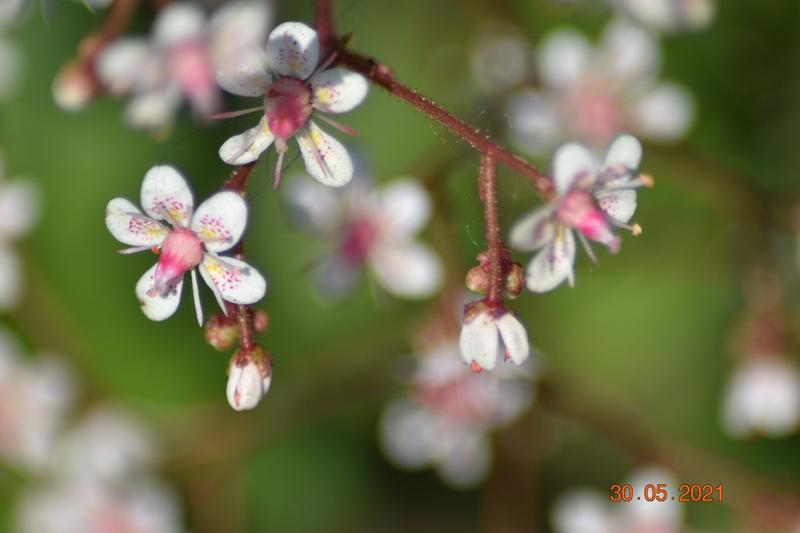
Quick facts
- Watering
- Weekly during dry spells
- Sunlight
- Partial to full shade
- Soil
- Moist but well-drained
- Humans
- Safe
- Cats
- Safe
- Dogs
- Safe
- Height
- 20–30 cm
- Spread
- 30–45 cm
- Spacing
- 30–40 cm apart
- RHS recognition
- Award of Garden Merit
About Saxifrage
Saxifrage, commonly known as London Pride, is a charming evergreen perennial forming neat rosettes of rounded, leathery leaves with delicate sprays of pale pink star-shaped flowers in late spring and early summer. This hybrid saxifrage is a garden classic, valued for its ability to thrive in shady spots where many other plants struggle. UK gardeners prize it as reliable ground cover for north-facing borders, beneath trees, and in urban gardens where it tolerates pollution remarkably well. Its low-maintenance nature and year-round foliage make it an indispensable plant for British gardens.
UK fact: London Pride earned its common name during the Blitz when it was famously observed flowering amongst the rubble of bombed buildings across London, becoming a symbol of resilience and the enduring spirit of the capital.
Watering Saxifrage
Once established, saxifrage is remarkably drought-tolerant and requires minimal watering in typical UK conditions. Water weekly during prolonged dry spells in summer, particularly for plants in containers or very free-draining soils. Newly planted specimens benefit from regular watering during their first growing season to establish a strong root system. Avoid waterlogging, as this can lead to crown rot, especially in heavy clay soils.
Sunlight requirements
Saxifrage thrives in partial to full shade, making it ideal for north-facing borders and beneath deciduous trees. In the UK, it tolerates morning sun but benefits from afternoon shade, particularly in southern regions. Avoid hot, sunny positions which can scorch the foliage and reduce flowering performance.
Soil and feeding
Saxifrage performs best in moist but well-drained soil enriched with organic matter. It tolerates a wide pH range from slightly acidic to slightly alkaline (pH 6.0-7.5), making it suitable for most UK garden soils. Improve heavy clay by incorporating grit and compost to enhance drainage. In very dry, sandy soils, add plenty of well-rotted manure or garden compost to improve moisture retention.
Saxifrage requires minimal feeding and thrives in moderately fertile soil. Apply a light dressing of general-purpose fertiliser or well-rotted compost in early spring to support flowering. Avoid over-feeding, which encourages lush foliage at the expense of flowers and can make plants prone to disease.
Pruning Saxifrage
Deadhead spent flower stems after blooming in early summer to maintain a tidy appearance and prevent self-seeding, though this is optional. Remove any damaged or yellowing leaves throughout the year to keep the rosettes looking fresh. Every few years in autumn, lift and divide congested clumps, discarding the woody central portions and replanting vigorous outer sections to rejuvenate the plant.
Propagating Saxifrage
Saxifrage is easily propagated by division in spring or autumn, making it one of the simplest perennials to increase. Lift established clumps and gently tease apart the rosettes, ensuring each division has roots attached, then replant immediately at the same depth. Alternatively, detach individual rosettes from the parent plant and pot them up in gritty compost until well-rooted. Plants can also be grown from seed sown in autumn, though division is quicker and more reliable.
Common problems
Saxifrage is generally trouble-free but can suffer from vine weevil, particularly in containers, with larvae feeding on roots and causing plants to wilt. Check for the characteristic notching on leaf edges and treat with biological controls in late summer. Slugs and snails occasionally damage young foliage in damp conditions. Crown rot can occur in poorly drained soils or during very wet winters, so ensure good drainage and avoid planting too deeply.
Spot a problem with your plant? Photograph the affected area using the Loam app and it will suggest the most likely cause and treatment.
Safety
- Humans
- Safe
- Cats
- Safe
- Dogs
- Safe
Toxicity information is for general guidance only.
Seasonal care calendar
Monthly care guide for Saxifrage in the UK, based on average conditions.
| Month | Care tasks |
|---|---|
| January | No action needed; evergreen rosettes provide winter interest. |
| February | Remove any winter-damaged leaves to tidy rosettes. |
| March | Apply light dressing of general fertiliser or compost around plants. |
| April | Flower stems begin to emerge; divide congested clumps if needed. |
| May | Enjoy the main flowering display of delicate pink blooms. |
| June | Deadhead spent flower stems to maintain appearance. |
| July | Water during prolonged dry spells; remove any yellowing leaves. |
| August | Continue watering if dry; apply biological vine weevil control. |
| September | Divide established clumps if required; replant divisions immediately. |
| October | Clear fallen leaves from rosettes to prevent rotting. |
| November | Final opportunity to divide plants before winter dormancy. |
| December | No action needed; foliage remains attractive through winter. |
Frequently asked questions
- Why is my saxifrage not flowering?
- Saxifrage may fail to flower if grown in too much shade, over-fed with nitrogen-rich fertiliser, or if the clump has become congested and woody. Move plants to a brighter position with dappled shade, reduce feeding, and divide old clumps every 3-4 years to rejuvenate flowering.
- How do I know when my saxifrage needs dividing?
- Signs include reduced flowering, bare centres with growth only at the edges, and overcrowded rosettes. The Loam app can track your plant's age and send timely reminders for division, plus help diagnose performance issues with personalised care adjustments.
- Can saxifrage grow in full sun in the UK?
- While saxifrage tolerates some morning sun, it performs poorly in full sun, especially in southern England. Hot, sunny positions cause leaf scorch, reduce flowering, and increase watering needs. Plant in partial to full shade for best results in UK gardens.
Got a question about growing Saxifrage that isn't covered here? Ask the Garden Advisor in the Loam app. It knows your saved plants and local conditions.
Related plants
This page was compiled with AI assistance and reviewed by our team. .