Great Burnet
Sanguisorba officinalis
Perennials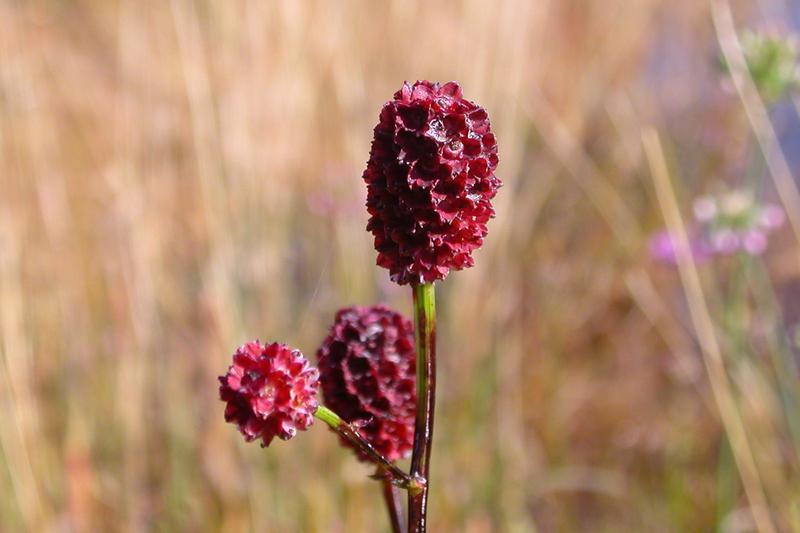
Quick facts
- Watering
- Weekly during dry spells
- Sunlight
- Full sun to partial shade
- Soil
- Moist, moderately fertile loam
- Humans
- Safe
- Cats
- Safe
- Dogs
- Safe
- Height
- 60–120 cm
- Spread
- 45–60 cm
- Spacing
- 45–60 cm apart
About Great Burnet
Great Burnet is a graceful British native perennial with distinctive bottle-brush flowers in deep crimson-purple, held on tall wiry stems above clumps of pinnate foliage. Growing wild in damp meadows and grasslands across the UK, it has been cultivated in cottage gardens for centuries both for ornament and its traditional medicinal uses. UK gardeners value it for its long flowering season from June to September, its wildlife appeal to bees and butterflies, and its ability to naturalise in wildflower meadows. The architectural flower spikes add vertical interest to herbaceous borders and prairie-style plantings.
UK fact: Great Burnet was historically grown in British physic gardens and used to staunch bleeding, reflected in its scientific name Sanguisorba meaning 'blood absorber', and it remains a component of traditional hay meadows across northern England and Scotland.
Watering Great Burnet
Great Burnet prefers consistently moist soil and benefits from regular watering during dry periods, particularly in its first year after planting. Established plants are reasonably drought-tolerant but flower more prolifically with adequate moisture during summer. In heavy clay soils that retain moisture well, watering is rarely needed except during prolonged dry spells. Mulching in spring helps retain soil moisture throughout the growing season.
Sunlight requirements
Great Burnet thrives in full sun but tolerates partial shade, particularly in southern UK gardens where afternoon shade prevents moisture stress. In northern regions, a sunny position encourages the best flowering and strongest stems. Avoid deep shade under trees, which causes weak, floppy growth and reduced flowering.
Soil and feeding
Great Burnet grows best in moisture-retentive but not waterlogged soil, thriving in the heavier loams and clay soils common across much of the UK. It tolerates a wide pH range from slightly acidic to slightly alkaline (pH 6.0-7.5) and performs well in both garden borders and naturalised meadow settings. Improve sandy soils with organic matter to increase moisture retention. Avoid very dry, free-draining soils unless you can provide regular irrigation.
Great Burnet requires minimal feeding and thrives in moderately fertile soil without supplementary fertiliser. A light mulch of garden compost or well-rotted manure in early spring provides sufficient nutrients for healthy growth. Avoid high-nitrogen feeds, which promote lush foliage at the expense of flowers.
Pruning Great Burnet
Deadhead spent flower spikes in late summer to encourage a second flush of blooms, or leave them to develop attractive seedheads for autumn interest and to self-seed. Cut back all foliage to ground level in late autumn or early spring before new growth emerges. Great Burnet can self-seed freely, so remove seedheads before they ripen if you wish to prevent spreading. Divide congested clumps every 3-4 years in spring to maintain vigour.
Propagating Great Burnet
Great Burnet is easily propagated by division in spring or autumn, lifting established clumps and separating them into sections with roots and shoots attached. Seed sowing is also straightforward: sow fresh seed in autumn in pots outdoors, allowing natural cold stratification over winter for spring germination. Alternatively, sow in spring after cold-stratifying seed in the refrigerator for 4-6 weeks. Plants self-seed readily in suitable conditions, and seedlings can be transplanted when large enough to handle.
Common problems
Great Burnet is largely trouble-free with few serious pest or disease problems in UK gardens. Slugs and snails may damage young foliage in spring, particularly in damp conditions, so protect new growth with organic slug pellets or barriers. Powdery mildew can occasionally affect leaves in dry summers with poor air circulation, though this is rarely serious. In very wet, poorly drained soils, crown rot may occur, so ensure adequate drainage when planting. Aphids sometimes colonise flower stems but rarely cause significant damage.
Spot a problem with your plant? Photograph the affected area using the Loam app and it will suggest the most likely cause and treatment.
Safety
- Humans
- Safe
- Cats
- Safe
- Dogs
- Safe
Toxicity information is for general guidance only.
Seasonal care calendar
Monthly care guide for Great Burnet in the UK, based on average conditions.
| Month | Care tasks |
|---|---|
| January | No action needed, plant fully dormant. |
| February | No action needed, plant dormant. |
| March | Cut back old foliage if not done in autumn. Apply mulch around emerging shoots. Divide established clumps if required. |
| April | New foliage emerges. Watch for slug damage on young leaves and protect as needed. Plant out new divisions or potted plants. |
| May | Plants develop rapidly. Water during dry spells. Stake tall varieties if needed in exposed positions. |
| June | Flowering begins. Deadhead early blooms to prolong display. Ensure adequate moisture during dry weather. |
| July | Peak flowering period. Continue deadheading and watering as needed. Enjoy the display and visiting pollinators. |
| August | Flowering continues. Deadhead for second flush or leave seedheads to develop for autumn interest and wildlife. |
| September | Late flowers fade. Collect seed if desired. Allow seedheads to remain for birds and autumn structure. |
| October | Foliage begins to die back. Cut back stems or leave for winter interest. Divide congested clumps if needed. |
| November | Complete cutting back if desired, or leave seedheads for winter structure. Tidy around base of plants. |
| December | No action needed, plant dormant. |
Frequently asked questions
- Does Great Burnet grow well in clay soil?
- Yes, Great Burnet thrives in clay soil and actually prefers the moisture-retentive qualities of heavier soils. It's an excellent choice for clay gardens where many other perennials struggle, requiring no soil improvement and tolerating wet conditions better than most border plants.
- Why is my Great Burnet not flowering well?
- Poor flowering is usually caused by too much shade, insufficient moisture during summer, or overcrowding. The Loam app can help you diagnose the specific issue based on your growing conditions and send timely reminders for watering and division to keep your plants flowering abundantly.
- Can I grow Great Burnet in a wildflower meadow?
- Absolutely. Great Burnet is a native British wildflower that naturalises beautifully in meadow settings, particularly in damper areas. Sow seed in autumn or plant plugs in spring, and it will self-seed to create drifts over time, providing valuable nectar for pollinators from June to September.
Got a question about growing Great Burnet that isn't covered here? Ask the Garden Advisor in the Loam app. It knows your saved plants and local conditions.
Related plants
This page was compiled with AI assistance and reviewed by our team. .