Salvia
Salvia nemorosa
Perennials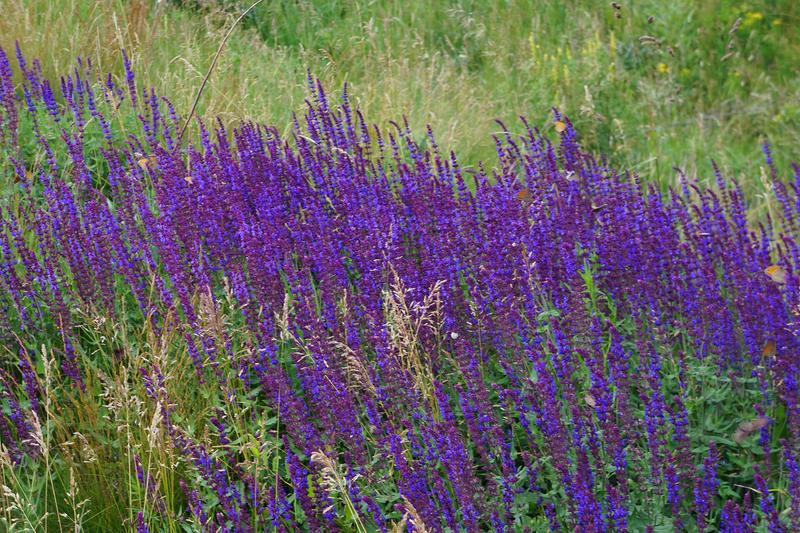
Quick facts
- Watering
- Weekly when establishing, then fortnightly
- Sunlight
- Full sun
- Soil
- Well-drained, moderately fertile
- Humans
- Safe
- Cats
- Safe
- Dogs
- Safe
- Height
- 40–60 cm
- Spread
- 30–45 cm
- Spacing
- 30–40 cm apart
- RHS recognition
- Award of Garden Merit
About Salvia
Salvia nemorosa is a hardy herbaceous perennial native to central Europe and western Asia, prized for its long-lasting spikes of violet-blue flowers from early summer through to autumn. Growing in neat, upright clumps with aromatic foliage, it brings reliable colour and structure to UK borders whilst attracting bees and butterflies throughout the season. British gardeners value this salvia for its drought tolerance once established, low maintenance requirements, and exceptional garden performance in both cottage-style and contemporary planting schemes.
UK fact: Several Salvia nemorosa cultivars hold the RHS Award of Garden Merit, including 'Caradonna' and 'Ostfriesland', recognising their outstanding performance in British gardens and their ability to thrive in the UK's variable climate with minimal intervention.
Watering Salvia
During the first year after planting, water weekly during dry spells, providing approximately 2.5 cm of water each time. Once established, salvia nemorosa requires watering only during prolonged dry periods in summer, typically every two weeks if rainfall is absent. Avoid overhead watering which can encourage fungal diseases; instead, water at the base of the plant in the morning. In typical British summers with regular rainfall, established plants rarely need supplementary watering except during heatwaves.
Sunlight requirements
Plant in a south or west-facing position where it will receive maximum sunlight throughout the day. In the UK, salvias grown in partial shade tend to become leggy with reduced flowering and may be more susceptible to mildew. Avoid planting in the shadow of walls, fences, or larger shrubs that block afternoon sun.
Soil and feeding
Plant in well-drained soil with a pH between 6.5 and 7.5, though salvias tolerate slightly alkaline conditions common in many UK gardens. Heavy clay soils should be improved with horticultural grit or sharp sand to ensure adequate drainage, as waterlogged roots in winter can prove fatal. Avoid overly rich soils which promote soft, leafy growth at the expense of flowers and reduce winter hardiness. Sandy or chalky soils are ideal, requiring no amendment beyond a light mulch of garden compost in spring.
Apply a light dressing of blood, fish and bone or a balanced granular fertiliser in early spring as new growth emerges. Avoid high-nitrogen feeds which promote lush foliage rather than flowers and can make plants less resilient to cold. A single spring application is sufficient for the entire season; established salvias perform well in lean soils without additional feeding.
Pruning Salvia
Deadhead spent flower spikes throughout summer by cutting back to the next set of buds to encourage continuous blooming until autumn. After the first flush of flowers in June or July, shear plants back by one-third to promote a second wave of blooms. In late autumn after flowering finishes, cut back all stems to 5-10 cm above ground level, or leave the seed heads for winter interest and wildlife, then prune hard in February before new growth begins. Remove any dead or damaged stems in spring to maintain a tidy appearance.
Propagating Salvia
Salvia nemorosa is readily propagated from softwood cuttings taken in May or June, which root quickly and produce flowering plants by the following season. Division of established clumps in March or September provides instant results and rejuvenates older plants that have become woody in the centre. Seed-raised plants are variable and named cultivars do not come true from seed, so vegetative propagation is preferred. Cuttings and divisions establish quickly in the UK climate with minimal protection required.
Common problems
Salvia nemorosa is generally trouble-free but may occasionally suffer from powdery mildew in humid conditions or when air circulation is poor, appearing as white powdery patches on leaves. Rosemary beetle and its larvae can feed on foliage, though damage is usually cosmetic rather than serious. Slugs and snails may attack young growth in spring, particularly on newly planted specimens. Leafhoppers occasionally cause pale mottling on leaves but rarely warrant intervention, and plants grown in excessively rich or waterlogged soil may develop root rot or become prone to flopping.
Spot a problem with your plant? Photograph the affected area using the Loam app and it will suggest the most likely cause and treatment.
Safety
- Humans
- Safe
- Cats
- Safe
- Dogs
- Safe
Toxicity information is for general guidance only.
Seasonal care calendar
Monthly care guide for Salvia in the UK, based on average conditions.
| Month | Care tasks |
|---|---|
| January | No action needed; plants are fully dormant with dead stems providing winter structure and wildlife habitat. |
| February | Cut back all dead stems to 5-10 cm above ground level before new growth emerges. Apply a light mulch of garden compost around the base. |
| March | Apply a balanced granular fertiliser as new shoots appear. Divide established clumps if required, replanting divisions immediately. Watch for slug damage on emerging foliage. |
| April | Water newly planted salvias weekly if rainfall is sparse. Stake tall varieties if necessary, though most cultivars are self-supporting. Plant out overwintered cuttings after hardening off. |
| May | Take softwood cuttings from non-flowering shoots. Continue watering young plants regularly. Watch for early signs of powdery mildew and ensure good air circulation. |
| June | Enjoy the first flush of flowers. Deadhead regularly to prolong blooming. Take additional cuttings if required. Water during dry spells, particularly for first-year plants. |
| July | After the main flowering flush, shear plants back by one-third to encourage a second wave of blooms. Continue deadheading. Water established plants fortnightly in dry weather. |
| August | Enjoy the second flush of flowers. Continue deadheading spent blooms. Monitor for rosemary beetle and remove by hand if present. Reduce watering as autumn approaches. |
| September | Flowering continues into early autumn. Divide congested clumps if required. Reduce watering frequency. Allow some seed heads to develop for autumn interest. |
| October | Flowering finishes by mid-month. Either cut back spent stems now or leave standing for winter structure. Collect seed if desired, though named cultivars don't come true. |
| November | Leave seed heads standing for birds and winter interest, or cut back to ground level if preferred. Ensure good drainage around plants before winter. |
| December | No action needed; plants are dormant. Standing stems provide structure in the winter border and shelter for overwintering insects. |
Frequently asked questions
- When should I prune salvia back for best results?
- Prune salvia in late February before new growth begins if you've left stems standing over winter, or cut back in late autumn for immediate tidying. For continuous flowering, shear plants back by one-third after the first flush in June or July to encourage a second wave of blooms in late summer and autumn.
- Why are the leaves on my salvia turning white and powdery?
- This is powdery mildew, a fungal disease encouraged by poor air circulation, overhead watering, or humid conditions. Improve spacing between plants, water at the base rather than overhead, and remove affected leaves. If you're unsure about plant problems or need help diagnosing issues early, the Loam app can identify diseases from photos and provide personalised treatment advice.
- Can I grow salvia from cuttings?
- Yes, salvia propagates easily from softwood cuttings taken in late spring or early summer. Take 8-10cm non-flowering shoots, remove lower leaves, and insert into gritty compost. Keep in a sheltered spot with consistent moisture until rooted in four to six weeks. This is an excellent way to create new plants without purchasing or dividing established clumps.
Got a question about growing Salvia that isn't covered here? Ask the Garden Advisor in the Loam app. It knows your saved plants and local conditions.
Related plants
This page was compiled with AI assistance and reviewed by our team. .