Hakuro-nishiki Willow
Salix integra 'Hakuro-nishiki'
Shrubs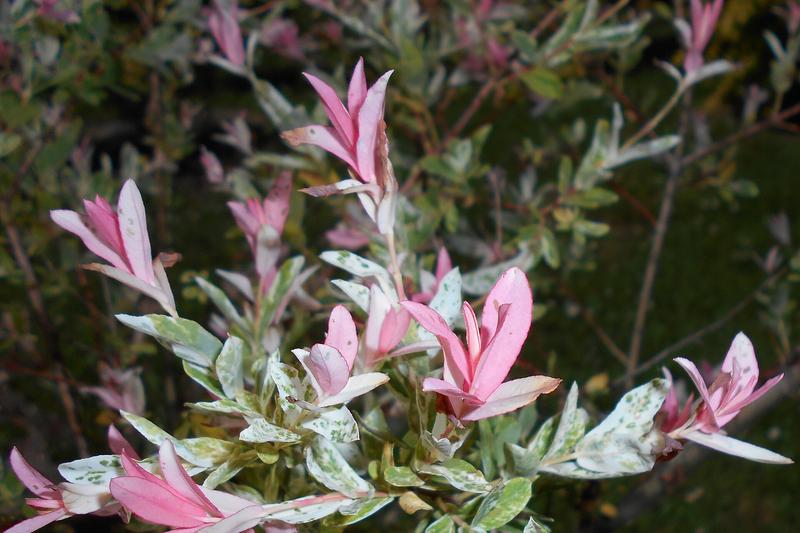
Quick facts
- Watering
- Twice weekly when establishing
- Sunlight
- Full sun to partial shade
- Soil
- Moist, well-drained, fertile
- Humans
- Unknown
- Cats
- Unknown
- Dogs
- Unknown
- Height
- 150–200 cm
- Spread
- 150–200 cm
- Spacing
- 150–180 cm apart
- RHS recognition
- Award of Garden Merit
About Hakuro-nishiki Willow
Hakuro-nishiki Willow is a deciduous shrub prized for its striking variegated foliage in shades of pink, white, and green, particularly vibrant on new spring growth. Originating from Japan, this compact willow cultivar has become a favourite in British gardens for adding year-round colour and structure to borders and containers. The slender stems and delicate leaves create an elegant, fountain-like habit that works beautifully in both formal and cottage garden settings. UK gardeners particularly value its tolerance of damp conditions and ability to thrive in our unpredictable climate.
UK fact: Hakuro-nishiki Willow holds the RHS Award of Garden Merit and performs exceptionally well in the UK's maritime climate, with the variegation becoming most intense during our cool spring months when new growth emerges.
Watering Hakuro-nishiki Willow
As a willow, this shrub appreciates consistent moisture and should never be allowed to dry out completely, particularly during establishment. Water twice weekly during the first growing season and during dry spells, ensuring the root zone remains moist but not waterlogged. Once established, it tolerates brief periods of drought but performs best with regular watering during the UK's drier summer months. Container-grown specimens require more frequent watering, potentially daily during hot weather.
Sunlight requirements
Hakuro-nishiki Willow produces its best variegation in full sun, where the pink and white tones are most pronounced. In the UK, a position receiving at least 4-6 hours of direct sunlight is ideal, though it will tolerate partial shade, particularly in southern regions. Avoid deep shade as this reduces the intensity of the variegation and can lead to predominantly green foliage.
Soil and feeding
Hakuro-nishiki Willow thrives in fertile, moisture-retentive soil that doesn't dry out, making it ideal for heavier clay soils common across much of the UK. It tolerates a wide pH range from slightly acidic to slightly alkaline (pH 5.5-7.5), though neutral soil is optimal. Improve sandy soils with plenty of organic matter to increase water retention, and ensure good drainage to prevent waterlogging in winter, which can lead to root rot despite the plant's love of moisture.
Apply a balanced slow-release fertiliser in early spring as new growth emerges to encourage vibrant variegation. A second feed in mid-summer supports continued growth and foliage colour throughout the season. Avoid high-nitrogen feeds which can reduce variegation intensity.
Pruning Hakuro-nishiki Willow
Hard prune in late winter or early spring (February-March) before new growth begins to maintain compact shape and encourage the most colourful new stems. Cut all stems back to within 5-10cm of the base or to a low framework of branches for a small standard form. Regular annual pruning is essential as the best variegation appears on young growth, and unpruned plants become leggy with reduced colour intensity.
Propagating Hakuro-nishiki Willow
Hakuro-nishiki Willow propagates readily from hardwood cuttings taken in late autumn or winter (November-February). Take 20-30cm lengths of current season's growth, insert into moist compost or directly into prepared ground, and they will root by spring. Softwood cuttings can also be taken in early summer, though these require more attention to prevent wilting. The high success rate makes this one of the easiest shrubs to propagate, allowing UK gardeners to create multiple plants from a single specimen.
Common problems
Aphids and caterpillars are the most common pests, often appearing on new spring growth and causing leaf distortion or damage. Willow anthracnose and rust can affect foliage in damp UK summers, causing brown spots and premature leaf drop, though these rarely threaten the plant's overall health. Reversion to plain green shoots occasionally occurs and these should be pruned out immediately to prevent them overtaking the variegated growth. Waterlogging in heavy winter rains can cause root problems, so ensure adequate drainage despite the plant's moisture requirements.
Spot a problem with your plant? Photograph the affected area using the Loam app and it will suggest the most likely cause and treatment.
Safety
- Humans
-
Unknown
Willow bark contains salicin, which may cause mild stomach upset if ingested in quantity, though Hakuro-nishiki is primarily ornamental.
- Cats
-
Unknown
Not commonly reported as toxic to cats, though ingestion of plant material may cause mild gastrointestinal upset.
- Dogs
-
Unknown
Not commonly reported as toxic to dogs, though ingestion of plant material may cause mild gastrointestinal upset.
Toxicity information is for general guidance only. If a person or pet has been exposed to this plant and you are concerned, seek advice from a medical professional or vet.
Seasonal care calendar
Monthly care guide for Hakuro-nishiki Willow in the UK, based on average conditions.
| Month | Care tasks |
|---|---|
| January | Check for storm damage and remove any broken branches. Plan pruning for late winter. |
| February | Hard prune back to framework or near ground level to encourage colourful new growth. Apply slow-release fertiliser. |
| March | Watch for new pink and white shoots emerging. Water if conditions are dry. Take hardwood cuttings if not done earlier. |
| April | Monitor for aphids on tender new growth and treat if necessary. Ensure consistent watering as growth accelerates. |
| May | Enjoy peak variegation display. Water regularly, especially container plants. Remove any plain green shoots immediately. |
| June | Apply second feed to maintain vigour. Take softwood cuttings if propagating. Continue regular watering. |
| July | Water frequently during dry spells, particularly containers. Check for caterpillars and remove by hand. |
| August | Maintain watering regime. Variegation may fade slightly in heat but will intensify again in autumn. |
| September | Reduce watering frequency as growth slows. Remove any diseased or damaged foliage. |
| October | Leaves begin to drop. Clear fallen foliage to prevent disease overwintering. Reduce watering further. |
| November | Take hardwood cuttings for propagation. Plant is now dormant. Minimal watering required. |
| December | No action needed. Bare stems may show attractive winter colour in some specimens. |
Frequently asked questions
- When should I prune Hakuro-nishiki Willow?
- Prune hard in late winter (February-March) before new growth begins, cutting all stems back to within 5-10cm of the base. This annual hard pruning is essential for maintaining the most vibrant pink and white variegation, as the best colour appears on young spring growth.
- Why is my Hakuro-nishiki Willow turning green?
- Plain green shoots are natural reversions that must be pruned out immediately at their base to prevent them overtaking variegated growth. Insufficient sunlight can also reduce variegation intensity. The Loam app can help you track pruning schedules and diagnose foliage problems with personalised care reminders.
- Can Hakuro-nishiki Willow be grown in a container?
- Yes, it's excellent for large containers (minimum 45cm diameter) and can be trained as a small standard. Container plants require more frequent watering, potentially daily in summer, and benefit from annual repotting or top-dressing with fresh compost and slow-release fertiliser each spring.
Got a question about growing Hakuro-nishiki Willow that isn't covered here? Ask the Garden Advisor in the Loam app. It knows your saved plants and local conditions.
Related plants
This page was compiled with AI assistance and reviewed by our team. .