Forsythia
Forsythia × intermedia
Shrubs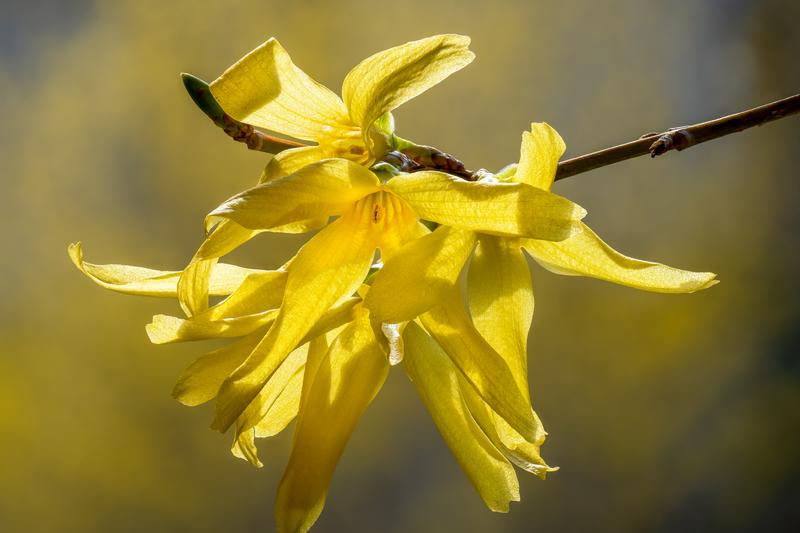
Quick facts
- Watering
- Weekly during establishment
- Sunlight
- Full sun to partial shade
- Soil
- Well-drained, moderately fertile
- Humans
- Safe
- Cats
- Safe
- Dogs
- Safe
- Height
- 200–300 cm
- Spread
- 150–250 cm
- Spacing
- 150–200 cm apart
- RHS recognition
- Award of Garden Merit
About Forsythia
Forsythia is a deciduous shrub celebrated for its brilliant golden-yellow flowers that appear on bare branches in early spring, often heralding the end of winter. Native to East Asia, this hybrid was introduced to British gardens in the 19th century and has become a quintessential cottage garden plant. UK gardeners prize it for its reliability, vigour, and ability to provide much-needed colour when little else is in bloom. The arching branches create an attractive fountain-like shape that works well as a specimen plant, hedge, or mixed border backdrop.
UK fact: Forsythia × intermedia 'Lynwood Variety' holds the RHS Award of Garden Merit and was raised in Northern Ireland in 1935, becoming one of the most widely planted forsythias in British gardens due to its profuse flowering and compact habit.
Watering Forsythia
Newly planted forsythias require consistent moisture, particularly during dry spells in spring and summer. Water deeply once or twice weekly during the first year, ensuring the root zone is thoroughly soaked rather than surface-watered. Established plants rarely need supplementary watering in the UK climate, as they tolerate dry periods well once their roots have spread. During prolonged summer droughts, an occasional deep soak will maintain vigour and support next year's flower bud development.
Sunlight requirements
Plant in a position receiving at least six hours of direct sunlight daily for the best floral display. In the UK, south- or west-facing aspects are ideal, though forsythia will adapt to east-facing positions where it receives morning sun. Avoid deep shade under trees, as this significantly reduces flowering and can lead to leggy, weak growth.
Soil and feeding
This adaptable shrub grows well in any reasonably fertile, well-drained soil with a pH between 6.0 and 8.0, making it suitable for most UK gardens. It tolerates heavy clay if drainage is improved with organic matter, and also performs well in lighter, sandy soils. Avoid waterlogged conditions, which can lead to root rot and poor growth. Incorporate well-rotted compost or manure at planting time to give young plants a good start, though forsythia is not particularly demanding once established.
Feed established forsythias in late February or early March with a slow-release balanced fertiliser such as blood, fish and bone or a general shrub feed. A light mulch of well-rotted compost or manure around the base also provides nutrients and improves soil structure. Avoid feeding after mid-summer, as this encourages soft growth vulnerable to frost damage.
Pruning Forsythia
The key to maintaining a floriferous forsythia is to prune at the correct time—immediately after the flowers fade in late April or May. Forsythia blooms on the previous year's wood, so pruning later in the season or in winter removes next spring's flower buds. Remove up to one-third of the oldest, thickest stems at ground level each year to stimulate strong new shoots that will flower abundantly the following spring. Lightly trim back flowered shoots to a strong bud or side branch to maintain shape. Neglected, overgrown specimens can be renovated by hard pruning all stems to 30–60 cm above ground level, though this sacrifices one year's flowering.
Propagating Forsythia
Semi-ripe cuttings taken in July or August root readily in a mix of multipurpose compost and sharp sand. Hardwood cuttings taken in November or December can be inserted directly into a sheltered border or cold frame. Layering is perhaps the easiest method: simply peg a low-growing branch to the soil in spring, and it will root by the following autumn, ready to be severed and transplanted. Division of established clumps is also possible but more disruptive to the parent plant.
Common problems
Forsythia is generally trouble-free but can occasionally suffer from forsythia gall, a bacterial disease causing rough, warty growths on stems that should be pruned out and destroyed. Aphids may colonise soft new growth in spring, though these rarely cause lasting damage and can be controlled with insecticidal soap or by encouraging natural predators. Honey fungus can affect forsythia, particularly in gardens with a history of this disease, causing dieback and eventual death; affected plants should be removed. Poor flowering is usually due to incorrect pruning timing, excessive shade, or late spring frosts damaging flower buds.
Spot a problem with your plant? Photograph the affected area using the Loam app and it will suggest the most likely cause and treatment.
Safety
- Humans
- Safe
- Cats
- Safe
- Dogs
- Safe
Toxicity information is for general guidance only.
Seasonal care calendar
Monthly care guide for Forsythia in the UK, based on average conditions.
| Month | Care tasks |
|---|---|
| January | No action needed. Flower buds are visible on bare stems, swelling as the month progresses. |
| February | Apply a balanced fertiliser such as blood, fish and bone around the base. Mulch with well-rotted compost if not done in autumn. |
| March | Enjoy the spectacular golden-yellow flowers appearing on bare branches. Plant new specimens while dormant if soil conditions allow. |
| April | Prune immediately after flowering finishes, removing up to one-third of the oldest stems at ground level. Take semi-ripe cuttings if desired. |
| May | Complete any pruning by mid-month. Water newly planted specimens regularly. Peg down low branches for layering if propagating. |
| June | Monitor for aphids on new growth and treat if necessary. Continue watering young plants during dry spells. |
| July | Take semi-ripe cuttings from healthy, non-flowering shoots. Water established plants during prolonged drought to support next year's flower buds. |
| August | Continue taking semi-ripe cuttings if needed. Ensure young plants receive adequate water during dry weather. |
| September | Reduce watering as growth slows. Check layered stems for rooting and sever from parent plant if well-rooted. |
| October | Plant new forsythias or transplant rooted layers. Foliage turns yellow and falls, revealing next spring's flower buds on bare stems. |
| November | Take hardwood cuttings and insert into a sheltered border or cold frame. Continue planting bare-root specimens. |
| December | No action needed. Plant is fully dormant. Avoid pruning, as this removes flower buds for spring display. |
Frequently asked questions
- When should I prune forsythia?
- Prune forsythia immediately after flowering finishes in late April or May. Remove up to one-third of the oldest stems at ground level and lightly trim back flowered shoots to maintain shape. Never prune in autumn, winter, or early spring, as this removes the flower buds that form on the previous season's growth.
- What are the warty growths on my forsythia stems?
- These are likely forsythia gall, caused by the bacterium Rhodococcus fascians. Prune out and destroy affected stems, cutting back to healthy wood below the galls. Sterilise secateurs between cuts with methylated spirits or a dilute bleach solution to prevent spread. If you're unsure about identifying plant problems or need personalised advice on treatment, the Loam app can help diagnose issues from photos and provide tailored care guidance.
- How do I take cuttings from forsythia?
- Forsythia is easy to propagate from hardwood cuttings taken in late autumn or winter (November to February). Cut healthy, pencil-thick stems about 20–30 cm long, trim just below a bud at the base, and insert two-thirds of their length into a slit trench filled with sharp sand in a sheltered spot outdoors. Cuttings should root by the following autumn and can be transplanted to their final positions. Alternatively, take softwood cuttings in early summer for faster results.
Got a question about growing Forsythia that isn't covered here? Ask the Garden Advisor in the Loam app. It knows your saved plants and local conditions.
Related plants
This page was compiled with AI assistance and reviewed by our team. .