Kerria
Kerria japonica
Shrubs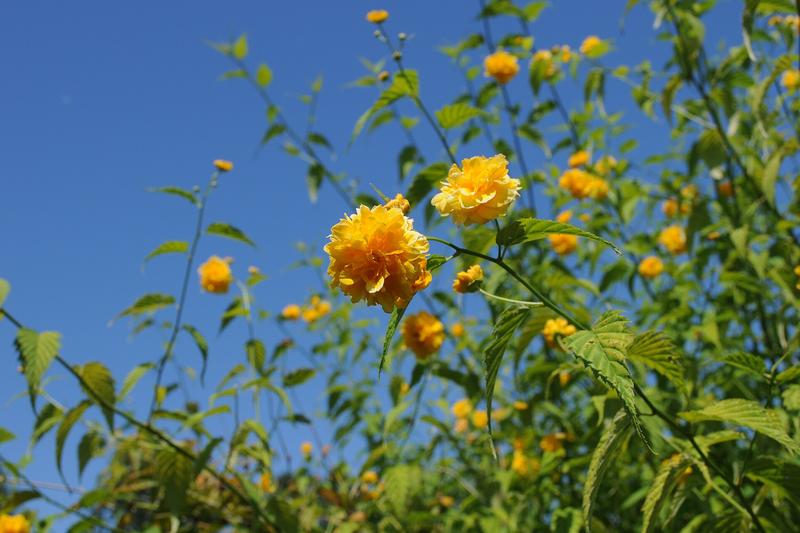
Quick facts
- Watering
- Weekly during establishment
- Sunlight
- Partial shade to full sun
- Soil
- Well-drained, moderately fertile
- Humans
- Safe
- Cats
- Safe
- Dogs
- Safe
- Height
- 150–200 cm
- Spread
- 150–250 cm
- Spacing
- 150–200 cm apart
- RHS recognition
- Award of Garden Merit
About Kerria
Kerria is a deciduous spring-flowering shrub native to China and Japan, prized for its cheerful golden-yellow flowers that brighten British gardens from April to May. The arching green stems remain attractive throughout winter, providing year-round structure and interest. UK gardeners value this hardy, unfussy shrub for shaded borders and woodland gardens where its vibrant blooms illuminate darker corners. The double-flowered form 'Pleniflora' is particularly popular in British cottage gardens.
UK fact: Kerria japonica 'Pleniflora' holds the RHS Award of Garden Merit and has been a staple of British gardens since Victorian times, when it was widely planted in shrubberies and against north-facing walls where few other flowering shrubs would thrive.
Watering Kerria
Newly planted kerria requires consistent moisture during its first year, with weekly watering during dry spells from April to September. Once established, this shrub is remarkably drought-tolerant and typically requires watering only during prolonged dry periods in summer. In typical UK conditions with regular rainfall, mature plants rarely need supplementary watering except during extended droughts. Avoid waterlogging, particularly in heavy clay soils, as kerria prefers good drainage.
Sunlight requirements
This adaptable shrub performs best in partial shade, particularly in positions receiving morning sun and afternoon shade. In the UK, it tolerates full sun in northern regions but may benefit from some shade in hotter southern counties to prevent flower fading. Kerria is particularly valuable for north-facing walls and fences where its bright flowers provide welcome colour in spring.
Soil and feeding
This unfussy shrub tolerates a wide range of soil conditions, from sandy loam to heavy clay, provided drainage is adequate. It thrives in moderately fertile soil enriched with organic matter such as garden compost or well-rotted manure at planting time. Kerria tolerates a pH range from slightly acidic to slightly alkaline (pH 6.0-7.5), making it suitable for most UK gardens. In very heavy clay, improve drainage by incorporating grit and organic matter, or plant on a slight mound to prevent waterlogging.
Feed kerria in March with a general-purpose balanced fertiliser such as blood, fish and bone or Growmore, scattering a handful around the base of established plants. Apply a 5-7cm mulch of garden compost or well-rotted manure in spring, keeping it clear of the stems to prevent rot. Avoid high-nitrogen feeds which promote excessive leafy growth at the expense of flowers.
Pruning Kerria
Kerria flowers on the previous year's wood, so prune immediately after flowering finishes in late May or early June. Cut flowered stems back to ground level or to a strong new shoot lower down, removing about one-third of the oldest stems annually to encourage vigorous new growth. This prevents the shrub becoming congested and maintains its graceful arching habit. Remove any dead, damaged or crossing branches, and thin out weak growth to improve air circulation and reduce disease risk.
Propagating Kerria
The easiest propagation method is to detach rooted suckers that appear around the base of established plants in autumn or early spring, replanting them immediately at the same depth. Alternatively, take 10-15cm semi-ripe cuttings in July or August, removing lower leaves and inserting into gritty compost in a cold frame. Hardwood cuttings taken in November and inserted into a sheltered border also root reliably. Division of established clumps in autumn is highly successful for this suckering shrub.
Common problems
Kerria is generally trouble-free in UK gardens, with few serious pest or disease problems. Occasionally, aphids may colonise young shoot tips in spring, causing distorted growth, but these are easily controlled by squashing or spraying with organic insecticidal soap. In shaded, humid positions with poor air circulation, powdery mildew can develop on foliage in late summer, appearing as white powdery patches; improve air flow through pruning and avoid overhead watering. Suckers can become invasive in some gardens, spreading beyond their allotted space, so remove unwanted shoots promptly by digging them out at the roots.
Spot a problem with your plant? Photograph the affected area using the Loam app and it will suggest the most likely cause and treatment.
Safety
- Humans
- Safe
- Cats
- Safe
- Dogs
- Safe
Toxicity information is for general guidance only.
Seasonal care calendar
Monthly care guide for Kerria in the UK, based on average conditions.
| Month | Care tasks |
|---|---|
| January | No action needed. Enjoy the bright green stems which provide winter interest in the dormant garden. |
| February | Check plants for winter damage and remove any broken or dead stems. Prepare planting sites for bare-root specimens. |
| March | Apply balanced fertiliser around the base and mulch with organic matter. Plant container-grown specimens and divide established clumps. |
| April | Enjoy the main flowering display. Water newly planted specimens weekly during dry spells and watch for aphids on new growth. |
| May | Flowering continues into early May. Begin pruning as flowers fade, removing spent blooms and oldest stems to ground level. |
| June | Complete post-flowering pruning by mid-month. Water during dry periods and remove unwanted suckers spreading beyond the plant's boundary. |
| July | Take semi-ripe cuttings for propagation. Continue watering young plants during dry weather and monitor for powdery mildew in humid conditions. |
| August | Maintain watering during prolonged dry spells. Remove any mildewed foliage and ensure good air circulation around plants. |
| September | Reduce watering as autumn rains return. Prepare planting sites for autumn planting and identify suckers suitable for division. |
| October | Plant new specimens and divide established clumps. Detach and replant rooted suckers. Clear fallen leaves from around the base. |
| November | Take hardwood cuttings and insert into sheltered borders. Complete autumn planting and apply mulch to newly planted specimens. |
| December | No action needed. The bright green stems provide valuable winter colour and structure in the dormant border. |
Frequently asked questions
- When should I prune kerria?
- Prune kerria immediately after flowering in late May or June. This timing is crucial because kerria flowers on the previous year's wood, so pruning in winter or early spring removes the flowering stems. Cut out the oldest stems at ground level and trim back flowered shoots to strong new growth. Remove any dead or damaged wood at the same time.
- Why are my kerria's stems dying back?
- Dieback is usually caused by coral spot fungus, which appears as pink or orange pustules on dead wood. Prune out affected stems to healthy wood, cutting well below any discolouration, and burn or bin the prunings. Improve air circulation through the plant and avoid overcrowding to prevent recurrence. If you're unsure about identifying the problem or need help diagnosing other issues, the Loam app can analyse photos of your plant and provide personalised treatment advice.
- How do I propagate kerria?
- Kerria is easy to propagate by division or hardwood cuttings. The simplest method is dividing suckers in autumn or spring—dig up rooted suckers with a spade and replant immediately. Alternatively, take 20-30cm hardwood cuttings in November, insert them into a trench of sandy soil outdoors, and they'll root by spring. Softwood cuttings can also be taken in early summer and rooted in pots with a cover to maintain humidity.
Got a question about growing Kerria that isn't covered here? Ask the Garden Advisor in the Loam app. It knows your saved plants and local conditions.
Related plants
This page was compiled with AI assistance and reviewed by our team. .