Rhipsalis
Rhipsalis baccifera
Houseplants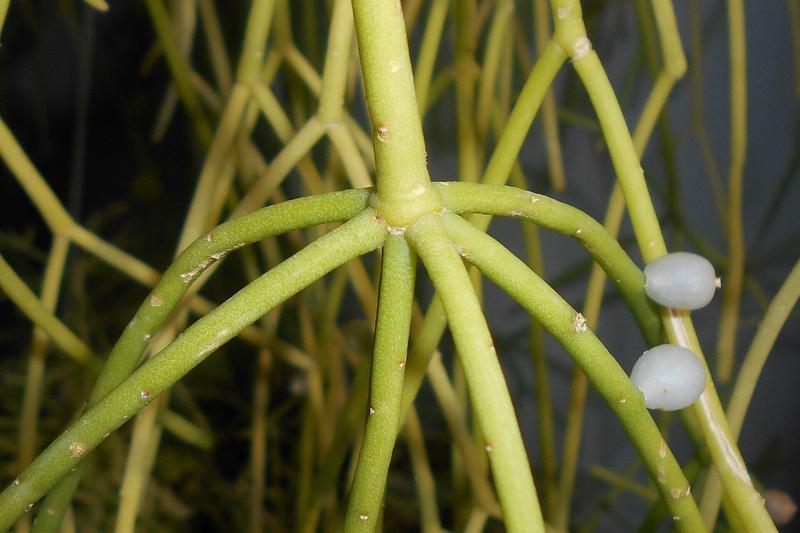
Quick facts
- Watering
- Weekly in summer, fortnightly in winter
- Sunlight
- Bright indirect light
- Soil
- Well-drained, peat-free cactus compost
- Humans
- Safe
- Cats
- Safe
- Dogs
- Safe
- Height
- 30–90 cm
- Spread
- 30–60 cm
- Spacing
- 0 cm apart
About Rhipsalis
Rhipsalis baccifera is a distinctive epiphytic cactus with cascading, pencil-thin green stems that create an elegant trailing effect. Native to tropical rainforests of Central and South America, it is the only cactus species naturally occurring in the Old World, found in parts of Africa and Sri Lanka. UK gardeners prize it as an easy-care houseplant that thrives in the lower light levels typical of British homes, making it ideal for bathrooms and north-facing rooms. Its delicate white berries, which resemble mistletoe, add seasonal interest and give rise to its common American name.
UK fact: Rhipsalis thrives particularly well in British bathrooms, where the naturally higher humidity from showers mimics its native rainforest environment without requiring additional misting or humidifiers.
Watering Rhipsalis
Water when the top 2-3 cm of compost feels dry, typically weekly during the growing season and fortnightly in winter when growth slows. Unlike desert cacti, Rhipsalis prefers consistent moisture and should never dry out completely, though it is sensitive to waterlogging. Use tepid water to avoid shocking the roots, and ensure excess water drains freely from the pot. In centrally heated UK homes during winter, check moisture levels regularly as radiators can dry the air and compost more quickly than expected.
Sunlight requirements
Rhipsalis prefers bright, indirect light and will scorch in direct sun, making it perfect for north or east-facing windowsills in UK homes. Avoid south-facing windows unless filtered by net curtains, as the intense summer sun can damage the delicate stems. It tolerates lower light levels better than most cacti, though growth may slow in very dim corners.
Soil and feeding
Use a specialist cactus and succulent compost mixed with orchid bark or perlite to ensure excellent drainage and aeration. A peat-free mix with added grit or pumice works well, mimicking the epiphytic growing conditions of its natural habitat. The compost should be slightly acidic to neutral, with a pH of 5.5-6.5. Repot every 2-3 years in spring, using a pot only slightly larger than the previous one, as Rhipsalis prefers being slightly pot-bound.
Feed monthly from April to September with a diluted cactus fertiliser at half the recommended strength. Avoid feeding during autumn and winter when the plant is resting, as this can cause weak, leggy growth in low light conditions.
Pruning Rhipsalis
Prune lightly in spring to maintain shape and encourage bushier growth, cutting stems back to a joint or branching point. Remove any dead, damaged, or yellowing stems throughout the year to maintain plant health. Rhipsalis responds well to pruning and will branch from cut points, creating a fuller appearance over time.
Propagating Rhipsalis
Rhipsalis propagates easily from stem cuttings taken in spring or summer, making it ideal for sharing with fellow gardeners. Cut 10-15 cm sections of healthy stem, allow the cut ends to callus over for 24 hours, then insert into moist cactus compost or perlite. Keep in a warm spot with bright, indirect light and maintain light moisture until roots develop in 3-4 weeks. Alternatively, stems that touch the compost in the parent pot often root naturally and can be separated once established.
Common problems
Rhipsalis is generally pest-free but can occasionally suffer from mealybugs or scale insects, particularly in warm, dry conditions typical of centrally heated UK homes. Overwatering is the most common problem, leading to root rot and mushy, yellowing stems; always ensure the compost has dried slightly between waterings. Stems may turn reddish or purple when exposed to too much direct sun, indicating stress and the need for shadier placement. In very dry air, stem tips may shrivel, which can be remedied by increasing humidity through grouping plants together or placing on a pebble tray.
Spot a problem with your plant? Photograph the affected area using the Loam app and it will suggest the most likely cause and treatment.
Safety
- Humans
- Safe
- Cats
- Safe
- Dogs
- Safe
Toxicity information is for general guidance only.
Seasonal care calendar
Monthly care guide for Rhipsalis in the UK, based on average conditions.
| Month | Care tasks |
|---|---|
| January | Reduce watering to fortnightly. Keep in warm room away from cold draughts and windows. |
| February | Continue minimal watering. Check for pests in dry, heated indoor conditions. |
| March | Begin increasing watering frequency as light levels improve. Prune to shape if needed. |
| April | Resume weekly watering and begin monthly feeding. Repot if rootbound. |
| May | Water weekly and feed monthly. Take stem cuttings for propagation. |
| June | Maintain regular watering and feeding. Watch for small white flowers appearing. |
| July | Continue weekly watering in warm weather. Ensure not in direct sun during hot spells. |
| August | Water weekly and feed monthly. Take final cuttings if desired. |
| September | Reduce feeding to fortnightly. White berries may appear following summer flowers. |
| October | Stop feeding. Begin reducing watering frequency as growth slows. |
| November | Water fortnightly only. Ensure adequate warmth as heating comes on. |
| December | Minimal watering required. Keep away from cold windows and draughts. |
Frequently asked questions
- Why is my Rhipsalis turning yellow and mushy?
- Yellowing, mushy stems indicate overwatering and possible root rot. Allow the compost to dry out more between waterings, ensure the pot has drainage holes, and reduce watering frequency to fortnightly in winter. Remove any affected stems and check the roots for black, soft sections that should be trimmed away before repotting in fresh, well-draining compost.
- How do I know when my Rhipsalis needs watering?
- Check the top 2-3 cm of compost with your finger; water when it feels dry to the touch. The Loam app can send personalised watering reminders based on your home conditions, pot size, and the season, taking the guesswork out of caring for your Rhipsalis and preventing both under and overwatering.
- Can Rhipsalis survive in a bathroom with no window?
- While Rhipsalis tolerates lower light better than most cacti and loves bathroom humidity, it still needs some natural light to thrive. A windowless bathroom with only artificial light will result in weak, etiolated growth. Consider a bathroom with a frosted window or place it in a brighter room and move it to the bathroom occasionally for humidity boosts.
Got a question about growing Rhipsalis that isn't covered here? Ask the Garden Advisor in the Loam app. It knows your saved plants and local conditions.
Related plants
This page was compiled with AI assistance and reviewed by our team. .