Air Plant
Tillandsia
Houseplants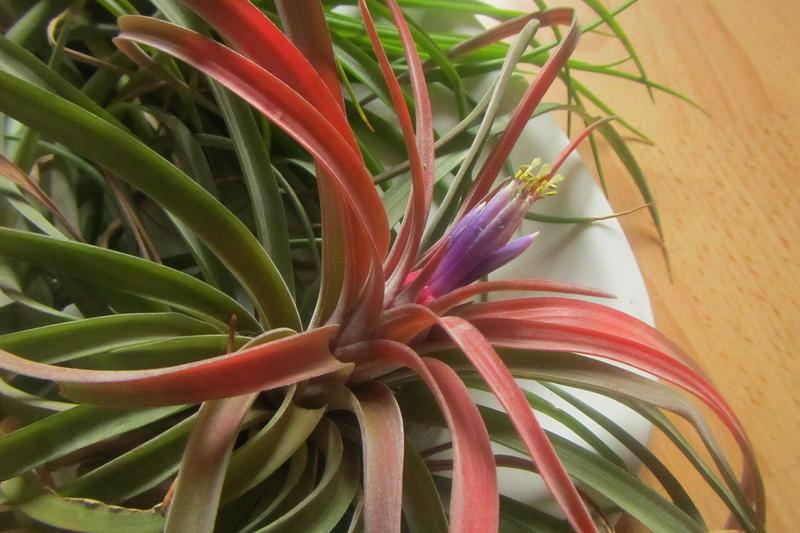
Quick facts
- Watering
- Mist 2–3 times weekly
- Sunlight
- Bright indirect light
- Soil
- No soil required
- Humans
- Safe
- Cats
- Safe
- Dogs
- Safe
- Height
- 5–35 cm
- Spread
- 5–30 cm
- Spacing
- 10–15 cm apart
About Air Plant
Air plants are extraordinary epiphytic houseplants native to the forests, mountains and deserts of Central and South America, prized for their ability to grow without soil. These architectural plants absorb water and nutrients through their silvery leaves, making them ideal for creative displays in UK homes. British gardeners favour them for terrariums, living walls and minimalist arrangements, where their sculptural rosettes and occasional vibrant blooms add year-round interest. Their low-maintenance nature and compact size make them perfect for small spaces, bathrooms and offices throughout the UK.
UK fact: Air plants became fashionable in British interior design during the 2010s, with the RHS Chelsea Flower Show featuring innovative Tillandsia displays that sparked a nationwide trend for soil-free gardening and geometric plant holders in urban homes.
Watering Air Plant
Water air plants by misting generously with room-temperature rainwater or filtered water 2–3 times weekly, ensuring leaves are thoroughly dampened. Alternatively, submerge the entire plant in water for 20–30 minutes once weekly, then shake vigorously and place upside down to drain completely—standing water in the crown causes fatal rot. In centrally heated UK homes during winter, increase misting frequency to counter dry air, whilst reducing watering in cooler, damper months. Always water in the morning so plants dry before nightfall, mimicking their natural habitat where dew evaporates quickly.
Sunlight requirements
Position your air plant within 1–2 metres of an east or north-facing window in UK homes, where it receives plenty of ambient light without harsh rays. South-facing windowsills are too intense unless filtered by sheer curtains, whilst west-facing aspects work well if shaded during afternoon sun. In darker British winter months, consider supplementing with grow lights to maintain healthy growth and encourage flowering.
Soil and feeding
Tillandsia species have evolved to grow on tree branches, rocks and other surfaces in their native habitats, making them completely soil-free houseplants. Mount them on driftwood, cork bark, shells or decorative holders, or simply display in glass terrariums and hanging globes. Never plant in potting compost or allow roots to sit in any growing medium, as this causes rot. The silvery trichomes covering their leaves function as both water-absorbing structures and protective coatings, with pH considerations irrelevant to their care.
Apply a specialist bromeliad or orchid fertiliser diluted to quarter strength once monthly from March through September to encourage healthy growth and flowering. Add the diluted feed to misting water or soaking baths, ensuring even coverage across all leaves. Avoid feeding during autumn and winter when growth naturally slows in response to reduced light levels in UK homes.
Pruning Air Plant
Air plants require minimal pruning, with the main task being removal of dried flower stalks once blooms fade, cutting cleanly at the base with sharp scissors. Gently peel away any brown, crispy or damaged leaves by pulling downwards from the base—healthy leaves resist removal whilst dead ones detach easily. After flowering, the mother plant will produce offsets (pups) around its base; leave these attached until they reach one-third the parent's size before carefully twisting them off to propagate. Regular grooming prevents debris accumulation and improves air circulation around the plant's centre.
Propagating Air Plant
Tillandsia reproduces vegetatively through pups that emerge from the mother plant's base following its bloom cycle, typically producing 2–8 offsets depending on species and growing conditions. Allow pups to remain attached until they develop their own root systems and reach at least one-third the parent's size—usually 4–6 months—as premature separation reduces survival rates. Gently twist or cut pups away from the mother plant using clean, sharp scissors, ensuring each offset has a complete base. The mother plant will gradually decline after producing pups, but the offsets will mature into flowering plants within 1–3 years under proper UK indoor conditions.
Common problems
Air plants are generally pest-free in UK homes but occasionally suffer from scale insects or mealybugs, which appear as white cottony masses or brown bumps on leaves and should be removed with cotton buds dipped in diluted methylated spirits. Overwatering or poor air circulation causes basal rot, the most common killer, characterised by blackening at the plant's centre and a musty odour—prevention through proper drying is essential as rot is usually fatal. Brown, crispy leaf tips indicate underwatering or low humidity, common in centrally heated British homes during winter, whilst pale, elongated growth suggests insufficient light. Failure to bloom often results from inadequate feeding or light levels, though some species naturally take several years to reach flowering maturity.
Spot a problem with your plant? Photograph the affected area using the Loam app and it will suggest the most likely cause and treatment.
Safety
- Humans
- Safe
- Cats
- Safe
- Dogs
- Safe
Toxicity information is for general guidance only.
Seasonal care calendar
Monthly care guide for Air Plant in the UK, based on average conditions.
| Month | Care tasks |
|---|---|
| January | Reduce watering frequency due to lower light levels and cooler temperatures. Mist lightly once or twice weekly rather than soaking. |
| February | Continue reduced winter watering schedule. Check for adequate humidity in centrally heated rooms and increase misting if leaf tips brown. |
| March | Gradually increase watering as daylight hours lengthen. Begin monthly feeding with diluted fertiliser. Check for emerging pups on plants that flowered last year. |
| April | Resume normal watering schedule with weekly soaking or 2–3 mistings. Feed monthly. Separate any pups that have reached suitable size. |
| May | Maintain regular watering and monthly feeding. Watch for flower spikes developing on mature plants. Ensure good air circulation as temperatures rise. |
| June | Continue weekly soaking and monthly feeding. Enjoy blooms on flowering specimens. Protect from direct sun through south-facing windows. |
| July | Increase misting frequency during hot spells to maintain humidity. Feed monthly. Remove spent flower spikes cleanly at the base. |
| August | Maintain regular watering and feeding schedule. Monitor for pup development on plants that have finished flowering. Ensure adequate ventilation. |
| September | Continue normal care routine. Give final feed of the growing season mid-month. Check plants for any pest issues before autumn. |
| October | Begin reducing watering frequency as light levels drop. Stop feeding until spring. Groom away any dead or damaged leaves. |
| November | Water sparingly, allowing plants to dry thoroughly between mistings. Monitor humidity levels as central heating begins. No feeding required. |
| December | Maintain minimal winter watering schedule. Keep away from cold draughts and radiators. Mist lightly 1–2 times weekly only. |
Frequently asked questions
- How often should I water my air plant in winter?
- During UK winters, reduce watering frequency as lower light levels slow growth. Mist 3–4 times weekly in centrally heated homes, or soak for 30 minutes once weekly, ensuring complete drying within 4 hours to prevent rot. Adjust based on your home's humidity—bathrooms may need less frequent watering than dry living rooms.
- How can I tell if my air plant is healthy or struggling?
- Healthy air plants display compact rosettes with silvery-green leaves and firm texture. Warning signs include brown crispy tips (underwatering), soft darkened bases (overwatering), pale elongated growth (insufficient light), or curling leaves (low humidity). The Loam app can help diagnose specific problems through photo analysis and provides personalised care reminders based on your home conditions.
- When should I separate air plant pups from the mother plant?
- Wait until pups reach one-third the size of the mother plant before separation, typically 3–6 months after appearing. Gently twist or cut pups away with a clean, sharp blade at the base. You can also leave them attached to form attractive clumps. Separated pups require the same care as adults and will flower in 1–3 years depending on species.
Got a question about growing Air Plant that isn't covered here? Ask the Garden Advisor in the Loam app. It knows your saved plants and local conditions.
Related plants
This page was compiled with AI assistance and reviewed by our team. .