Hoya
Hoya carnosa
Houseplants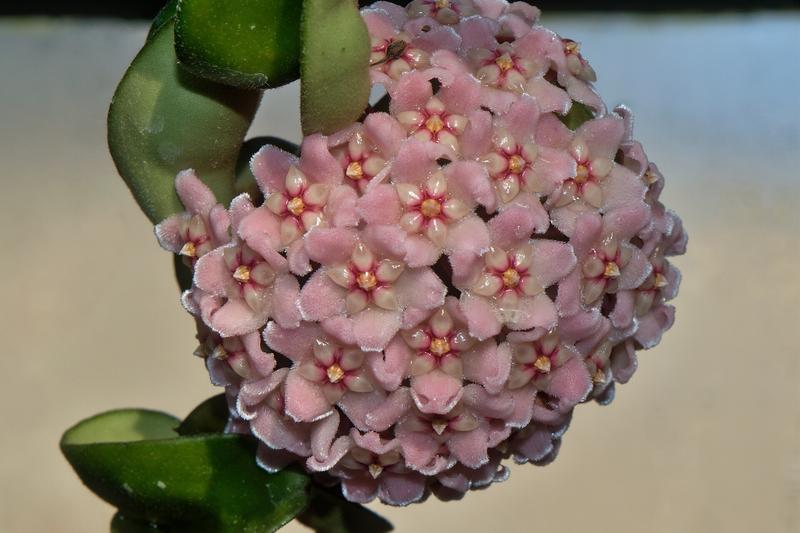
Quick facts
- Watering
- Fortnightly in summer, monthly in winter
- Sunlight
- Bright indirect light
- Soil
- Well-draining, chunky houseplant mix
- Humans
- Safe
- Cats
- Safe
- Dogs
- Safe
- Height
- 100–300 cm
- Spread
- 30–60 cm
- Spacing
- 0 cm apart
- RHS recognition
- Award of Garden Merit
About Hoya
Hoya carnosa is a popular trailing houseplant native to Eastern Asia and Australia, prized for its thick, waxy leaves and clusters of fragrant, star-shaped flowers. In the UK, it thrives indoors as a low-maintenance plant that can be trained up supports or allowed to cascade from hanging baskets. Its tolerance of neglect and ability to bloom reliably in British homes has made it a favourite among houseplant enthusiasts. The sweetly scented flowers, which appear in summer, produce nectar droplets that add to the plant's charm.
UK fact: Hoya carnosa received the RHS Award of Garden Merit in 1993, recognising its excellent performance as a houseplant in British conditions and its reliability in producing fragrant blooms even in lower light levels typical of UK homes.
Watering Hoya
Water thoroughly when the top 3-5 cm of compost feels dry, allowing excess to drain completely. In the UK's cooler months, reduce watering significantly as growth slows and the plant enters semi-dormancy. Hoya carnosa is semi-succulent and stores water in its thick leaves, making it tolerant of occasional drought but susceptible to root rot if overwatered. Use tepid water to avoid shocking the roots, and never allow the pot to sit in standing water.
Sunlight requirements
Hoya carnosa performs best in bright, indirect light near an east or west-facing window in UK homes. Avoid direct summer sun, which can scorch the waxy leaves, but ensure sufficient light to encourage flowering. North-facing windows may provide adequate light but can reduce flowering frequency, whilst south-facing positions require sheer curtains to diffuse intense afternoon sun.
Soil and feeding
Use a free-draining mix combining two parts peat-free houseplant compost with one part perlite or orchid bark to ensure excellent drainage. Hoya carnosa prefers slightly acidic to neutral conditions (pH 6.0-7.0) and benefits from a chunky texture that allows air to reach the roots. Avoid heavy, moisture-retentive composts that can lead to root rot. Repot only when root-bound, typically every 2-3 years, as hoyas flower more readily when slightly pot-bound.
Feed monthly from April to September with a balanced liquid houseplant fertiliser diluted to half strength. During the flowering period, switch to a high-potassium feed to encourage more blooms. Cease feeding entirely from October to March when the plant is semi-dormant and growth has slowed.
Pruning Hoya
Prune sparingly, as hoya flowers emerge from the same spurs (peduncles) year after year, so never remove these after flowering. Trim back leggy growth in spring to encourage bushier habit, and remove any yellowing or damaged leaves as needed. If training up a support, gently wind new growth around the structure rather than cutting, as this preserves flowering potential and maintains the plant's natural trailing form.
Propagating Hoya
Hoya carnosa propagates readily from stem cuttings taken in spring or early summer. Take 10-15 cm cuttings with at least two nodes, remove the lower leaves, and root in water or directly in moist perlite or houseplant compost. Cuttings typically root within 3-4 weeks in warm conditions (18-21°C). Alternatively, layer stems whilst still attached to the parent plant by pinning a node into compost in an adjacent pot, severing once roots have formed.
Common problems
Hoya carnosa is relatively pest-free but can occasionally suffer from mealybugs, scale insects, or aphids, particularly in warm, dry UK homes during winter when central heating reduces humidity. Overwatering is the most common cultural problem, leading to root rot and yellowing leaves. Failure to flower is usually caused by insufficient light, over-potting, or removing the flowering spurs during pruning. Brown leaf tips typically indicate low humidity or inconsistent watering, whilst leaf drop suggests cold draughts or sudden temperature changes.
Spot a problem with your plant? Photograph the affected area using the Loam app and it will suggest the most likely cause and treatment.
Safety
- Humans
- Safe
- Cats
- Safe
- Dogs
- Safe
Toxicity information is for general guidance only.
Seasonal care calendar
Monthly care guide for Hoya in the UK, based on average conditions.
| Month | Care tasks |
|---|---|
| January | Maintain in warm room, water sparingly only when compost is dry. Avoid cold draughts. |
| February | Continue minimal watering. Check for pests in dry, heated rooms. |
| March | Begin increasing watering frequency as days lengthen. Wipe leaves to remove dust. |
| April | Resume monthly feeding. Take stem cuttings for propagation. Repot if root-bound. |
| May | Water when top layer of compost dries. Flower buds may begin forming. |
| June | Flowering typically begins. Do not move plant or remove flower spurs. Continue feeding. |
| July | Maintain regular watering and feeding. Enjoy fragrant blooms, especially in evening. |
| August | Continue care routine. Flowers may produce nectar droplets. Avoid disturbing plant. |
| September | Reduce feeding frequency as growth slows. Maintain watering whilst warm. |
| October | Cease feeding. Reduce watering as temperatures drop and growth slows. |
| November | Water sparingly, allowing compost to dry between waterings. Maintain warmth. |
| December | Minimal watering required. Keep away from cold windows and draughts. |
Frequently asked questions
- Why is my hoya not flowering?
- Hoyas need bright indirect light, maturity (2-3 years old), and slight pot-bound conditions to flower. Ensure you're not removing the flowering spurs after blooms fade, as new flowers emerge from the same points. Feed with high-potassium fertiliser in spring and summer, and avoid moving the plant once buds form.
- How do I know when my hoya needs watering?
- Check the top 3-5 cm of compost – water when this feels dry to the touch. Hoya leaves will feel slightly softer when thirsty. The Loam app can send personalised watering reminders based on your home conditions and help you track your plant's seasonal needs throughout the year.
- Can I put my hoya outside in summer?
- Hoya carnosa can spend summer outdoors in a sheltered, shaded spot once night temperatures stay above 12°C, typically from late May to early September in southern UK. Gradually acclimatise it to outdoor conditions over a week, and bring it back indoors before autumn frosts arrive.
Got a question about growing Hoya that isn't covered here? Ask the Garden Advisor in the Loam app. It knows your saved plants and local conditions.
Related plants
This page was compiled with AI assistance and reviewed by our team. .