Christmas Cactus
Schlumbergera bridgesii
Houseplants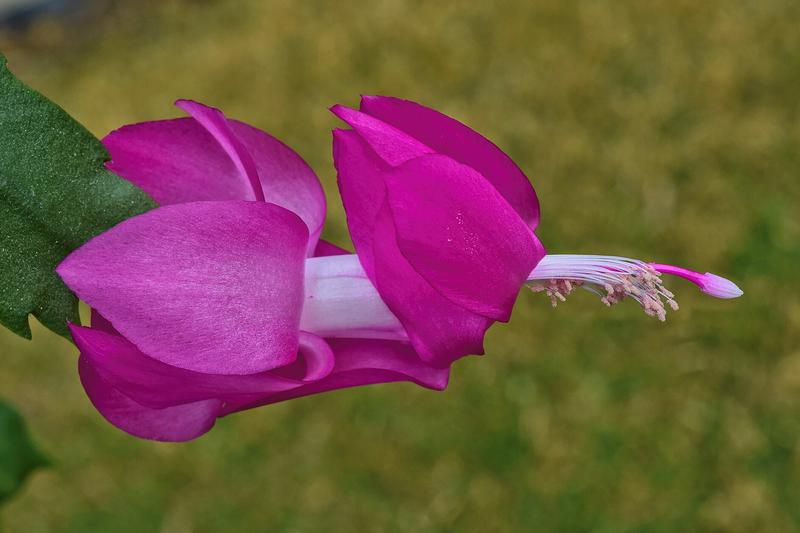
Quick facts
- Watering
- Weekly during growth, fortnightly in winter
- Sunlight
- Bright indirect light
- Soil
- Well-drained, slightly acidic cactus compost
- Humans
- Safe
- Cats
- Safe
- Dogs
- Safe
- Height
- 15–30 cm
- Spread
- 30–60 cm
- Spacing
- 0 cm apart
About Christmas Cactus
Christmas Cactus is a popular Brazilian epiphytic succulent prized for its spectacular tubular flowers that appear in shades of pink, red, white, and purple during the festive season. Unlike desert cacti, this forest-dwelling plant has flattened, segmented stems and thrives in the indirect light and moderate temperatures typical of UK homes. British gardeners value it as a reliable winter-flowering houseplant that can live for decades with proper care, often becoming cherished family heirlooms passed down through generations.
UK fact: The RHS awarded Schlumbergera 'Gold Charm' an Award of Garden Merit, and Christmas Cacti have been popular in British homes since Victorian times, when they were displayed in conservatories and parlours as exotic curiosities from the New World.
Watering Christmas Cactus
Christmas Cactus prefers evenly moist but never waterlogged compost during its active growing season from spring through autumn. Water thoroughly when the top few centimetres of compost feel dry to the touch, using room-temperature water, and always empty the saucer beneath to prevent root rot. During the UK's darker winter months after flowering has finished, reduce watering frequency to fortnightly, allowing the compost to dry out slightly more between waterings. To encourage bud formation in autumn, reduce watering for 4-6 weeks from late September, then resume normal watering once buds appear.
Sunlight requirements
Position your Christmas Cactus near an east- or north-facing window in the UK, where it will receive gentle morning light or consistent bright indirect light throughout the day. Avoid south-facing windowsills during summer months, as direct sun can cause the segments to turn reddish and become damaged. In winter, when light levels are lower, you can move the plant closer to windows or even to a west-facing position to encourage flowering.
Soil and feeding
Christmas Cactus requires excellent drainage and slightly acidic conditions with a pH of 5.5-6.5, reflecting its epiphytic rainforest origins. A specialist cactus and succulent compost works well, or you can create your own mix using equal parts peat-free multipurpose compost, perlite or horticultural grit, and orchid bark or coconut coir. The addition of perlite and bark ensures the roots receive adequate air circulation whilst retaining some moisture. Repot every 2-3 years in spring, moving up just one pot size, as Christmas Cacti actually flower better when slightly pot-bound.
Apply a balanced liquid houseplant fertiliser at half the recommended strength once a month during the growing season from April through September. In early autumn, switch to a high-potassium tomato feed to promote bud formation and flowering. Cease feeding entirely from October through March when the plant is resting or flowering, as excess nutrients during this period can cause bud drop.
Pruning Christmas Cactus
Christmas Cactus requires minimal pruning but benefits from light shaping after flowering ends, typically in February or March. Simply twist off one or two segments at the joints where stems have become leggy or unbalanced, which encourages the plant to branch and develop a fuller, more attractive shape. You can also remove any damaged or shrivelled segments throughout the year. The removed segments root easily and make excellent material for propagation, so nothing need go to waste.
Propagating Christmas Cactus
The easiest propagation method is by stem cuttings, ideally taken in late spring or early summer when the plant is actively growing. Twist off a section comprising 2-4 healthy segments from the parent plant, allow the cut end to dry and callous over for a few hours, then insert the bottom segment into barely moist cactus compost. Cuttings root reliably at normal room temperature without the need for bottom heat or propagators, making this one of the most straightforward houseplants to multiply.
Common problems
Christmas Cactus is relatively trouble-free but can suffer from bud drop if moved or exposed to temperature fluctuations during bud formation in autumn. Overwatering leads to root rot and mushy, yellowing segments, whilst underwatering causes shrivelled, wrinkled stems. Mealybugs occasionally infest the joints between segments and should be removed with a cotton bud dipped in methylated spirits. Red spider mite can appear in very dry conditions, causing stippled, bronzed foliage; increase humidity and mist regularly to deter them.
Spot a problem with your plant? Photograph the affected area using the Loam app and it will suggest the most likely cause and treatment.
Safety
- Humans
- Safe
- Cats
- Safe
- Dogs
- Safe
Toxicity information is for general guidance only.
Seasonal care calendar
Monthly care guide for Christmas Cactus in the UK, based on average conditions.
| Month | Care tasks |
|---|---|
| January | Enjoy the flowers. Keep compost barely moist and maintain temperatures of 15-21°C. Avoid moving the plant whilst in bloom. |
| February | Flowering finishes. Lightly prune to shape if needed. Reduce watering slightly as the plant enters a brief rest period. |
| March | Begin increasing watering as new growth appears. Repot if the plant has become pot-bound, moving up just one pot size. |
| April | Active growth begins. Water when the top 2-3 cm of compost dries out. Begin monthly feeding with balanced liquid fertiliser at half strength. |
| May | Continue regular watering and monthly feeding. Take stem cuttings for propagation if desired. Ensure bright, indirect light. |
| June | Maintain regular watering and feeding regime. Move away from south-facing windows to avoid scorching from strong summer sun. |
| July | Continue care as in June. The plant can be placed outdoors in a sheltered, shaded spot if desired, but bring in before temperatures drop. |
| August | Continue watering and feeding. If outdoors, ensure protection from heavy rain and bring indoors by month end as nights cool. |
| September | Give final feed with balanced fertiliser. From late September, reduce watering for 4-6 weeks to encourage bud formation. Provide 12-14 hours of darkness nightly. |
| October | Continue reduced watering and long dark periods. Buds should begin forming. Switch to high-potassium tomato feed once buds appear. Avoid moving the plant. |
| November | Resume normal watering as buds develop. Stop feeding. Maintain consistent temperatures and avoid draughts to prevent bud drop. |
| December | Flowers open for the festive season. Keep compost lightly moist. Avoid temperature extremes and do not move the plant whilst flowering. |
Frequently asked questions
- How do I get my Christmas Cactus to flower?
- Christmas Cacti need 12-14 hours of darkness each night for 6 weeks in autumn, along with cooler temperatures (12-15°C) and reduced watering, to trigger bud formation. Ensure the plant isn't exposed to artificial light in the evenings during September and October. The key is consistent conditions during this critical period.
- Why are the leaf segments on my Christmas Cactus turning red or purple?
- Reddish or purple discolouration indicates the plant is receiving too much direct sunlight or is stressed by cold temperatures. Move it to a location with bright but indirect light and ensure temperatures remain above 12°C. If you're unsure whether it's light or temperature stress, the Loam app can help diagnose the specific issue and provide personalised care adjustments based on your plant's location.
- How do I propagate a Christmas Cactus?
- Christmas Cacti are easy to propagate from stem cuttings. Take a cutting of 2-3 segments in spring or early summer, allow the cut end to dry for a few hours, then insert into moist, well-draining compost. Keep in bright, indirect light and maintain light moisture. Roots typically develop within 3-4 weeks, and you'll have a new plant to share or expand your collection.
Got a question about growing Christmas Cactus that isn't covered here? Ask the Garden Advisor in the Loam app. It knows your saved plants and local conditions.
Related plants
This page was compiled with AI assistance and reviewed by our team. .