Quince
Cydonia oblonga
Fruit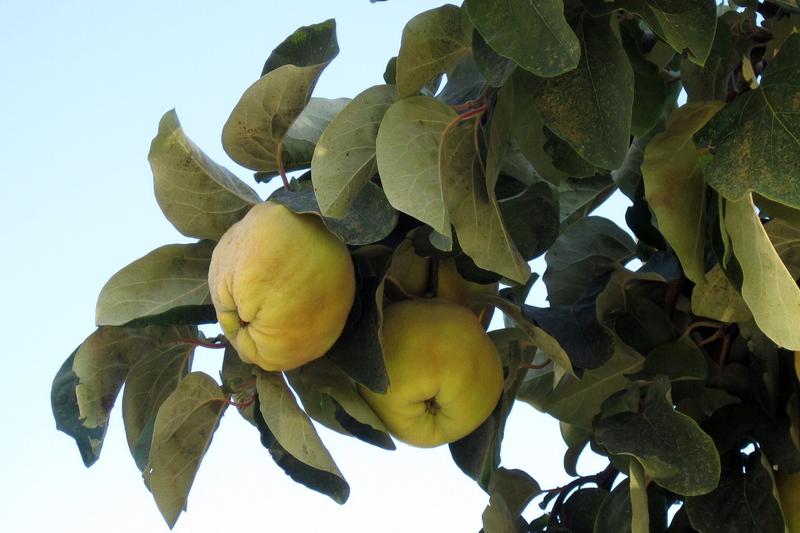
Quick facts
- Watering
- Weekly when young, fortnightly established
- Sunlight
- Full sun
- Soil
- Well-drained, moisture-retentive, fertile loam
- Humans
- Safe
- Cats
- Toxic
- Dogs
- Toxic
- Height
- 300–500 cm
- Spread
- 300–500 cm
- Spacing
- 400–500 cm apart
- RHS recognition
- Award of Garden Merit
About Quince
Quince is a deciduous fruit tree native to the Caucasus and Iran, grown in British gardens for centuries for its fragrant, golden-yellow fruits and beautiful spring blossom. The gnarled, characterful trees reach modest proportions ideal for smaller UK gardens, producing large, aromatic fruits in autumn that are too astringent to eat raw but transform into exceptional jellies, preserves, and membrillo when cooked. With attractive pink-tinged white flowers in May and striking autumn foliage, quince offers ornamental value alongside its culinary rewards.
UK fact: Quince has been cultivated in Britain since at least the 13th century and features prominently in medieval recipes; the variety 'Vranja' holds an RHS Award of Garden Merit and is particularly well-suited to the UK climate, reliably fruiting even in cooler northern regions.
Watering Quince
Young quince trees require regular watering during their first two to three years, particularly during dry spells from May to September. Once established, trees are reasonably drought-tolerant but benefit from deep watering every fortnight during prolonged dry periods to ensure good fruit development. Water at the base of the tree rather than overhead to reduce the risk of fungal diseases, which can be problematic in the UK's damp climate. Mulching around the root zone helps retain moisture and reduces watering frequency.
Sunlight requirements
Quince requires full sun to ripen its fruits properly, ideally in a warm, sheltered position such as against a south or west-facing wall. In the UK, maximising sunlight exposure is essential for good fruit development and flavour, particularly in northern regions. Avoid shaded positions as these will result in poor flowering and minimal fruit set.
Soil and feeding
Quince thrives in deep, fertile, moisture-retentive soil with good drainage, ideally a rich loam with plenty of organic matter. The tree tolerates a wide pH range from slightly acidic to slightly alkaline (pH 6.0-7.5) but performs best in neutral conditions. Heavy clay soils are acceptable provided they don't become waterlogged in winter, whilst very light sandy soils should be improved with generous amounts of well-rotted manure or compost. Avoid shallow or chalky soils which can lead to nutrient deficiencies and poor growth.
Apply a balanced general-purpose fertiliser such as Growmore or blood, fish and bone in early spring at 70g per square metre around the root zone. Supplement with a potassium-rich feed in late spring to encourage flowering and fruiting. Mulch annually with well-rotted manure or compost to maintain soil fertility and structure.
Pruning Quince
Quince requires minimal pruning and fruits on spurs produced on older wood, so avoid heavy pruning which reduces cropping. In late winter or early spring, remove any dead, diseased, or crossing branches to maintain an open, goblet-shaped framework that allows good air circulation. Shorten vigorous upright shoots by about one-third to encourage spur formation. Once established, pruning is mainly limited to thinning overcrowded growth and maintaining shape, as quince naturally develops an attractive, gnarled habit with age.
Propagating Quince
Quince is most reliably propagated by hardwood cuttings taken in late autumn or winter, using pencil-thick shoots of the current season's growth inserted into sandy compost in a cold frame. Layering is also successful, pegging down low branches in spring and severing them once rooted after 12-18 months. Grafting onto quince rootstock (Quince A or Quince C) is the commercial method and ensures true-to-type plants with predictable vigour, though this requires more skill. Seed-grown quinces are variable and take many years to fruit, so are not recommended for fruit production.
Common problems
Quince leaf blight (Diplocarpon mespili) is the most serious problem in the UK, causing dark spots on leaves and premature defoliation in wet summers; remove and destroy affected leaves and improve air circulation through pruning. Aphids can infest new growth in spring, causing leaf curl and sooty mould, whilst codling moth caterpillars may tunnel into developing fruits. Brown rot can affect fruits, particularly in damp autumns, so remove any infected fruits promptly and avoid overcrowding branches. Fireblight is a notifiable disease that occasionally affects quince; infected branches show blackened, scorched-looking shoots and must be cut out well below the damage and reported to authorities.
Spot a problem with your plant? Photograph the affected area using the Loam app and it will suggest the most likely cause and treatment.
Safety
- Humans
- Safe
- Cats
-
Toxic
Seeds contain cyanogenic glycosides which can release cyanide when chewed; keep pets away from fallen fruits.
- Dogs
-
Toxic
Seeds contain cyanogenic glycosides which can release cyanide when chewed; keep pets away from fallen fruits.
Toxicity information is for general guidance only. If a pet has been exposed to this plant and you are concerned, seek advice from a vet.
Seasonal care calendar
Monthly care guide for Quince in the UK, based on average conditions.
| Month | Care tasks |
|---|---|
| January | Prune established trees during dormancy, removing dead or crossing branches. Apply winter wash if pest problems occurred the previous year. |
| February | Complete any remaining pruning before buds begin to swell. Plant bare-root trees in mild spells when soil is workable. |
| March | Apply balanced fertiliser around the root zone and mulch with well-rotted manure. Plant container-grown trees. |
| April | Watch for aphid infestations on new growth and treat if necessary. Water young trees during dry spells. |
| May | Enjoy the beautiful blossom display. Apply potassium-rich feed to support fruit development. Continue watering young trees regularly. |
| June | Monitor for leaf blight and remove affected foliage. Water during dry periods, especially young trees and those carrying heavy crops. |
| July | Continue watering during dry spells. Watch for codling moth damage and remove affected fruitlets. Thin fruits if the crop is very heavy. |
| August | Maintain watering regime for developing fruits. Remove any diseased or damaged fruits to prevent brown rot spreading. |
| September | Monitor fruits for ripeness; they should be golden-yellow and aromatic. Support heavily laden branches if necessary. |
| October | Harvest fruits when fully coloured and fragrant, typically mid to late October. Handle carefully as they bruise easily. Clear fallen leaves showing blight symptoms. |
| November | Complete harvesting before hard frosts. Take hardwood cuttings for propagation. Clear any remaining diseased material from around the tree. |
| December | Plan any pruning work for the dormant season. Check tree stakes and ties, adjusting if necessary to prevent damage. |
Frequently asked questions
- When should I harvest quince in the UK?
- Harvest quince in October when the fruits turn golden-yellow and develop their characteristic fragrance. In the UK, this is typically mid to late October before the first hard frosts. The fruits should come away easily from the tree when gently twisted, and any remaining green tinge will disappear during storage. Handle carefully as they bruise easily, and store in a cool, dark place where they'll keep for several weeks.
- Why isn't my quince tree producing fruit?
- Poor fruiting can result from insufficient sunlight, late spring frosts damaging blossom, over-pruning, or the tree being too young (quinces typically begin fruiting at 3-5 years old). The Loam app can help you track your tree's flowering times, set reminders for frost protection, and provide personalised advice based on your garden's specific conditions and your tree's age.
- Can I grow quince in a container?
- Yes, quince can be grown in large containers (minimum 60cm diameter) using a dwarfing rootstock such as Quince C. Choose a compact variety, use soil-based compost like John Innes No. 3, and ensure excellent drainage. Container-grown quinces require more frequent watering and feeding than those in the ground, and should be repotted every 2-3 years. They're ideal for patios and small gardens where space is limited.
Got a question about growing Quince that isn't covered here? Ask the Garden Advisor in the Loam app. It knows your saved plants and local conditions.
Related plants
This page was compiled with AI assistance and reviewed by our team. .