Medlar
Mespilus germanica
Fruit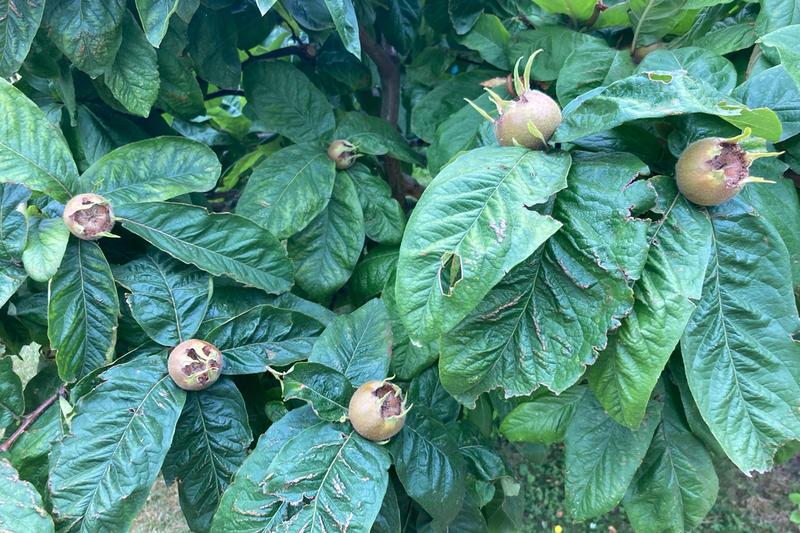
Quick facts
- Watering
- Weekly when young, fortnightly established
- Sunlight
- Full sun to partial shade
- Soil
- Well-drained, moisture-retentive loam
- Humans
- Safe
- Cats
- Safe
- Dogs
- Safe
- Height
- 300–600 cm
- Spread
- 300–600 cm
- Spacing
- 400–500 cm apart
About Medlar
The medlar is a small, deciduous fruit tree native to southwest Asia and southeastern Europe, cultivated in Britain since medieval times. It produces distinctive apple-like fruits with an open calyx end, which must be 'bletted' (partially rotted) before eating, giving them a unique, sweet flavour reminiscent of spiced apple sauce. UK gardeners value medlars for their ornamental qualities—beautiful white or pink-tinged spring blossom, attractive autumn foliage, and gnarled, picturesque form—as well as their unusual heritage fruit. The tree is well-suited to British gardens, being fully hardy and tolerant of our climate.
UK fact: Medlars were a popular fruit in medieval and Tudor Britain, mentioned in Chaucer's Canterbury Tales and Shakespeare's plays, and were commonly grown in cottage gardens until the Victorian era when imported fruits became fashionable.
Watering Medlar
Water young medlar trees regularly during their first two to three years, particularly during dry spells in spring and summer, to help establish a strong root system. Once established, medlars are reasonably drought-tolerant but benefit from watering during prolonged dry periods, especially when fruiting in late summer and autumn. In typical UK conditions, rainfall is usually sufficient for mature trees, though container-grown specimens need regular watering throughout the growing season. Avoid waterlogging, which can lead to root problems.
Sunlight requirements
Medlars perform best in full sun, which encourages good flowering and fruit ripening, but tolerate partial shade better than most fruit trees. In the UK, a south or west-facing position is ideal, though they will crop reasonably well on east-facing sites. Avoid deep shade and frost pockets, as late spring frosts can damage blossom.
Soil and feeding
Medlars thrive in deep, fertile, moisture-retentive soil that drains well, ideally a medium loam enriched with organic matter. They tolerate a wide pH range from slightly acidic to slightly alkaline (pH 6.0-7.5) and will grow on clay soils provided drainage is adequate. Avoid very light, sandy soils that dry out quickly, and waterlogged or compacted ground. Mulch annually with well-rotted compost or manure to maintain soil fertility and moisture retention.
Apply a balanced general-purpose fertiliser such as Growmore or blood, fish and bone in early spring at 70g per square metre around the root zone. Supplement with a potassium-rich feed in late spring to support flowering and fruit development. Mature trees in good soil may need little additional feeding beyond annual mulching with well-rotted organic matter.
Pruning Medlar
Medlars require minimal pruning and naturally develop an attractive, spreading shape. In late winter or early spring, remove any dead, diseased, or crossing branches to maintain an open centre and good air circulation. Avoid heavy pruning, as medlars fruit on spurs on older wood and excessive cutting reduces cropping. Young trees can be lightly shaped to establish a balanced framework, but once mature, restrict pruning to maintenance only.
Propagating Medlar
Medlars are typically propagated by grafting onto quince or hawthorn rootstock, which controls vigour and ensures fruiting begins within a few years. Grafting is best done in late winter or early spring using whip-and-tongue or chip budding techniques. Growing from seed is possible but results in variable quality and trees take 5-8 years to fruit. Layering can also be successful: peg down a low branch in spring, and it should root within 12-18 months.
Common problems
Medlars are relatively trouble-free but can be affected by aphids in spring, which distort new growth and excrete sticky honeydew. Leaf spot diseases occasionally occur in wet summers, causing brown spots on foliage but rarely affecting overall health. Canker can develop on branches, particularly in poorly drained soil or after frost damage, and affected wood should be pruned out. Birds may peck ripening fruit in autumn, though the hard texture before bletting usually deters them.
Spot a problem with your plant? Photograph the affected area using the Loam app and it will suggest the most likely cause and treatment.
Safety
- Humans
- Safe
- Cats
- Safe
- Dogs
- Safe
Toxicity information is for general guidance only.
Seasonal care calendar
Monthly care guide for Medlar in the UK, based on average conditions.
| Month | Care tasks |
|---|---|
| January | Prune established trees if needed, removing dead or crossing branches during dormancy. |
| February | Complete any winter pruning before buds begin to swell. Apply organic mulch around the base. |
| March | Apply balanced fertiliser around the root zone. Check for signs of pest or disease as growth begins. |
| April | Monitor for aphids on new growth. Water young trees during dry spells. |
| May | Enjoy the white or pink-tinged blossom. Apply potassium-rich feed to support fruit development. |
| June | Water during dry periods, especially young trees. Weed around the base and top up mulch if needed. |
| July | Continue watering during dry weather. Monitor developing fruits and check for pest damage. |
| August | Water regularly if dry. Fruits begin to swell and develop their characteristic shape. |
| September | Reduce watering as autumn approaches. Enjoy the developing autumn foliage colour. |
| October | Harvest fruits after the first frosts when they detach easily. Store in a cool place to blett. |
| November | Finish harvesting any remaining fruit. Clear fallen leaves to reduce disease carryover. |
| December | No action needed. Trees are fully dormant and require no winter protection. |
Frequently asked questions
- When do you pick medlars and how do you know they're ready?
- Harvest medlars in late October or early November after the first frosts, when fruits detach easily from the tree. They're not ready to eat immediately—store them in a cool place for 2-3 weeks until the flesh softens and turns brown inside, a process called bletting. The fruit is ready when it feels soft and the skin wrinkles slightly.
- Why isn't my medlar tree producing fruit?
- Young medlar trees can take 3-5 years to begin fruiting, and poor flowering may result from late frosts damaging blossom, insufficient sunlight, or over-feeding with nitrogen. The Loam app can help you track your tree's development, set reminders for appropriate feeding schedules, and diagnose specific problems based on your growing conditions.
- Can I grow a medlar tree in a container?
- Yes, medlars can be grown in large containers (at least 45-60cm diameter) using a soil-based compost such as John Innes No. 3. Choose a tree on dwarfing quince rootstock to restrict size, water regularly during the growing season, and feed monthly from spring to late summer. Repot every 2-3 years and protect the container from hard frosts in winter.
Got a question about growing Medlar that isn't covered here? Ask the Garden Advisor in the Loam app. It knows your saved plants and local conditions.
Related plants
This page was compiled with AI assistance and reviewed by our team. .