English Oak
Quercus robur
Trees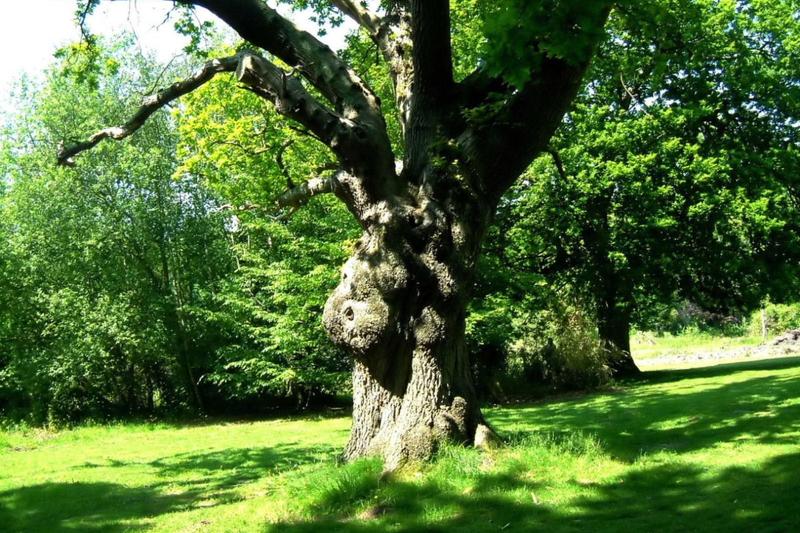
Quick facts
- Watering
- Minimal once established
- Sunlight
- Full sun to partial shade
- Soil
- Deep, well-drained, fertile loam
- Humans
- Toxic
- Cats
- Toxic
- Dogs
- Toxic
- Height
- 2000–4000 cm
- Spread
- 1500–2500 cm
- Spacing
- 2000–3000 cm apart
About English Oak
The English Oak is a majestic, long-lived deciduous tree native to Britain, renowned for its broad, spreading crown and deeply lobed leaves. Growing up to 40 metres tall, it produces distinctive acorns in autumn and develops deeply fissured bark with age. UK gardeners value it as a cornerstone species for wildlife gardens, supporting hundreds of insect species, and as a stately specimen tree for large gardens, parks, and estates. Its cultural significance and ecological importance make it an iconic choice for those with space to accommodate its eventual size.
UK fact: The English Oak is Britain's most common native oak species and has been a symbol of English heritage for centuries, featuring in folklore, heraldry, and as the timber of choice for historic buildings and naval ships including HMS Victory.
Watering English Oak
Young trees require regular watering during their first two to three years, particularly during dry spells in spring and summer, to establish a deep root system. Water deeply once or twice weekly during prolonged dry periods in the establishment phase. Once established, English Oak is remarkably drought-tolerant and rarely requires supplementary watering in the UK climate, though severe droughts may warrant occasional deep watering. Avoid waterlogging, which can lead to root problems.
Sunlight requirements
English Oak thrives in full sun where it develops the best crown shape and density, but tolerates partial shade, particularly when young. In UK gardens, position away from buildings to allow for its eventual spread, ideally in an open position where it receives sunlight from the south and west. Avoid deep shade which can lead to sparse foliage and weak growth.
Soil and feeding
English Oak performs best in deep, fertile, well-drained loam but is remarkably adaptable, tolerating clay, sandy, and chalky soils. It prefers a slightly acidic to neutral pH (5.5-7.5) but will grow in mildly alkaline conditions. Good drainage is essential to prevent root rot, though the tree tolerates occasional waterlogging better than many species. Avoid shallow soils over bedrock, as the tree develops a deep taproot and extensive lateral root system requiring substantial soil depth.
Established English Oaks rarely require feeding in most UK garden soils. Young trees benefit from a balanced slow-release fertiliser applied in early spring for the first three to five years to encourage strong growth. Mulching annually with well-rotted compost or leaf mould provides sufficient nutrients for mature specimens.
Pruning English Oak
Prune English Oak between late autumn and early spring when fully dormant to minimise sap bleeding and reduce the risk of oak wilt disease. Remove dead, diseased, or crossing branches, and maintain a clear trunk to the desired height for specimen trees. Formative pruning in the first five to ten years establishes a strong framework with a central leader and well-spaced lateral branches. Mature trees require minimal pruning beyond safety work, which should be carried out by qualified arborists due to the tree's size.
Propagating English Oak
English Oak is most easily propagated from acorns collected in autumn when they fall naturally from the tree. Sow fresh acorns immediately in deep pots or directly into the ground, as they lose viability quickly if allowed to dry out. Plant acorns 5cm deep in a mixture of loam and grit, and protect from mice and squirrels with wire mesh. Germination occurs the following spring, and seedlings can be grown on in pots for two to three years before planting out in their permanent positions.
Common problems
English Oak is susceptible to oak processionary moth, whose caterpillars can defoliate trees and pose a health risk to humans; report sightings to the Forestry Commission. Powdery mildew commonly affects leaves in late summer but rarely causes lasting damage. Acute oak decline, characterised by stem bleeding and dieback, is an emerging concern in the UK, though its causes are not fully understood. Honey fungus can attack weakened trees, whilst oak gall wasps create harmless but conspicuous growths on leaves and stems.
Spot a problem with your plant? Photograph the affected area using the Loam app and it will suggest the most likely cause and treatment.
Safety
- Humans
-
Toxic
Acorns and leaves contain tannins which are toxic if consumed in large quantities, causing stomach upset. Generally not a significant risk as they are unpalatable.
- Cats
-
Toxic
Acorns and leaves contain tannins which can cause gastrointestinal upset if ingested, though cats rarely consume them.
- Dogs
-
Toxic
Acorns are toxic to dogs, causing vomiting, diarrhoea, and potentially kidney damage if consumed in quantity. Prevent dogs from eating fallen acorns.
Toxicity information is for general guidance only. If a person or pet has been exposed to this plant and you are concerned, seek advice from a medical professional or vet.
Seasonal care calendar
Monthly care guide for English Oak in the UK, based on average conditions.
| Month | Care tasks |
|---|---|
| January | Tree is dormant. Suitable time for pruning if required. |
| February | Continue pruning work before sap rises. Check for storm damage. |
| March | Buds begin to swell. Apply mulch around young trees. |
| April | New leaves emerge. Monitor for pest activity and begin watering young trees if dry. |
| May | Foliage fully developed. Check for oak processionary moth and report sightings. |
| June | Monitor watering needs during dry spells. Watch for powdery mildew. |
| July | Continue watering young trees. Acorns developing on mature trees. |
| August | Powdery mildew may appear on leaves. Maintain watering if prolonged dry weather. |
| September | Acorns begin to ripen. Collect for propagation when they fall naturally. |
| October | Leaves turn golden-brown. Collect and sow fresh acorns immediately. |
| November | Leaf fall completes. Rake up fallen leaves for composting. Pruning can resume. |
| December | Tree fully dormant. Suitable time for structural pruning work. |
Frequently asked questions
- How long does an English Oak take to grow?
- English Oak is slow-growing, typically adding 30-60cm per year when young. It takes 20-30 years to reach a substantial size of 10-15 metres, and continues growing for centuries, potentially reaching 40 metres over 200-300 years. Young trees establish slowly but accelerate growth once their root system is developed.
- Why are the leaves on my English Oak turning brown in summer?
- Summer browning can indicate powdery mildew, drought stress, or acute oak decline. The Loam app can help you diagnose the specific cause through photo analysis and provide tailored treatment advice based on your tree's symptoms and local conditions.
- Can I grow an English Oak in a small garden?
- English Oak is unsuitable for small gardens due to its eventual size of 20-40 metres tall with a 15-25 metre spread. It requires substantial space and can damage buildings, paths, and drains with its extensive root system. Consider smaller native trees like Field Maple or Rowan for limited spaces.
Got a question about growing English Oak that isn't covered here? Ask the Garden Advisor in the Loam app. It knows your saved plants and local conditions.
Related plants
This page was compiled with AI assistance and reviewed by our team. .