Poinsettia
Euphorbia pulcherrima
Houseplants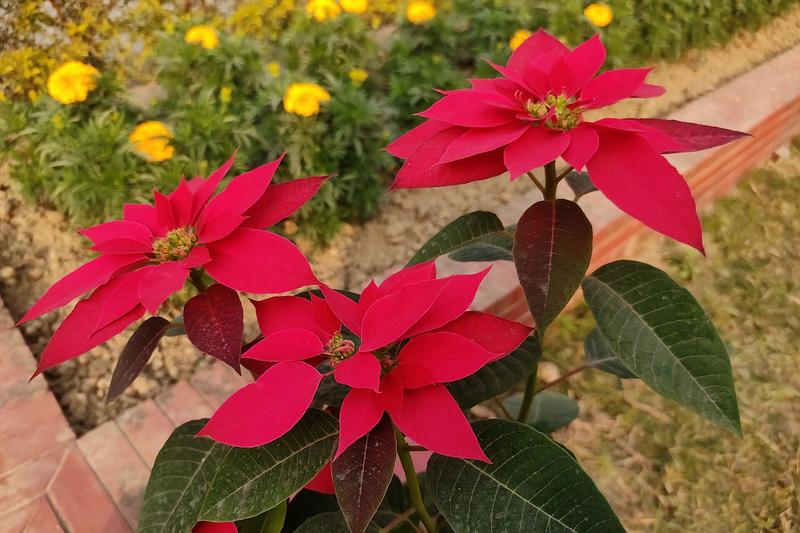
Quick facts
- Watering
- When top 2cm of compost dries
- Sunlight
- Bright indirect light
- Soil
- Well-drained, peat-free multipurpose compost
- Humans
- Toxic
- Cats
- Toxic
- Dogs
- Toxic
- Height
- 30–60 cm
- Spread
- 30–50 cm
- Spacing
- 0 cm apart
About Poinsettia
Poinsettia is a striking houseplant native to Mexico, celebrated for its vibrant red, pink, or white bracts that appear in winter. In the UK, it has become synonymous with Christmas, gracing homes and conservatories from late November through the festive season. Though often treated as a temporary decoration, with proper care poinsettias can be kept year-round and encouraged to colour up again the following winter. The true flowers are small and yellow, clustered at the centre of the showy bracts.
UK fact: Poinsettias became a British Christmas tradition following their introduction by Victorian plant collectors, and the UK now imports over 8 million plants annually, with peak sales occurring in the three weeks before Christmas.
Watering Poinsettia
Check the compost every few days and water when the top 2cm feels dry to the touch, typically once or twice weekly in centrally heated UK homes. Always use tepid water and ensure the pot drains freely—never leave the plant sitting in water, as this causes root rot. During the growing season (spring to early autumn), maintain slightly more consistent moisture, whilst in winter after the bracts have formed, reduce watering slightly. Mist occasionally to increase humidity in dry indoor environments.
Sunlight requirements
Place your poinsettia near a south- or west-facing window in winter, ensuring it receives plenty of bright light without direct sun exposure. In the UK's darker months, the plant benefits from maximum available daylight. Avoid draughty windowsills and keep away from radiators, as fluctuating temperatures cause leaf drop.
Soil and feeding
Poinsettias thrive in well-drained, peat-free multipurpose compost with a slightly acidic to neutral pH of 6.0–6.5. Add up to 20% perlite or horticultural grit to improve drainage and prevent waterlogging, which is the primary cause of root problems. When repotting in spring, choose a pot only slightly larger than the previous one, as poinsettias prefer being slightly pot-bound. Ensure containers have adequate drainage holes.
Apply a balanced liquid fertiliser at half strength every two weeks from April through September, when the plant is actively growing. Cease feeding once the bracts begin to show colour in autumn, and do not feed during winter whilst the plant is in display. Resume feeding in spring after pruning to encourage vigorous new growth.
Pruning Poinsettia
In late March or April, after the bracts have faded, cut all stems back to approximately 10–15cm from the compost surface, leaving several leaf nodes on each stem. This hard pruning encourages branching and prevents the plant becoming leggy. Pinch out growing tips in late spring and early summer to promote a compact, bushy shape. Wear gloves when pruning, as the milky sap can irritate skin and is toxic if ingested.
Propagating Poinsettia
Take 10–15cm stem-tip cuttings in May or June from healthy new growth. Dip the cut ends briefly in tepid water to stop the milky sap flow, then allow them to dry for 30 minutes to form a callus. Insert cuttings into small pots of moist, gritty compost and place in a heated propagator or cover with a clear plastic bag to maintain humidity. Roots should develop within 3–4 weeks in temperatures of 18–21°C.
Common problems
Poinsettias are susceptible to whitefly, particularly in warm conservatories and greenhouses; check leaf undersides regularly and treat with biological controls or insecticidal soap. Overwatering causes root rot and yellowing leaves, whilst underwatering leads to sudden leaf drop. Draughts, temperature fluctuations, and low light also trigger premature leaf loss. The milky sap can cause skin irritation and is toxic to pets and humans if ingested, so handle with care and keep out of reach of children and animals.
Spot a problem with your plant? Photograph the affected area using the Loam app and it will suggest the most likely cause and treatment.
Safety
- Humans
-
Toxic
The milky sap contains irritant compounds that can cause skin irritation, and if ingested may cause nausea, vomiting, and diarrhoea. Keep out of reach of children.
- Cats
-
Toxic
Toxic if ingested, causing drooling, vomiting, and diarrhoea. The milky sap is an irritant. Seek veterinary advice if consumption is suspected.
- Dogs
-
Toxic
Toxic if ingested, causing vomiting, drooling, and diarrhoea. The sap can also irritate skin and eyes. Contact your vet if your dog has eaten any part of the plant.
Toxicity information is for general guidance only. If a person or pet has been exposed to this plant and you are concerned, seek advice from a medical professional or vet.
Seasonal care calendar
Monthly care guide for Poinsettia in the UK, based on average conditions.
| Month | Care tasks |
|---|---|
| January | Maintain even temperatures and water sparingly. Keep away from cold draughts and continue to enjoy the colourful bracts. |
| February | Bracts will begin to fade. Reduce watering slightly as growth slows. Maintain bright light and stable temperatures above 13°C. |
| March | Prune back hard to 10–15cm in late March. Reduce watering until new growth emerges. Move to a warm, bright position. |
| April | Repot into fresh compost if rootbound. Resume regular watering as new shoots appear. Begin fortnightly feeding with balanced liquid fertiliser. |
| May | Pinch out growing tips to encourage bushiness. Continue feeding and watering regularly. Take stem cuttings for propagation if desired. |
| June | Maintain regular watering and feeding. Pinch out tips again to promote compact growth. Can be moved outdoors to a sheltered, shaded spot if temperatures permit. |
| July | Continue watering and feeding. Keep in bright, indirect light. If outdoors, ensure protection from direct midday sun and heavy rain. |
| August | Maintain regular care routine. Bring indoors before temperatures drop below 13°C at night. Final pinching of tips by mid-month. |
| September | Begin short-day treatment from late September: ensure 14 hours of complete darkness daily for 8–10 weeks to initiate bract colouring. Continue feeding. |
| October | Continue strict dark period regime (14 hours darkness, 10 hours light). Maintain temperatures of 18–21°C. Water and feed regularly. |
| November | Continue dark treatment until bracts show colour, then resume normal light exposure. Stop feeding once bracts develop. Reduce watering slightly. |
| December | Display in full colour. Water when compost surface dries. Keep away from draughts, radiators, and cold windows. No feeding required. |
Frequently asked questions
- How do I water my poinsettia correctly?
- Water your poinsettia when the top 2cm of compost feels dry to the touch. Water thoroughly until it drains from the bottom, then empty the saucer after 10 minutes to prevent waterlogging. Poinsettias are sensitive to both overwatering and underwatering—both cause leaf drop. In centrally heated UK homes, check every 2–3 days during winter. The Loam app can send personalised watering reminders based on your home conditions and help diagnose problems if leaves start dropping.
- Why are my poinsettia's bracts staying green?
- Bracts remain green if the plant hasn't received the necessary short-day treatment. Poinsettias need 14 hours of complete darkness nightly for 8–10 weeks in autumn to trigger colour change. Any light interruption during the dark period—even from street lamps or passing car headlights—can prevent colouring.
- When should I prune my poinsettia?
- Prune your poinsettia in late March or early April, after the bracts have faded and before new spring growth begins. Cut stems back to about 10–15cm from the base, leaving 3–4 leaves on each stem. This hard pruning encourages bushy growth. Wear gloves as the milky sap can irritate skin. Feed fortnightly through summer and pinch out growing tips in June to promote branching for a fuller plant by autumn.
Got a question about growing Poinsettia that isn't covered here? Ask the Garden Advisor in the Loam app. It knows your saved plants and local conditions.
Related plants
This page was compiled with AI assistance and reviewed by our team. .