Persicaria
Persicaria amplexicaulis
Perennials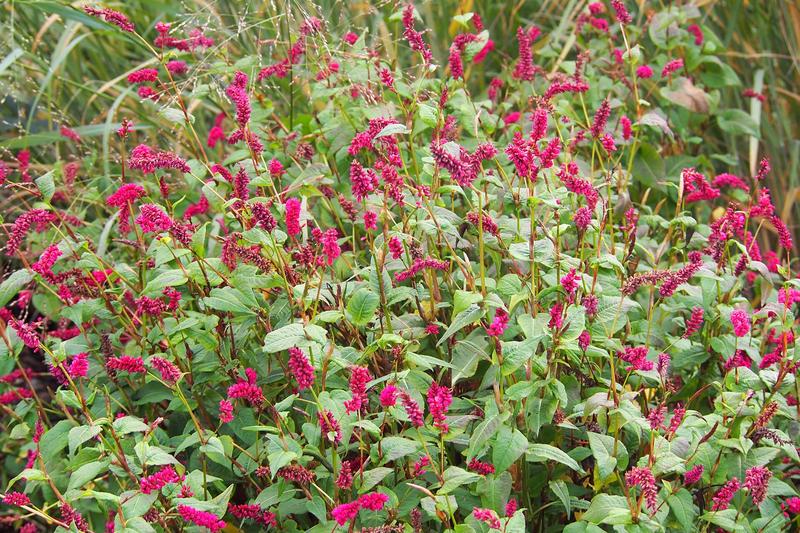
Quick facts
- Watering
- Weekly during dry spells
- Sunlight
- Full sun to partial shade
- Soil
- Moist, fertile, well-drained
- Humans
- Safe
- Cats
- Safe
- Dogs
- Safe
- Height
- 90–120 cm
- Spread
- 60–90 cm
- Spacing
- 60–75 cm apart
- RHS recognition
- Award of Garden Merit
About Persicaria
Persicaria amplexicaulis is a vigorous herbaceous perennial native to the Himalayas, prized for its long-lasting bottlebrush flower spikes that bloom from midsummer through to the first frosts. Growing in bold clumps of lance-shaped leaves, this reliable plant produces slender spires in shades of red, pink, or white that stand well above the foliage. UK gardeners value persicaria for its exceptional flowering period, low maintenance requirements, and ability to fill gaps in late-season borders when many other perennials are fading.
UK fact: Several Persicaria amplexicaulis cultivars hold the RHS Award of Garden Merit, including 'Firetail' (introduced 1996) and 'Taurus', which have become staples in British cottage gardens and prairie-style plantings across the country.
Watering Persicaria
Keep soil evenly moist throughout the growing season, particularly during the long flowering period from June to October. In typical British summers, established plants usually receive adequate moisture from rainfall, but water weekly during dry spells to maintain flower production. Apply a 5-7cm mulch layer around the base in spring to conserve soil moisture and suppress weeds. Avoid waterlogging in winter, as this can lead to crown rot in heavy clay soils.
Sunlight requirements
Plant in full sun for the most prolific flowering and strongest stems, particularly in northern parts of the UK where light levels are lower. In southern counties, light afternoon shade can help prevent moisture stress during hot summers. Avoid deep shade under trees, as this will result in weak, floppy growth and sparse flowering.
Soil and feeding
Grow in fertile, humus-rich soil that retains moisture without becoming waterlogged. Persicaria tolerates a wide pH range from slightly acidic to neutral (pH 6.0-7.5) and adapts to both clay and loam soils. Improve poor soils by incorporating well-rotted compost or manure before planting to boost fertility and moisture retention. On heavy clay, add horticultural grit to improve drainage and prevent winter waterlogging, which can damage the crown.
Feed in early spring with a general-purpose granular fertiliser such as blood, fish and bone at 70g per square metre, working it gently into the soil around the plant base. Alternatively, apply a 5cm layer of well-rotted garden compost or manure as a mulch, which will gradually release nutrients throughout the growing season. Avoid high-nitrogen feeds after midsummer, as these promote soft growth at the expense of flowers.
Pruning Persicaria
Leave the spent flower spikes standing over winter, as they provide structure and interest in the dormant border and food for seed-eating birds. Cut all stems down to ground level in February or March, just as new basal growth begins to appear. Deadhead regularly during the flowering season if you wish to prevent self-seeding, though this is not essential for plant health. Divide congested clumps every 3-4 years in spring to maintain vigour and prevent the centre from becoming woody.
Propagating Persicaria
Division is the most reliable method and should be carried out in March or April as new growth emerges, or in September after flowering finishes. Lift established clumps with a garden fork and divide into sections, ensuring each piece has several healthy shoots and a good root system. Basal cuttings taken in spring root readily: remove young shoots 7-10cm long with a heel of older tissue, insert into gritty compost, and keep in a cold frame until rooted. Persicaria can self-seed freely, and seedlings can be transplanted, though named cultivars will not come true from seed.
Common problems
Persicaria is generally trouble-free and resistant to most pests and diseases, making it an excellent choice for low-maintenance gardens. Slugs and snails may damage young spring growth, so protect emerging shoots with organic slug pellets or barriers. In very wet conditions or poorly drained soil, crown rot can occasionally occur over winter; ensure good drainage and avoid planting in heavy, waterlogged clay. Persicaria can self-seed enthusiastically in favourable conditions, so deadhead after flowering if you wish to prevent unwanted seedlings appearing throughout the border.
Spot a problem with your plant? Photograph the affected area using the Loam app and it will suggest the most likely cause and treatment.
Safety
- Humans
- Safe
- Cats
- Safe
- Dogs
- Safe
Toxicity information is for general guidance only.
Seasonal care calendar
Monthly care guide for Persicaria in the UK, based on average conditions.
| Month | Care tasks |
|---|---|
| January | No action needed. Leave old stems standing for winter structure and wildlife value. |
| February | Cut back all dead stems to ground level as new basal growth begins to emerge. Apply a mulch of well-rotted compost. |
| March | Divide established clumps if required. Apply a balanced granular fertiliser around the base. Watch for slug damage on emerging shoots. |
| April | Water newly planted or divided specimens regularly. Take basal cuttings from strong shoots for propagation. |
| May | Continue watering during dry spells. Foliage fills out rapidly; ensure adequate spacing for air circulation. |
| June | First flower spikes begin to appear. Water regularly to support flowering. Mulch to conserve moisture if not already done. |
| July | Peak flowering period. Deadhead spent blooms to encourage further flushes. Water weekly during dry weather. |
| August | Continue deadheading and watering. Flowering remains prolific through late summer. |
| September | Flowering continues into early autumn. Divide congested clumps if preferred over spring division. Reduce watering as temperatures cool. |
| October | Late flowers fade. Leave seed heads for birds and winter interest. Allow foliage to die back naturally. |
| November | No action needed. Stems provide structure in the dormant border. |
| December | No action needed. Leave standing stems for wildlife and winter garden interest. |
Frequently asked questions
- When should I cut back persicaria?
- Cut back persicaria to ground level in late autumn (November) after the first hard frosts have blackened the foliage, or leave the seed heads for winter interest and wildlife and cut back in early spring (February-March) before new growth emerges. Use clean, sharp secateurs and remove all old stems to the base. Spring cutting is preferred in colder regions as the dead growth provides some frost protection to the crown.
- Why are my persicaria leaves turning yellow?
- Yellowing leaves usually indicate insufficient water, as persicaria needs consistently moist soil throughout the growing season. Check that the soil hasn't dried out, particularly during hot weather or if the plant is in a container. Occasionally, yellowing can signal nutrient deficiency or waterlogging in heavy clay. The Loam app can help diagnose the specific cause by analysing photos of your plant and tracking your watering schedule to ensure your persicaria gets the care it needs.
- What soil does persicaria need?
- Persicaria thrives in moist, fertile soil that retains water without becoming waterlogged. It tolerates a wide range of soil types including clay, loam, and chalk, provided moisture levels remain consistent. Improve sandy soils by incorporating organic matter such as well-rotted compost or manure before planting. Avoid very dry, free-draining soils unless you can commit to regular watering. A soil pH between 6.0 and 7.5 is ideal, though persicaria is adaptable.
Got a question about growing Persicaria that isn't covered here? Ask the Garden Advisor in the Loam app. It knows your saved plants and local conditions.
Related plants
This page was compiled with AI assistance and reviewed by our team. .