Common Bistort
Persicaria bistorta
Perennials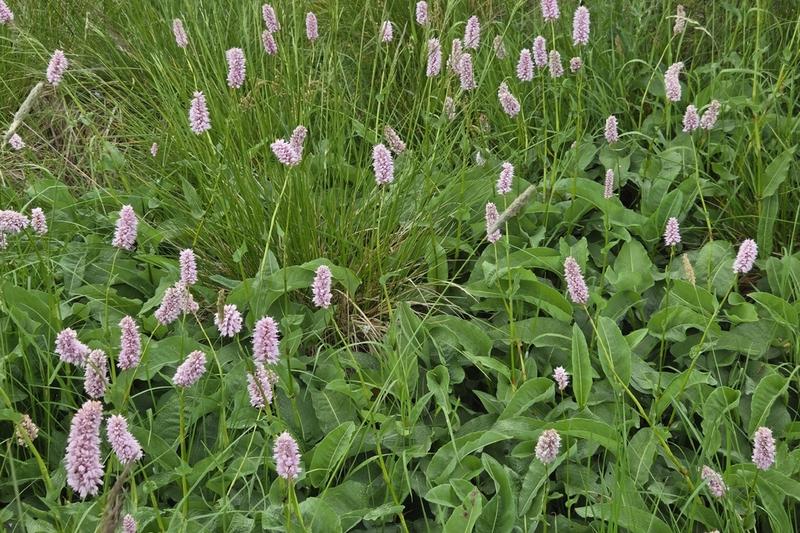
Quick facts
- Watering
- Weekly during dry spells
- Sunlight
- Full sun to partial shade
- Soil
- Moist, humus-rich, any pH
- Humans
- Safe
- Cats
- Safe
- Dogs
- Safe
- Height
- 60–90 cm
- Spread
- 45–60 cm
- Spacing
- 45–60 cm apart
- RHS recognition
- Award of Garden Merit
About Common Bistort
Common Bistort is a robust, clump-forming perennial native to damp meadows and grasslands across the UK and Europe. It produces striking bottle-brush spikes of soft pink flowers on tall stems from late spring through summer, rising above neat clumps of dock-like foliage. UK gardeners prize it for naturalising in wildflower meadows, cottage garden borders, and bog gardens where its vigorous growth and long flowering season provide reliable colour. The plant spreads steadily via rhizomes to form attractive drifts in moist conditions.
UK fact: Common Bistort holds the RHS Award of Garden Merit and has a long history in British cuisine, particularly in the Lake District where the young leaves are a key ingredient in 'Easter-ledge pudding', a traditional dish still made in Cumbria today.
Watering Common Bistort
This moisture-loving perennial requires consistent watering, especially during establishment and dry periods. In typical UK conditions, rainfall usually suffices, but water weekly during prolonged dry spells from May to September. Plants in bog gardens or beside ponds need little supplementary watering, whilst those in borders benefit from mulching to retain soil moisture. Avoid allowing the soil to dry out completely as this can check growth and reduce flowering.
Sunlight requirements
Common Bistort thrives in full sun to partial shade, with flowering most prolific in sunnier positions. In the UK, it tolerates light shade particularly well, making it ideal for north-facing borders or beneath deciduous trees. Plants in shadier spots will produce slightly fewer flower spikes but maintain healthy foliage throughout the growing season.
Soil and feeding
Common Bistort performs best in moisture-retentive, humus-rich soil that never dries out completely. It tolerates a wide pH range from acidic to alkaline and will grow in heavy clay soils provided they remain moist. For border plantings, improve drainage slightly whilst maintaining moisture by incorporating organic matter such as well-rotted compost or leaf mould. The plant excels in bog garden conditions and alongside streams or ponds where the soil remains consistently damp.
Apply a balanced slow-release fertiliser or well-rotted compost in early spring to support vigorous growth and flowering. Avoid high-nitrogen feeds which can promote excessive foliage at the expense of flowers. Plants in naturally fertile, moisture-retentive soils rarely require additional feeding beyond an annual mulch of organic matter.
Pruning Common Bistort
Deadhead spent flower spikes after the main flush in June to encourage a second, lighter flowering in late summer. Cut back all foliage to ground level in late autumn once it has died back naturally, or leave until early spring to provide winter interest and habitat for beneficial insects. Divide congested clumps every 3-4 years in spring or autumn to maintain vigour and prevent excessive spread. Remove any unwanted runners at the edges of clumps to control spread in smaller gardens.
Propagating Common Bistort
Common Bistort is easily propagated by division in spring or autumn, lifting established clumps and separating them into sections with roots and shoots attached. Replant divisions immediately at the same depth, spacing them 45-60cm apart, and water well until established. Seed can be sown in autumn in pots outdoors, though germination may be erratic and plants take 2-3 years to reach flowering size. Division is the quickest and most reliable method for UK gardeners, producing flowering plants within the same season.
Common problems
Common Bistort is largely trouble-free and resistant to most pests and diseases in UK gardens. Slugs and snails may damage young emerging shoots in spring, particularly in damp conditions, so apply organic slug pellets or barriers if necessary. In very dry conditions, plants may suffer from powdery mildew on foliage, though this is rare in moisture-retentive soils. The main cultural issue is excessive spread in small gardens, as the rhizomatous roots can become invasive in ideal conditions, requiring regular division and removal of unwanted growth.
Spot a problem with your plant? Photograph the affected area using the Loam app and it will suggest the most likely cause and treatment.
Safety
- Humans
- Safe
- Cats
- Safe
- Dogs
- Safe
Toxicity information is for general guidance only.
Seasonal care calendar
Monthly care guide for Common Bistort in the UK, based on average conditions.
| Month | Care tasks |
|---|---|
| January | No action needed, plant fully dormant. |
| February | Check mulch around plants and top up if necessary. |
| March | Apply balanced fertiliser or compost as new growth emerges. Divide congested clumps if needed. |
| April | Water during dry spells as foliage develops. Protect emerging shoots from slugs. |
| May | Maintain soil moisture as flower spikes begin to form. Stake tall stems if exposed to wind. |
| June | Enjoy peak flowering. Deadhead spent blooms to encourage repeat flowering. |
| July | Continue deadheading and water weekly during dry periods. |
| August | Water regularly in dry weather. Second flush of flowers may appear. |
| September | Reduce watering as growth slows. Divide plants if required. |
| October | Cut back dying foliage or leave for winter interest and wildlife. |
| November | Apply mulch around plants to protect roots and suppress weeds. |
| December | No action needed, plant dormant. |
Frequently asked questions
- Is Common Bistort invasive in UK gardens?
- Common Bistort can spread vigorously via rhizomes in ideal moist conditions, but it's not classified as invasive and is easily controlled by dividing clumps every 3-4 years and removing unwanted runners. It's perfect for naturalising in wildflower meadows or larger bog gardens where its spreading habit is an asset.
- Why isn't my Common Bistort flowering well?
- Poor flowering is usually caused by insufficient sunlight, dry soil, or overcrowding. The Loam app can help you track watering schedules and set reminders to divide congested clumps, ensuring your plants receive the care they need for abundant blooms each summer.
- Can I grow Common Bistort in a container?
- Whilst possible, Common Bistort is better suited to open ground as it requires consistently moist soil and space for its spreading rhizomes. If growing in a container, choose a large pot (at least 40cm diameter), use moisture-retentive compost, and water daily during summer to prevent the soil drying out.
Got a question about growing Common Bistort that isn't covered here? Ask the Garden Advisor in the Loam app. It knows your saved plants and local conditions.
Related plants
This page was compiled with AI assistance and reviewed by our team. .