Neoregelia
Neoregelia carolinae
Houseplants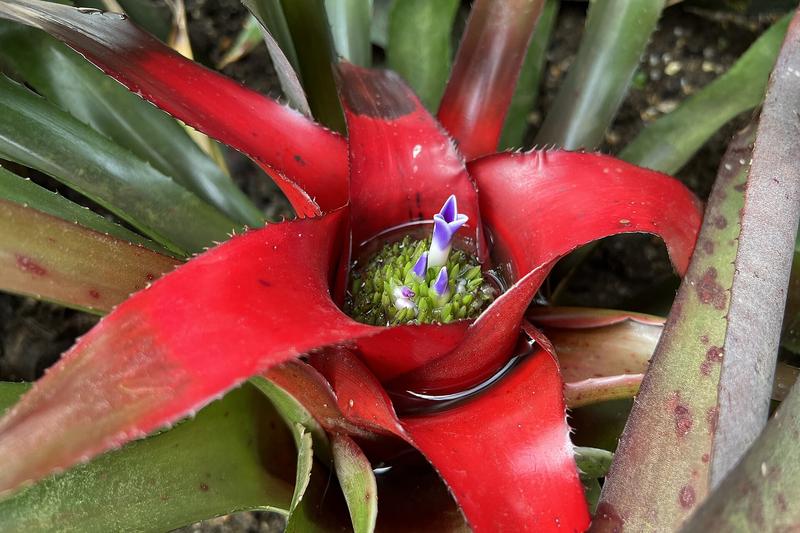
Quick facts
- Watering
- Weekly, fill central cup
- Sunlight
- Bright indirect light
- Soil
- Free-draining orchid or bromeliad mix
- Humans
- Safe
- Cats
- Safe
- Dogs
- Safe
- Height
- 20–40 cm
- Spread
- 30–50 cm
- Spacing
- 30–40 cm apart
- RHS recognition
- Award of Garden Merit
About Neoregelia
Neoregelia is a striking Brazilian bromeliad prized for its rosette of glossy, strap-like leaves that flush brilliant red or pink at the centre when mature. This epiphytic houseplant brings year-round architectural interest to UK homes, particularly valued for its low-maintenance nature and tolerance of central heating. The central 'vase' formed by overlapping leaves holds water in its natural rainforest habitat, a feature that makes it a fascinating talking point. UK gardeners appreciate its ability to thrive in bright bathrooms and conservatories where humidity levels are naturally higher.
UK fact: Neoregelia carolinae f. tricolor 'Perfecta' holds an RHS Award of Garden Merit, recognised for its exceptional performance as a houseplant in British homes and its reliable display of vibrant foliage colour without requiring specialist glasshouse conditions.
Watering Neoregelia
Keep the central cup formed by the rosette filled with fresh water at all times, flushing and refilling weekly to prevent stagnation. Water the growing medium lightly when the top 2-3 cm feels dry, but avoid waterlogging as this can cause root rot. In UK homes with central heating, mist the foliage 2-3 times weekly during winter to maintain humidity. Use rainwater or filtered water where possible, as Neoregelia is sensitive to the lime and chlorine found in hard tap water common across much of southern England.
Sunlight requirements
Neoregelia thrives in bright, filtered light but must be protected from direct summer sun which can scorch the leaves. In UK homes, an east or west-facing windowsill is ideal, or set back from a south-facing window behind a sheer curtain. North-facing positions may result in reduced colour intensity in the central rosette, though the plant will still survive.
Soil and feeding
Plant in a specialist orchid or bromeliad compost that provides excellent drainage and aeration, or create your own mix using equal parts bark chips, perlite, and peat-free multipurpose compost. The roots serve primarily as anchors rather than for nutrient uptake, so a chunky, open structure is essential to prevent rot. Neoregelia tolerates a wide pH range (5.5-7.0) but performs best in slightly acidic conditions. Repotting is rarely needed as these plants prefer being slightly pot-bound.
Feed monthly from April to September using a diluted liquid fertiliser at quarter strength, applying it to both the central cup and the growing medium. Alternatively, mist the foliage with diluted feed as Neoregelia absorbs nutrients through its leaves. Avoid feeding during the darker winter months when growth naturally slows in UK conditions.
Pruning Neoregelia
Neoregelia requires minimal pruning beyond removing any brown or damaged outer leaves by cutting cleanly at the base with sterilised scissors. After flowering (which may take several years), the main rosette will slowly die back over 12-18 months whilst producing offsets (pups) around its base. Allow the mother plant to remain until it has fully transferred energy to the pups, then carefully cut away the spent rosette. Remove any accumulated debris from the central cup during weekly water changes to maintain plant health.
Propagating Neoregelia
Neoregelia is propagated from offsets (pups) that develop around the base of the mother plant after flowering. Wait until pups reach at least one-third the size of the parent plant before separating them, typically 3-6 months after they first appear. Use a sharp, sterilised knife to cut the pup away with some root attached if possible, then pot into orchid compost and keep warm (18-24°C) in bright, indirect light. The pup will establish over 2-3 months and may take 3-5 years to reach flowering size in UK conditions.
Common problems
Neoregelia is relatively pest-free but can occasionally suffer from scale insects or mealybugs, particularly in the leaf axils where they're difficult to spot. Inspect regularly and remove pests with cotton buds dipped in diluted washing-up liquid or horticultural soap. Brown leaf tips typically indicate low humidity or the use of hard tap water, both common issues in UK homes with central heating. Root rot from overwatering the growing medium is the most serious problem; always ensure the pot has drainage holes and the compost is free-draining. Lack of colour in the central rosette usually indicates insufficient light rather than a health problem.
Spot a problem with your plant? Photograph the affected area using the Loam app and it will suggest the most likely cause and treatment.
Safety
- Humans
- Safe
- Cats
- Safe
- Dogs
- Safe
Toxicity information is for general guidance only.
Seasonal care calendar
Monthly care guide for Neoregelia in the UK, based on average conditions.
| Month | Care tasks |
|---|---|
| January | Maintain warmth above 15°C and mist foliage if central heating reduces humidity. Flush central cup with fresh water. |
| February | Check for scale insects in leaf axils. Continue weekly cup flushing and light watering of compost when dry. |
| March | Increase watering frequency slightly as daylight hours lengthen. Wipe leaves with damp cloth to remove dust. |
| April | Begin monthly feeding at quarter strength. Check for emerging pups around the base of mature plants. |
| May | Continue feeding and maintain consistent moisture in central cup. Increase misting frequency as temperatures rise. |
| June | Monitor for sunburn if positioned near south-facing windows. Ensure adequate humidity through regular misting. |
| July | Peak growing season: maintain regular feeding and watering. Flush central cup twice weekly in warm weather. |
| August | Continue summer care routine. Separate pups that have reached one-third parent size if desired. |
| September | Reduce feeding frequency as growth slows. Maintain watering and cup flushing routine. |
| October | Stop feeding for winter. Ensure plant is positioned away from cold draughts as heating begins. |
| November | Reduce watering frequency slightly but keep central cup filled. Increase misting to counter dry indoor air. |
| December | Maintain minimum 15°C temperature. Flush cup weekly and mist foliage regularly in heated rooms. |
Frequently asked questions
- Why is my Neoregelia losing its red colour?
- Loss of red or pink colouration in the central rosette is almost always due to insufficient light. Move your Neoregelia to a brighter position with indirect light, such as an east or west-facing windowsill. The colour intensifies as the plant matures and approaches flowering, which can take 3-5 years from a pup. Ensure you're also feeding during the growing season to support healthy pigment development.
- How do I know when to water my Neoregelia and avoid overwatering?
- The Loam app can send you personalised watering reminders based on your home conditions and pot size. Generally, keep the central cup filled with fresh water (flushed weekly) and water the compost only when the top 2-3 cm feels dry. The app's diagnosis feature can also help identify signs of overwatering like yellowing leaves or root rot before serious damage occurs.
- Will my Neoregelia flower, and what happens afterwards?
- Neoregelia typically flowers once it reaches maturity, usually 3-5 years from a pup, producing small tubular flowers in the water-filled central cup. The main rosette will gradually die back over 12-18 months after flowering, but it produces offsets (pups) around its base that can be separated and grown on. This is the plant's natural lifecycle, and the pups will eventually flower in turn.
Got a question about growing Neoregelia that isn't covered here? Ask the Garden Advisor in the Loam app. It knows your saved plants and local conditions.
Related plants
This page was compiled with AI assistance and reviewed by our team. .