Heavenly Bamboo
Nandina domestica
Shrubs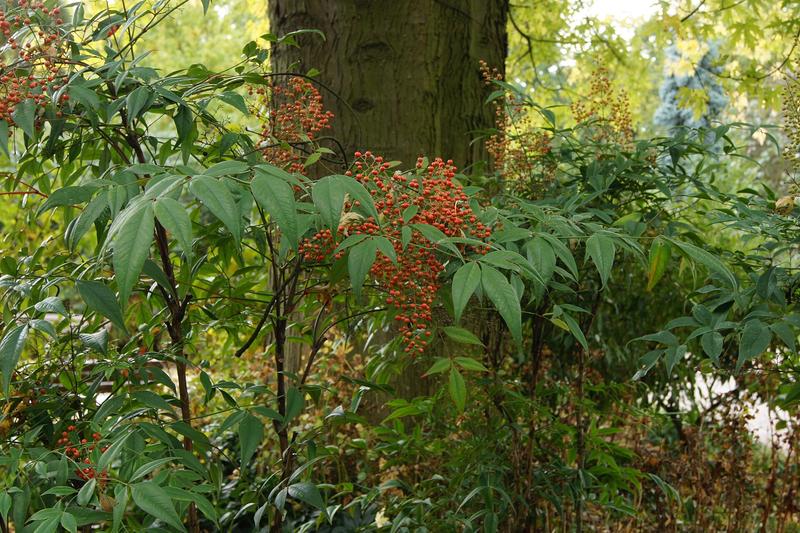
Quick facts
- Watering
- Weekly when establishing
- Sunlight
- Full sun to partial shade
- Soil
- Well-drained, fertile, slightly acidic
- Humans
- Toxic
- Cats
- Toxic
- Dogs
- Toxic
- Height
- 120–180 cm
- Spread
- 90–150 cm
- Spacing
- 100–120 cm apart
- RHS recognition
- Award of Garden Merit
About Heavenly Bamboo
Heavenly Bamboo is an evergreen shrub native to East Asia, prized by UK gardeners for its year-round interest and architectural form. Despite its common name, it is not a true bamboo but a member of the Berberidaceae family, with bamboo-like canes and delicate, compound leaves that turn brilliant shades of red and purple in autumn and winter. Its white summer flowers are followed by clusters of bright red berries that persist through winter, providing valuable colour when little else is in bloom. This low-maintenance shrub thrives in sheltered UK gardens, particularly in milder regions and urban microclimates.
UK fact: Nandina domestica has been awarded the RHS Award of Garden Merit for its reliable performance in British gardens, particularly valued for providing winter colour in sheltered city gardens and courtyards where its evergreen foliage and persistent berries brighten the darkest months.
Watering Heavenly Bamboo
Water newly planted Heavenly Bamboo regularly during the first growing season to establish a deep root system, typically once or twice weekly during dry spells. Once established, plants are moderately drought-tolerant and usually only require watering during prolonged dry periods in summer. In containers, water more frequently, ensuring the compost remains moist but not waterlogged. During winter, reduce watering significantly as the plant's growth slows, though container-grown specimens may still need occasional watering in sheltered spots.
Sunlight requirements
Heavenly Bamboo performs best in full sun, which encourages the most vibrant autumn and winter foliage colour as well as prolific berry production. In the UK, a south or west-facing position is ideal, though it will tolerate partial shade, particularly in warmer southern regions. Plants in shadier spots will produce fewer berries and less intense leaf colour, though they will still provide attractive evergreen structure.
Soil and feeding
Heavenly Bamboo thrives in moist but well-drained soil enriched with organic matter, preferring a slightly acidic to neutral pH of 5.5 to 7.0. Heavy clay soils should be improved with grit and compost to enhance drainage, as waterlogged conditions can lead to root rot. In alkaline soils, the foliage may show signs of chlorosis (yellowing), so incorporate ericaceous compost at planting time. For container cultivation, use a loam-based compost such as John Innes No. 3 mixed with ericaceous compost for optimal results.
Apply a balanced slow-release fertiliser in early spring as new growth emerges, or use a liquid feed monthly during the growing season from April to August. For the best autumn and winter colour, avoid high-nitrogen feeds after midsummer, as these promote soft growth at the expense of foliage pigmentation. Container-grown plants benefit from more regular feeding throughout the growing season.
Pruning Heavenly Bamboo
Prune Heavenly Bamboo in late spring after the risk of hard frost has passed, removing any frost-damaged stems and cutting back older canes to ground level to encourage fresh growth from the base. Light pruning to shape the plant or remove wayward stems can be done at any time during the growing season. To maintain a compact habit, cut back up to one-third of the oldest stems annually, which will promote dense, bushy growth and better winter colour. Avoid autumn pruning, as this removes the developing berries that provide winter interest.
Propagating Heavenly Bamboo
Heavenly Bamboo can be propagated from semi-ripe cuttings taken in late summer, using 10-15cm lengths of current season's growth with a heel of older wood. Root cuttings in a mix of peat-free compost and sharp sand in a cold frame or unheated greenhouse, where they should root by the following spring. Division of established clumps in spring is also successful, carefully separating rooted suckers from the parent plant. Seed propagation is possible but slow, requiring stratification and taking two to three years to produce flowering-sized plants.
Common problems
Heavenly Bamboo is generally trouble-free in UK gardens, though it can suffer frost damage to foliage and stems during severe winters, particularly in exposed positions. Viral infections occasionally cause mottling or distortion of leaves, and affected plants should be removed to prevent spread. In poorly drained soils, root rot can occur, manifesting as yellowing leaves and dieback. The berries are toxic if ingested, so care should be taken in gardens where children or pets play, and fallen berries should be cleared regularly to prevent accidental consumption.
Spot a problem with your plant? Photograph the affected area using the Loam app and it will suggest the most likely cause and treatment.
Safety
- Humans
-
Toxic
All parts of Heavenly Bamboo are toxic if ingested, particularly the berries, which contain cyanogenic glycosides that can cause vomiting, abdominal pain, and respiratory distress. Keep berries away from children.
- Cats
-
Toxic
Toxic to cats if ingested. The berries and foliage contain compounds that can cause vomiting, difficulty breathing, and seizures. Seek veterinary attention immediately if ingestion is suspected.
- Dogs
-
Toxic
Toxic to dogs if ingested. Berries are particularly dangerous and can cause vomiting, excessive drooling, difficulty breathing, and seizures. Contact a vet immediately if your dog has eaten any part of the plant.
Toxicity information is for general guidance only. If a person or pet has been exposed to this plant and you are concerned, seek advice from a medical professional or vet.
Seasonal care calendar
Monthly care guide for Heavenly Bamboo in the UK, based on average conditions.
| Month | Care tasks |
|---|---|
| January | Enjoy the winter foliage colour and persistent red berries. Protect from severe frost with fleece if temperatures drop below -10°C. |
| February | Check for frost damage and remove any badly damaged leaves. Continue to enjoy winter berries and colourful foliage. |
| March | Apply slow-release fertiliser around the base. Begin watering container plants more regularly as growth resumes. |
| April | Prune out any frost-damaged stems and remove oldest canes to encourage fresh growth. Plant new specimens and water regularly. |
| May | Water during dry spells and mulch around the base with organic matter. New foliage emerges in shades of pink and bronze. |
| June | Watch for white flower panicles forming at stem tips. Continue regular watering of newly planted specimens. |
| July | Flowers are in full bloom. Water during dry periods and feed container plants with liquid fertiliser. |
| August | Take semi-ripe cuttings for propagation. Green berries begin to form as flowers fade. Water regularly in dry weather. |
| September | Berries ripen to bright red. Reduce watering as growth slows. Foliage begins to develop autumn tints in cooler regions. |
| October | Enjoy the developing autumn colour as leaves turn red and purple. Berry clusters provide ornamental interest. |
| November | Foliage colour intensifies in cold weather. Clear fallen berries if children or pets are present. Reduce watering. |
| December | Peak winter colour with red and purple foliage and bright berries. Minimal watering required except for container plants in sheltered spots. |
Frequently asked questions
- Why is my Heavenly Bamboo not turning red in winter?
- Heavenly Bamboo requires full sun and cold temperatures to develop its characteristic red and purple winter colour. Plants in shade or sheltered, warm positions often remain green. Ensure your plant receives at least six hours of direct sunlight daily, and avoid high-nitrogen fertilisers after midsummer, which promote green growth at the expense of colour pigmentation.
- How do I know when my Heavenly Bamboo needs watering?
- Check the soil moisture by inserting your finger 5cm into the soil—if it feels dry, water thoroughly. The Loam app can send you personalised watering reminders based on your local weather conditions and help you track your plant's specific needs throughout the seasons.
- Can Heavenly Bamboo survive a British winter outdoors?
- Yes, Heavenly Bamboo is hardy to around -10°C and survives most UK winters, particularly in southern and urban areas. In colder northern regions or exposed sites, provide winter protection with fleece during severe frosts, or grow in a sheltered spot against a south-facing wall. Container-grown plants are more vulnerable and should be moved to a sheltered location during extreme cold.
Got a question about growing Heavenly Bamboo that isn't covered here? Ask the Garden Advisor in the Loam app. It knows your saved plants and local conditions.
Related plants
This page was compiled with AI assistance and reviewed by our team. .