Mulberry
Morus nigra
Trees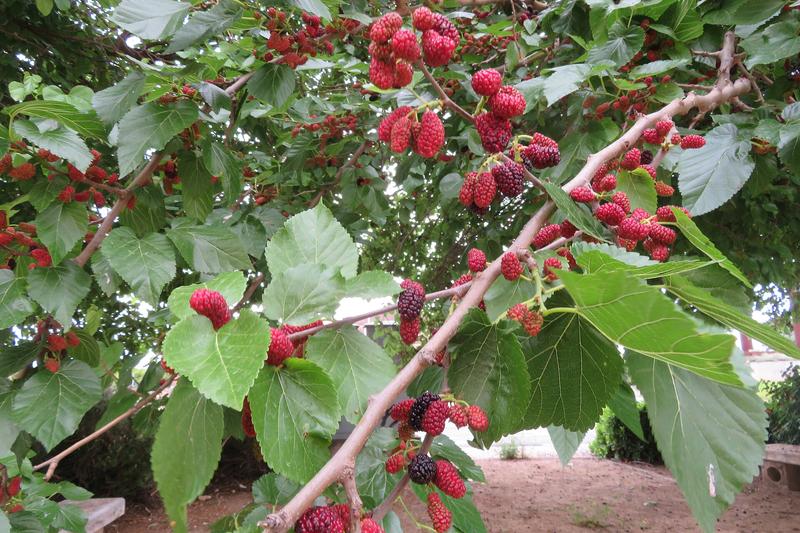
Quick facts
- Watering
- Weekly when young, fortnightly established
- Sunlight
- Full sun to partial shade
- Soil
- Deep, fertile, well-drained loam
- Humans
- Safe
- Cats
- Safe
- Dogs
- Safe
- Height
- 600–1000 cm
- Spread
- 600–1000 cm
- Spacing
- 800–1200 cm apart
About Mulberry
The black mulberry is a handsome, slow-growing deciduous tree prized for its delicious dark purple fruits and attractive heart-shaped leaves. Native to western Asia, it has been cultivated in Britain since at least the 16th century, often planted in monastery and manor house gardens. UK gardeners value it for its sweet, juicy berries that ripen in late summer, its gnarled architectural form, and its ability to thrive in our temperate climate. The tree develops a characterful, spreading crown and can live for several centuries, becoming a cherished garden feature.
UK fact: Many historic mulberry trees survive in British gardens and parks, including specimens at Hampton Court Palace planted in the 1540s, making them among the oldest cultivated fruit trees in the UK.
Watering Mulberry
Young mulberry trees require regular watering during their first two to three years, particularly during dry spells from May to September. Once established, they are remarkably drought-tolerant and typically need watering only during prolonged dry periods in summer. Water deeply rather than frequently to encourage deep root development. Trees in containers require more frequent watering, especially when fruiting.
Sunlight requirements
Mulberries fruit most prolifically in full sun but tolerate partial shade, making them suitable for south, west, or east-facing positions. In the UK, a sheltered spot with good light exposure encourages the best fruit set and ripening. Avoid deep shade, which reduces fruiting and can lead to weak, leggy growth.
Soil and feeding
Mulberries thrive in deep, fertile, moisture-retentive soil with good drainage, ideally a rich loam. They tolerate a wide pH range from slightly acidic to slightly alkaline (pH 5.5-7.5) but perform best in neutral to slightly acidic conditions. Heavy clay soils should be improved with organic matter and grit to prevent waterlogging, whilst sandy soils benefit from generous additions of compost to improve moisture retention. The tree's extensive root system requires deep soil to anchor properly and access nutrients.
Apply a balanced general-purpose fertiliser such as blood, fish and bone in early spring at 70g per square metre around the root zone. Mulch annually with well-rotted manure or garden compost in late winter to maintain soil fertility and moisture retention. Avoid high-nitrogen feeds after midsummer, as this encourages soft growth vulnerable to frost damage.
Pruning Mulberry
Mulberries require minimal pruning and bleed sap profusely if cut during the growing season, so prune only when fully dormant in late December or January. Remove dead, diseased, or crossing branches to maintain an open crown with good air circulation. Established trees rarely need pruning beyond removing damaged wood. Young trees can be lightly shaped to develop a balanced framework, but avoid heavy pruning as mulberries fruit on old wood and recover slowly from major cuts.
Propagating Mulberry
Mulberries can be propagated from semi-ripe cuttings taken in July or August, using 15-20cm lengths of current season's growth with a heel. Root in a mixture of equal parts peat-free compost and sharp sand in a cold frame, though success rates are variable. Hardwood cuttings taken in winter and rooted outdoors are an alternative method. Layering is often more reliable: peg down a low branch in spring, wound the underside, and it should root within 12-18 months. Named varieties are usually grafted professionally to ensure fruit quality.
Common problems
Mulberries are generally trouble-free in the UK, with few serious pests or diseases. Birds, particularly blackbirds and starlings, can strip ripe fruit, so netting may be necessary if you want to harvest the crop. Coral spot fungus can affect dead wood, appearing as pink-orange pustules; prune out affected branches to healthy tissue. The abundant fruit drop can stain paving and patios with dark purple juice, so avoid planting near seating areas or where fallen fruit will create a nuisance. Powdery mildew occasionally affects foliage in dry summers but rarely causes lasting damage.
Spot a problem with your plant? Photograph the affected area using the Loam app and it will suggest the most likely cause and treatment.
Safety
- Humans
- Safe
- Cats
- Safe
- Dogs
- Safe
Toxicity information is for general guidance only.
Seasonal care calendar
Monthly care guide for Mulberry in the UK, based on average conditions.
| Month | Care tasks |
|---|---|
| January | Prune if necessary whilst fully dormant, removing dead or damaged wood. |
| February | Apply well-rotted manure or compost as a mulch around the base. |
| March | Apply balanced fertiliser such as blood, fish and bone around the root zone. |
| April | Monitor for new growth and water young trees if conditions are dry. |
| May | Water regularly during dry spells, especially young trees and container specimens. |
| June | Continue watering as needed and watch for early fruit development. |
| July | Take semi-ripe cuttings if propagating. Water during dry weather. |
| August | Harvest ripe fruit as it darkens and softens. Net against birds if necessary. |
| September | Continue harvesting late fruit. Clear fallen fruit to prevent staining and mess. |
| October | Reduce watering as the tree enters dormancy and leaves begin to fall. |
| November | Clear fallen leaves and fruit from around the base. |
| December | Prune if necessary once fully dormant, though late January is preferable. |
Frequently asked questions
- How long does it take for a mulberry tree to fruit in the UK?
- Mulberry trees typically begin fruiting 3-5 years after planting, though this varies by propagation method. Grafted trees often fruit sooner than those grown from cuttings. Once established, they fruit reliably each summer, with yields increasing as the tree matures over 10-15 years.
- Why are my mulberry leaves turning yellow?
- Yellowing leaves can indicate waterlogging, nutrient deficiency, or natural autumn colour change. The Loam app can help you diagnose the specific cause by tracking your watering schedule, soil conditions, and seasonal patterns, then provide personalised care adjustments.
- Can I grow a mulberry tree in a container?
- Yes, mulberries can be grown in large containers (at least 60cm diameter) for several years, making them suitable for patios and small gardens. Choose a dwarf variety if possible, use soil-based compost such as John Innes No. 3, and water regularly. Container-grown trees will need repotting every 2-3 years and more frequent feeding than those in the ground.
Got a question about growing Mulberry that isn't covered here? Ask the Garden Advisor in the Loam app. It knows your saved plants and local conditions.
Related plants
This page was compiled with AI assistance and reviewed by our team. .