Blackberry
Rubus fruticosus
Fruit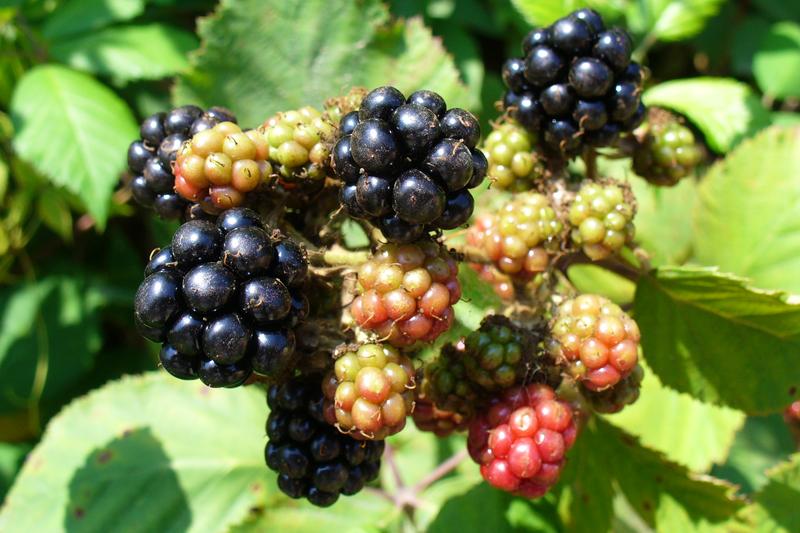
Quick facts
- Watering
- Weekly during fruiting season
- Sunlight
- Full sun to partial shade
- Soil
- Moist, well-drained, slightly acidic
- Humans
- Safe
- Cats
- Safe
- Dogs
- Safe
- Height
- 150–250 cm
- Spread
- 150–300 cm
- Spacing
- 180–240 cm apart
About Blackberry
Blackberry is a vigorous, thorny perennial shrub native to the UK, producing arching canes that bear clusters of sweet, dark purple-black berries in late summer. The plant features white or pale pink flowers in early summer and attractive palmate leaves that often turn reddish in autumn. British gardeners prize blackberries for their abundant, flavourful fruit that's perfect for jams, pies, and fresh eating, as well as their ability to thrive in a wide range of conditions. Modern thornless cultivars offer easier harvesting whilst maintaining the delicious flavour of wild hedgerow blackberries.
UK fact: Blackberries have been gathered from British hedgerows for thousands of years, and folklore dictates that they should not be picked after Michaelmas (29th September) when the devil is said to have spoiled them—though this likely reflects the deterioration of late-season fruit quality.
Watering Blackberry
Blackberries require consistent moisture during the growing season, especially from flowering through to harvest in July and August. Water deeply once or twice weekly during dry periods, providing approximately 25-40mm of water to encourage deep root growth. Established plants are reasonably drought-tolerant but fruit size and quality suffer without adequate moisture. Mulching around the base helps retain soil moisture and reduces watering frequency, particularly important during the increasingly dry British summers.
Sunlight requirements
Position blackberries in full sun for the heaviest crops and sweetest fruit, ideally receiving at least six hours of direct sunlight daily. They will tolerate partial shade and still produce reasonable yields, making them suitable for north-facing walls or beneath light tree canopies. In the UK, a south or west-facing position maximises ripening potential during our relatively short summers.
Soil and feeding
Plant blackberries in rich, moisture-retentive soil that drains well, ideally with a pH between 5.5 and 6.5, though they tolerate a range from 5.0 to 7.0. Heavy clay soils benefit from the addition of organic matter and grit to improve drainage, whilst sandy soils require generous amounts of compost or well-rotted manure to increase water retention. Avoid waterlogged sites as blackberries are susceptible to root rot. Incorporate a 7-10cm layer of garden compost or well-rotted manure before planting to provide the nutrient-rich foundation these hungry plants require.
Apply a general-purpose fertiliser such as Growmore or blood, fish and bone in March at 70g per square metre around the base of established plants. Supplement with a potassium-rich feed such as tomato fertiliser in June to promote fruit development and improve flavour. Mulch annually in spring with a 5-7cm layer of well-rotted manure or garden compost to maintain soil fertility and structure.
Pruning Blackberry
Blackberries fruit on the previous year's growth, so pruning focuses on removing old canes that have fruited. Cut fruited canes down to ground level immediately after harvest in late summer or early autumn, as they will not fruit again and can harbour pests and diseases. Tie in the current season's new green canes to your support system, spacing them 10-15cm apart to allow air circulation and light penetration. In late winter, tip-prune the new canes to 15-20cm above the top wire to encourage side shoots that will bear fruit.
Propagating Blackberry
The easiest propagation method is tip layering, performed in July or August when new canes are still flexible. Simply bend a young cane tip to the ground, bury it 7-10cm deep in soil or a pot of compost, and secure with a wire peg. Roots develop within 6-8 weeks, and the new plant can be severed from the parent and transplanted the following spring. Alternatively, take 10-15cm root cuttings in December or January, plant them horizontally 5cm deep in pots of gritty compost, and keep in a cold frame until shoots appear in spring.
Common problems
Blackberries are relatively trouble-free but can suffer from raspberry beetle, whose larvae damage ripening fruit—covering plants with fine netting after flowering helps prevent infestation. Cane spot and spur blight are fungal diseases causing purple spots and dieback; prune out affected canes and ensure good air circulation. Birds are the most common problem, stripping ripe berries before harvest, so netting is essential from late July onwards. Aphids may colonise new growth in spring, and can be controlled with insecticidal soap or by encouraging natural predators such as ladybirds and hoverflies.
Spot a problem with your plant? Photograph the affected area using the Loam app and it will suggest the most likely cause and treatment.
Safety
- Humans
- Safe
- Cats
- Safe
- Dogs
- Safe
Toxicity information is for general guidance only.
Seasonal care calendar
Monthly care guide for Blackberry in the UK, based on average conditions.
| Month | Care tasks |
|---|---|
| January | Take root cuttings for propagation. Check supports and repair any damage from winter weather. |
| February | Complete winter pruning by tip-pruning new canes. Apply well-rotted manure or compost as a mulch around established plants. |
| March | Apply general-purpose fertiliser around the base. Plant new bare-root canes. Tie in any loose canes to supports. |
| April | Water during dry spells as new growth emerges. Watch for aphids on young shoots and treat if necessary. |
| May | Flowers begin to appear. Continue watering regularly and tie in new canes as they grow to keep them separate from fruiting canes. |
| June | Apply potassium-rich feed to support fruit development. Ensure consistent watering as fruits begin to form. Erect bird netting. |
| July | Begin harvesting early varieties. Water regularly during fruiting. Tip layer new canes for propagation. Watch for raspberry beetle. |
| August | Continue harvesting ripe berries every few days. Cut out fruited canes immediately after harvest and tie in new growth. |
| September | Finish harvesting and complete removal of old fruited canes. Tie in new canes, spacing them evenly along supports. |
| October | Clear away fallen leaves and debris to reduce overwintering pests and diseases. Check ties and supports are secure. |
| November | Plant new container-grown plants if soil conditions allow. Mulch around the base with compost or bark. |
| December | Take root cuttings for propagation. Plants are dormant—minimal care required beyond checking supports remain secure. |
Frequently asked questions
- How do I prune blackberries after fruiting?
- After fruiting finishes in September or October, cut all fruited canes down to ground level as they won't fruit again. Tie in the new season's canes that grew during summer, spacing them 10-15cm apart along the wires. These will produce next year's crop. Remove any weak or damaged growth and thin to 6-8 strong canes per plant for best results.
- What's wrong with my blackberry leaves?
- Blackberry leaf problems can indicate various issues: purple-brown spots suggest fungal rust, yellowing between veins indicates nutrient deficiency, and curled or distorted leaves may signal aphid infestation or virus. The Loam app can help you identify the specific problem through photo diagnosis and provide personalised treatment recommendations based on your growing conditions.
- What type of soil do blackberries need?
- Blackberries thrive in moisture-retentive but well-drained soil with a pH between 6.0 and 6.5. They tolerate a range of soil types but perform best in fertile loam enriched with organic matter. Avoid waterlogged or very chalky soils. Before planting, incorporate well-rotted manure or compost and ensure the site receives full sun for at least 6 hours daily for the sweetest fruit.
Got a question about growing Blackberry that isn't covered here? Ask the Garden Advisor in the Loam app. It knows your saved plants and local conditions.
Related plants
This page was compiled with AI assistance and reviewed by our team. .