Blackcurrant
Ribes nigrum
Fruit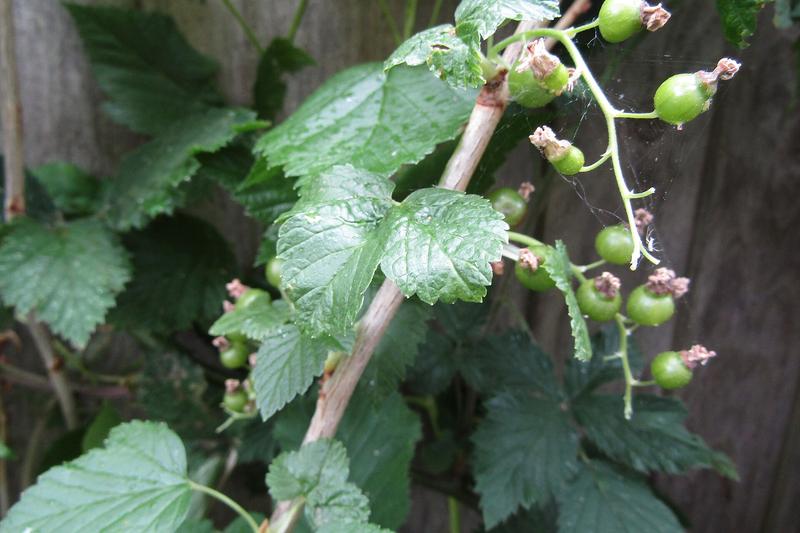
Quick facts
- Watering
- Weekly during fruiting
- Sunlight
- Full sun to partial shade
- Soil
- Moisture-retentive, slightly acidic
- Humans
- Safe
- Cats
- Safe
- Dogs
- Safe
- Height
- 120–180 cm
- Spread
- 120–150 cm
- Spacing
- 150–180 cm apart
About Blackcurrant
Blackcurrant is a deciduous shrub native to northern Europe and Asia, producing clusters of tart, vitamin C-rich berries on woody stems. Growing 1.2–1.8 metres tall, it bears aromatic leaves and small greenish flowers in spring, followed by glossy black fruits in midsummer. British gardeners prize blackcurrants for their exceptional flavour in jams, cordials, and desserts, and their reliable cropping in cool climates. The shrub thrives in the UK's temperate conditions, making it one of the most rewarding soft fruits for home cultivation.
UK fact: Blackcurrants became a vital source of vitamin C during World War II when citrus imports were restricted, leading to the widespread distribution of free blackcurrant syrup to British children—a practice that continued until the 1950s and cemented the fruit's place in British culinary culture.
Watering Blackcurrant
Water regularly from spring through harvest, providing 20–30 litres per square metre weekly during dry periods. Blackcurrants have shallow roots and suffer quickly in drought, causing berries to shrivel or drop prematurely. Mulching helps retain moisture, but ensure water penetrates to root depth rather than just wetting the mulch surface. Reduce watering after harvest, but don't allow the soil to dry out completely, as next year's fruit buds form in late summer.
Sunlight requirements
Plant in full sun for the heaviest crops and sweetest berries, though blackcurrants are more shade-tolerant than most soft fruits. In the UK, a south- or west-facing position is ideal, but they'll still produce reasonable yields in partial shade or on north-facing sites. Avoid deep shade under trees, which reduces flowering and increases disease risk.
Soil and feeding
Plant in fertile, moisture-retentive soil enriched with well-rotted manure or compost, ideally with a pH of 6.0–6.5. Heavy clay soils suit blackcurrants well provided they don't waterlog in winter; improve drainage on very heavy ground by incorporating organic matter or planting on slight mounds. Avoid shallow, chalky, or very sandy soils unless heavily amended with organic matter. Mulch annually with compost or well-rotted manure to maintain soil structure and fertility.
Apply a general-purpose fertiliser such as Growmore or blood, fish and bone at 100g per square metre in late February, followed by sulphate of potash at 30g per square metre in early spring to boost fruit quality. Blackcurrants are hungry feeders and benefit from an annual mulch of well-rotted manure or compost in late winter, which provides slow-release nutrients throughout the growing season.
Pruning Blackcurrant
Blackcurrants fruit best on one-year-old wood, so annual pruning maintains a supply of young, vigorous stems. In winter (November to February), cut out up to one-third of the oldest, darkest stems at ground level, prioritising any that are weak, damaged, or crossing. Leave younger, lighter-coloured wood and strong new shoots from the base. Avoid summer pruning, which can reduce the following year's crop, though you may remove any diseased or broken branches immediately.
Propagating Blackcurrant
Hardwood cuttings are the simplest and most reliable method for blackcurrants. Take 20–25cm cuttings from healthy, pencil-thick current season's growth in October or November, cutting just below a bud at the base and just above a bud at the top. Insert cuttings two-thirds deep into a slit trench filled with sharp sand in a sheltered spot outdoors, spacing them 15cm apart. By the following autumn, rooted cuttings can be lifted and planted in their permanent positions.
Common problems
Blackcurrants are susceptible to big bud mite, which causes swollen buds in winter and spreads reversion virus, reducing yields—remove and destroy affected buds promptly. Aphids can distort new growth in spring; treat with insecticidal soap or encourage natural predators. Powdery mildew may affect leaves and shoots in dry conditions; improve air circulation through pruning and avoid overhead watering. American gooseberry mildew can cause white fungal growth on shoots and fruit; resistant varieties such as 'Ben Hope' and 'Ben Gairn' are recommended for UK gardens.
Spot a problem with your plant? Photograph the affected area using the Loam app and it will suggest the most likely cause and treatment.
Safety
- Humans
- Safe
- Cats
- Safe
- Dogs
- Safe
Toxicity information is for general guidance only.
Seasonal care calendar
Monthly care guide for Blackcurrant in the UK, based on average conditions.
| Month | Care tasks |
|---|---|
| January | Prune established bushes, removing up to one-third of old wood at ground level. Apply winter wash if pest problems occurred last year. |
| February | Complete winter pruning. Apply general-purpose fertiliser at 100g per square metre and mulch with well-rotted manure or compost. |
| March | Apply sulphate of potash at 30g per square metre. Check for big bud mite and remove swollen buds. Flowers begin to appear. |
| April | Protect blossom from late frosts with horticultural fleece if necessary. Water if conditions are dry. Watch for aphids on new growth. |
| May | Water regularly as fruits begin to develop. Weed around plants and top up mulch if needed. Monitor for sawfly larvae on leaves. |
| June | Continue regular watering, especially during dry spells. Net bushes to protect ripening fruit from birds. Early varieties begin to ripen. |
| July | Harvest fruit when fully ripe and glossy black, picking whole trusses (strigs). Water well after harvest to support next year's buds. |
| August | Complete harvesting. Continue watering if dry, as fruit buds for next year are forming. Remove any diseased or damaged growth. |
| September | Reduce watering as growth slows. Clear fallen leaves and debris to reduce overwintering pests and diseases. |
| October | Take hardwood cuttings for propagation. Plant new bushes, spacing 1.5–1.8 metres apart. Cut newly planted bushes back hard to encourage strong growth. |
| November | Continue planting bare-root bushes. Begin winter pruning if weather is mild. Check for big bud mite on swelling buds. |
| December | Prune established bushes during dormancy. Inspect canes for signs of disease or pest damage and remove affected material. |
Frequently asked questions
- How do I prune blackcurrant bushes in the UK?
- Prune established blackcurrants in winter (November to February) by removing up to one-third of the oldest, darkest stems at ground level to encourage new growth. Blackcurrants fruit best on one-year-old wood. Also remove any weak, damaged, or low-lying branches. Light summer pruning after harvest can improve air circulation and reduce disease.
- Why are my blackcurrant leaves turning yellow?
- Yellowing leaves can indicate several issues: nutrient deficiency (particularly nitrogen or iron), waterlogging, drought stress, or disease such as blackcurrant leaf spot. Check soil moisture and drainage first, then examine leaves for spots or patterns. The Loam app can help diagnose the specific cause through photo identification and provide personalised care recommendations based on your growing conditions.
- What type of soil do blackcurrants need?
- Blackcurrants thrive in moisture-retentive, fertile soil with a pH of 6.0–6.5 (slightly acidic). They tolerate heavy clay if drainage is adequate but struggle in very light, sandy soils that dry out quickly. Enrich the planting area with well-rotted manure or compost, and apply a thick mulch annually to retain moisture and suppress weeds. Avoid very alkaline soils, which can cause nutrient deficiencies.
Got a question about growing Blackcurrant that isn't covered here? Ask the Garden Advisor in the Loam app. It knows your saved plants and local conditions.
Related plants
This page was compiled with AI assistance and reviewed by our team. .