Money Tree
Pachira aquatica
Houseplants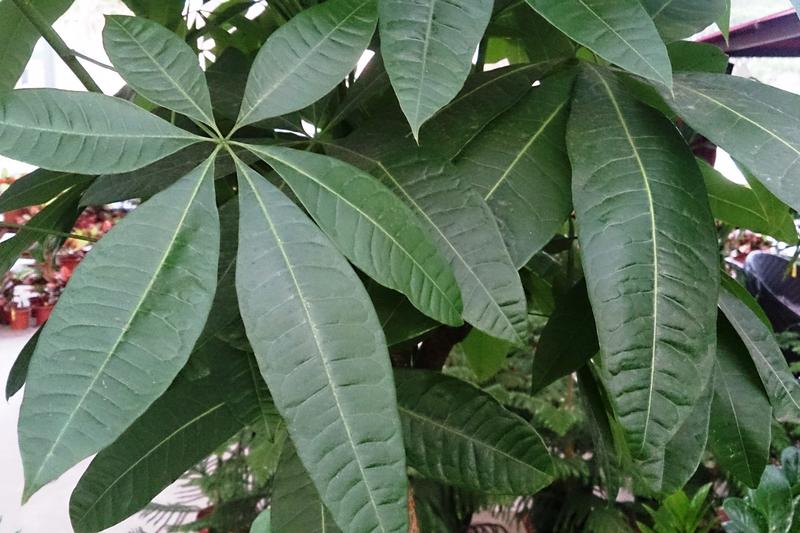
Quick facts
- Watering
- Weekly during growing season
- Sunlight
- Bright indirect light
- Soil
- Well-drained, peat-free multipurpose compost
- Humans
- Safe
- Cats
- Safe
- Dogs
- Safe
- Height
- 180–300 cm
- Spread
- 60–120 cm
- Spacing
- 0 cm apart
About Money Tree
The Money Tree is a tropical houseplant native to Central and South American wetlands, prized for its distinctive braided trunk and glossy, palmate leaves with five to seven leaflets. In the UK, it's grown exclusively as an indoor plant, valued for its architectural form and reputation for bringing good fortune according to feng shui principles. The plant can reach impressive heights indoors, making it a popular choice for brightening living rooms and conservatories. Its tolerance of lower light levels and forgiving nature make it ideal for British homes.
UK fact: Money Trees became fashionable in British homes during the 1990s feng shui trend and remain one of the most popular houseplants sold in UK garden centres, often given as housewarming or business-opening gifts.
Watering Money Tree
Allow the top third of compost to dry out between waterings, typically once weekly from April to September. In the UK's darker winter months, reduce watering to every 10-14 days as growth slows and evaporation decreases. Always use tepid water and ensure excess drains freely, as Money Trees are susceptible to root rot in waterlogged conditions. During central heating season, mist the foliage weekly to maintain humidity and prevent leaf browning.
Sunlight requirements
Position your Money Tree in bright, indirect light near an east or west-facing window for optimal growth. Avoid direct sunlight, particularly during summer months, as this can scorch the leaves. North-facing rooms provide adequate light, though growth may be slower, whilst south-facing positions require sheer curtains to diffuse intense afternoon sun.
Soil and feeding
Plant in a peat-free multipurpose compost mixed with perlite or horticultural grit (roughly 3:1 ratio) to ensure excellent drainage. A slightly acidic to neutral pH of 6.0-7.0 is ideal. Repot every 2-3 years in spring, moving up one pot size only when roots fill the container. Good drainage is essential, so always use pots with drainage holes and add a layer of crocks at the base.
Apply a balanced liquid houseplant feed at half strength every four weeks from April through September. Cease feeding entirely from October to March when growth naturally slows in response to reduced daylight hours. Over-feeding can cause leaf tip burn and salt accumulation in the compost.
Pruning Money Tree
Carry out main pruning in March or April before the growing season begins, cutting back stems to control height and encourage bushier growth. Remove any yellowing or damaged leaves promptly throughout the year. If your Money Tree becomes leggy, cut back to just above a leaf node to promote branching. Wear gloves when pruning as the sap can cause mild skin irritation in sensitive individuals.
Propagating Money Tree
The most reliable method for UK gardeners is stem cuttings taken in late spring when temperatures are warmer. Select healthy stems with at least two leaf nodes, use a sharp, clean knife, and root in water or moist compost with bottom heat. Air layering is effective for larger plants but requires patience and consistent humidity. Seed propagation is possible but rarely attempted domestically as seeds are difficult to source and germination is unreliable without tropical conditions.
Common problems
Money Trees are generally trouble-free but can suffer from spider mites in dry, centrally heated UK homes, particularly during winter. Overwatering is the most common cultural problem, leading to yellowing leaves and root rot, especially in poorly drained compost or during the darker months. Leaf spot diseases occasionally occur in overly humid conditions with poor air circulation. Brown leaf tips typically indicate low humidity, fluoride in tap water, or accumulated fertiliser salts.
Spot a problem with your plant? Photograph the affected area using the Loam app and it will suggest the most likely cause and treatment.
Safety
- Humans
- Safe
- Cats
- Safe
- Dogs
- Safe
Toxicity information is for general guidance only.
Seasonal care calendar
Monthly care guide for Money Tree in the UK, based on average conditions.
| Month | Care tasks |
|---|---|
| January | Reduce watering to minimum; mist foliage if central heating causes dry air. No feeding required. |
| February | Continue minimal watering. Check for spider mites in heated rooms. Clean leaves with damp cloth. |
| March | Increase watering slightly as daylight improves. Prune to shape before growing season. Repot if rootbound. |
| April | Resume monthly feeding. Water when top 5 cm of compost dries. Repot if not done in March. |
| May | Maintain regular watering and feeding schedule. Take stem cuttings for propagation. Mist foliage weekly. |
| June | Peak growing season; water weekly and feed monthly. Protect from direct sunlight. Continue propagation. |
| July | Monitor watering carefully during warm weather. Ensure good humidity through misting. Feed as usual. |
| August | Continue summer care routine. Check for pests. Maintain consistent watering and monthly feeding. |
| September | Begin reducing watering frequency as growth slows. Final feed of the season mid-month. |
| October | Reduce watering to fortnightly. Stop feeding. Clean leaves to maximise light absorption. |
| November | Water sparingly, only when compost feels dry. Mist occasionally if heating is on. No feeding. |
| December | Minimal watering required. Keep away from cold draughts and radiators. Maintain humidity through misting. |
Frequently asked questions
- Why are the leaves on my Money Tree turning yellow?
- Yellowing leaves usually indicate overwatering, particularly during winter months. Allow the top third of compost to dry between waterings and ensure your pot has adequate drainage. Cold draughts or sudden temperature changes can also cause leaf yellowing.
- How do I know if my Money Tree has a pest or disease problem?
- Common issues include spider mites (fine webbing, speckled leaves), mealybugs (white cottony masses), and fungal problems from overwatering. Check leaf undersides and stem joints regularly. If you're unsure what's affecting your plant, the Loam app can help diagnose problems through photos and provide personalised treatment advice based on your specific conditions.
- When should I repot my Money Tree?
- Repot in spring (April-May) when roots emerge from drainage holes or growth slows significantly, typically every 2-3 years. Choose a pot only 5cm larger in diameter and use well-draining houseplant compost. Avoid repotting in autumn or winter when the plant is dormant, as this can cause stress and root rot.
Got a question about growing Money Tree that isn't covered here? Ask the Garden Advisor in the Loam app. It knows your saved plants and local conditions.
Related plants
This page was compiled with AI assistance and reviewed by our team. .