Meadow Buttercup
Ranunculus acris
Wildflowers and Natives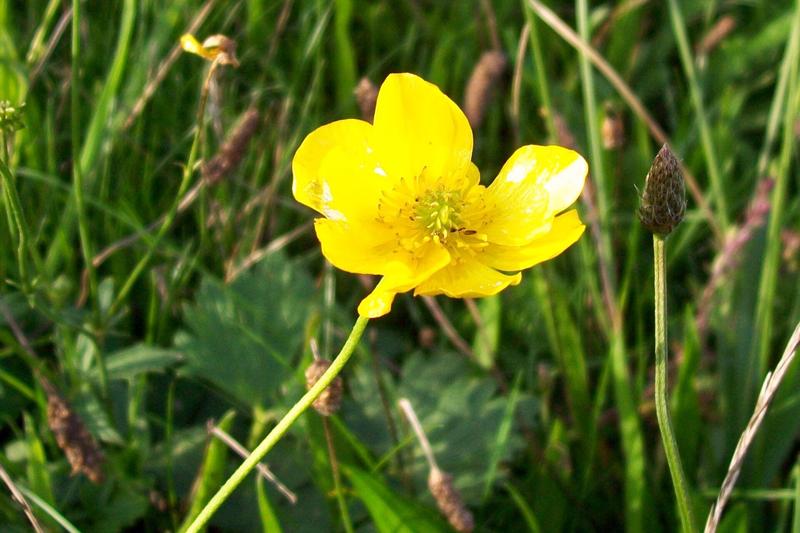
Quick facts
- Watering
- Minimal once established
- Sunlight
- Full sun to partial shade
- Soil
- Moist, moderately fertile loam
- Humans
- Toxic
- Cats
- Toxic
- Dogs
- Toxic
- Height
- 30–90 cm
- Spread
- 20–40 cm
- Spacing
- 25–30 cm apart
About Meadow Buttercup
Meadow Buttercup is a cheerful native perennial wildflower producing glossy, golden-yellow flowers from late spring through summer. Growing 30–90 cm tall with deeply divided, palmate leaves, it's a quintessential sight in British meadows, pastures, and roadside verges. UK gardeners value it for wildlife-friendly planting schemes, wildflower meadows, and cottage garden borders where its bright blooms attract pollinators including bees, hoverflies, and butterflies.
UK fact: Meadow Buttercup has been a beloved feature of the British countryside for centuries, mentioned in folklore and children's games where holding the flower under the chin supposedly reveals whether you like butter by the golden reflection on skin.
Watering Meadow Buttercup
As a native wildflower adapted to British rainfall patterns, Meadow Buttercup requires little supplementary watering once established. Water newly planted specimens during their first summer if conditions are particularly dry, providing a thorough soak weekly. Established plants tolerate both moist meadow conditions and periods of summer drought, though they perform best in consistently moist soil. In containers, water when the top 3 cm of compost feels dry.
Sunlight requirements
Meadow Buttercup thrives in full sun where it produces the most abundant flowering, but tolerates partial shade particularly in southern UK gardens during hot summers. In shadier positions, plants may become slightly taller and more lax as they reach for light. Avoid deep shade under trees where flowering will be significantly reduced.
Soil and feeding
Meadow Buttercup grows best in moisture-retentive but not waterlogged soil with moderate fertility. It tolerates a wide range of soil types from clay to sandy loam, and adapts to pH levels from slightly acidic to slightly alkaline (pH 5.5–7.5). Avoid very dry, free-draining soils where plants will struggle during summer, and excessively rich soils which promote lush foliage at the expense of flowers. Heavy clay soils are generally suitable provided they don't become waterlogged in winter.
Meadow Buttercup requires no supplementary feeding in garden settings and actually performs better in moderately fertile to poor soils. Excessive nutrients encourage vigorous leafy growth and can make plants floppy and prone to flopping. In wildflower meadows, avoid fertilisers entirely to prevent more vigorous grasses from outcompeting the buttercups.
Pruning Meadow Buttercup
Deadhead spent flowers if you wish to prevent self-seeding, though allowing some seed to develop supports wildlife and natural regeneration. Cut back flowering stems to basal foliage after the main flowering period in late summer to encourage a tidy appearance and potentially a second, lighter flush of blooms. In autumn, leave seed heads standing to provide food for finches and other seed-eating birds. Cut back all dead foliage to ground level in late winter before new growth emerges in early spring.
Propagating Meadow Buttercup
Meadow Buttercup is easily propagated by seed or division. Sow fresh seed in autumn directly where plants are to grow, or in pots of seed compost left outdoors over winter as cold stratification improves germination. Seeds typically germinate the following spring. Divide established clumps in early spring or autumn, ensuring each division has roots and several growing points. Plants also self-seed readily in suitable conditions, often appearing in lawns and borders where they can be transplanted when small.
Common problems
Meadow Buttercup is generally trouble-free with few serious pest or disease problems in UK gardens. Powdery mildew may occasionally affect foliage in dry conditions with poor air circulation, though this rarely requires treatment. Slugs and snails may damage young spring growth but established plants are usually unaffected. The main issue is invasiveness: plants self-seed enthusiastically and can spread via creeping roots, potentially becoming weedy in borders, though they're easily controlled by pulling unwanted seedlings and dividing clumps every few years.
Spot a problem with your plant? Photograph the affected area using the Loam app and it will suggest the most likely cause and treatment.
Safety
- Humans
-
Toxic
All parts contain the toxin protoanemonin which can cause skin irritation on contact and gastrointestinal upset if ingested. Wear gloves when handling if you have sensitive skin.
- Cats
-
Toxic
Contains protoanemonin which causes oral irritation, drooling, vomiting, and diarrhoea if ingested. Keep cats away from plants.
- Dogs
-
Toxic
Contains protoanemonin causing oral irritation, excessive drooling, vomiting, and diarrhoea if eaten. Prevent dogs from grazing on plants.
Toxicity information is for general guidance only. If a person or pet has been exposed to this plant and you are concerned, seek advice from a medical professional or vet.
Seasonal care calendar
Monthly care guide for Meadow Buttercup in the UK, based on average conditions.
| Month | Care tasks |
|---|---|
| January | No action needed; plants fully dormant. |
| February | Cut back any remaining dead foliage to ground level before new growth begins. |
| March | Fresh basal leaves emerge; divide established clumps if required. Sow seed in pots outdoors. |
| April | Flowering stems begin to develop. Water newly planted specimens during dry spells. |
| May | Main flowering period begins. Enjoy the golden blooms and visiting pollinators. |
| June | Peak flowering continues. Deadhead if preventing self-seeding is desired. |
| July | Flowering continues into mid-summer. Allow some seed heads to develop for wildlife. |
| August | Cut back spent flowering stems to basal foliage after main flowering finishes. |
| September | Collect ripe seed for sowing. Divide clumps if required. Sow fresh seed directly outdoors. |
| October | Continue autumn sowings. Leave seed heads for birds. Transplant self-sown seedlings. |
| November | Foliage begins to die back. Leave standing for winter wildlife interest. |
| December | No action needed; plants entering dormancy. |
Frequently asked questions
- Is Meadow Buttercup invasive in UK gardens?
- Meadow Buttercup can spread enthusiastically through self-seeding and creeping roots, but it's not considered seriously invasive and is easily controlled. Deadhead flowers to prevent seeding, pull unwanted seedlings whilst small, and divide clumps every 3–4 years to keep plants in check. It's ideal for wildflower meadows where natural spread is desirable, but may require management in formal borders.
- Why are my Meadow Buttercup leaves turning yellow?
- Yellowing leaves can indicate waterlogging, particularly in heavy clay soils during wet winters, or conversely drought stress in very free-draining soils during summer. The Loam app can help diagnose the specific cause based on your soil type, recent weather, and photos of the affected plant, then provide tailored watering advice.
- Can I grow Meadow Buttercup in a wildflower lawn?
- Yes, Meadow Buttercup is excellent for wildflower lawns and flowering meadows. Establish plants by sowing seed in autumn or spring into prepared ground, or plug-plant young specimens. Delay mowing until after flowering and seed set in late summer (typically August) to allow natural regeneration. Reduce soil fertility by removing grass clippings to prevent vigorous grasses from outcompeting the buttercups.
Got a question about growing Meadow Buttercup that isn't covered here? Ask the Garden Advisor in the Loam app. It knows your saved plants and local conditions.
Related plants
This page was compiled with AI assistance and reviewed by our team. .