Plume Poppy
Macleaya cordata
Perennials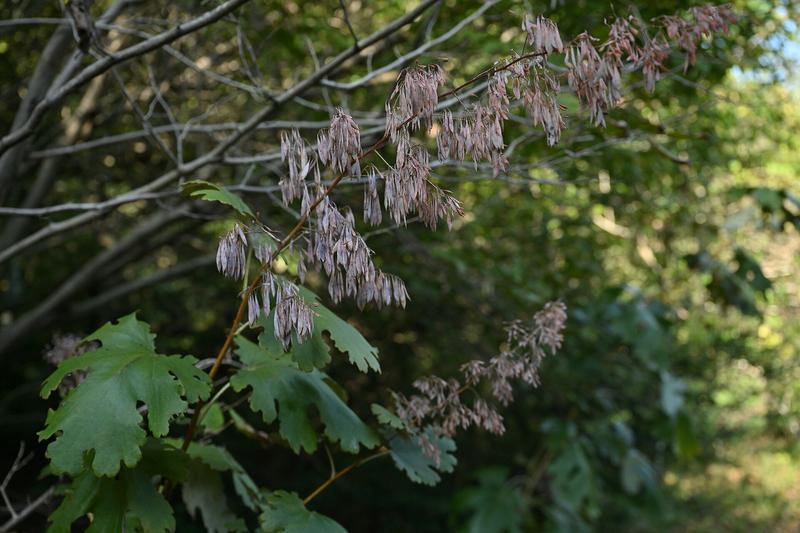
Quick facts
- Watering
- Weekly during dry spells
- Sunlight
- Full sun to partial shade
- Soil
- Moist, well-drained, fertile
- Humans
- Toxic
- Cats
- Toxic
- Dogs
- Toxic
- Height
- 180–250 cm
- Spread
- 90–120 cm
- Spacing
- 90–120 cm apart
- RHS recognition
- Award of Garden Merit
About Plume Poppy
Plume Poppy is a statuesque herbaceous perennial native to China and Japan, prized for its architectural presence in British borders. Growing up to 2.5 metres tall, it produces large, lobed grey-green leaves and airy plumes of tiny buff-pink flowers in mid to late summer. UK gardeners value it as a bold statement plant for the back of borders, though its vigorous spreading habit requires careful placement and management in smaller gardens.
UK fact: Macleaya cordata received the RHS Award of Garden Merit, recognising its outstanding performance in British gardens, though gardeners are advised to choose its position carefully as it can spread enthusiastically via underground rhizomes in favourable conditions.
Watering Plume Poppy
Once established, Plume Poppy is reasonably drought-tolerant but performs best with consistent moisture during the growing season. Water weekly during dry spells, particularly from May to August when the plant is actively growing and flowering. In heavy clay soils common across much of the UK, reduce watering frequency to prevent waterlogging. Newly planted specimens require regular watering throughout their first summer to establish a strong root system.
Sunlight requirements
Plume Poppy thrives in full sun but tolerates partial shade, particularly in southern England where afternoon shade can prevent leaf scorch during hot summers. In northern and western regions, a sunnier position encourages stronger flowering and more compact growth. Avoid deep shade, which results in weak, floppy stems that require staking.
Soil and feeding
Plume Poppy adapts to most soil types but excels in fertile, moisture-retentive yet well-drained ground. It tolerates both slightly acidic and alkaline conditions (pH 6.0-7.5), making it suitable for most British gardens. Improve heavy clay with organic matter to enhance drainage, and enrich sandy soils with compost to boost moisture retention. Avoid waterlogged sites, which can lead to root rot during wet British winters.
Apply a balanced slow-release fertiliser or well-rotted compost in early spring to support vigorous growth and abundant flowering. Avoid excessive nitrogen, which encourages lush foliage at the expense of flowers and can make the plant even more invasive. A light mulch of garden compost in March provides sufficient nutrients for most established plants.
Pruning Plume Poppy
Cut back all stems to ground level in late autumn or early spring before new growth emerges. Deadhead spent flower plumes in late summer if you wish to maintain a tidier appearance, though the seed heads provide winter interest and food for birds. To control spread, slice through the outer edges of the clump with a sharp spade in spring, removing unwanted rhizomes. Regular division every 3-4 years helps contain vigorous growth and rejuvenates older clumps.
Propagating Plume Poppy
Plume Poppy is easily propagated by division in early spring, lifting established clumps and separating rooted sections of rhizome. Each division should have several growing points and a good root system. Alternatively, dig up suckers that appear around the parent plant and replant immediately at the desired spacing. Root cuttings taken in late winter also succeed well: cut pencil-thick roots into 5-8cm sections and insert vertically into pots of gritty compost, keeping just moist until shoots appear.
Common problems
Plume Poppy is largely trouble-free, with few serious pest or disease issues in UK gardens. The main challenge is its invasive tendency, as it spreads rapidly via underground rhizomes and can overwhelm neighbouring plants if not controlled. Slugs and snails occasionally damage young spring growth, though established plants are rarely affected. In very exposed sites, tall stems may require staking to prevent wind damage, particularly on rich soils that encourage soft, lush growth.
Spot a problem with your plant? Photograph the affected area using the Loam app and it will suggest the most likely cause and treatment.
Safety
- Humans
-
Toxic
All parts of Plume Poppy contain toxic alkaloids and the sap can cause skin irritation. Wear gloves when handling and avoid contact with eyes. Not suitable for gardens where young children play unsupervised.
- Cats
-
Toxic
Toxic if ingested; contains alkaloids that can cause gastrointestinal upset and other symptoms. Keep cats away from this plant.
- Dogs
-
Toxic
Toxic if ingested; contains alkaloids that can cause vomiting, diarrhoea, and other symptoms. Keep dogs away from this plant.
Toxicity information is for general guidance only. If a person or pet has been exposed to this plant and you are concerned, seek advice from a medical professional or vet.
Seasonal care calendar
Monthly care guide for Plume Poppy in the UK, based on average conditions.
| Month | Care tasks |
|---|---|
| January | No action needed; plant is fully dormant. |
| February | Cut back any remaining dead stems if not done in autumn. |
| March | Apply slow-release fertiliser or compost mulch. Divide established clumps if needed. |
| April | New shoots emerge; remove unwanted suckers to control spread. |
| May | Water during dry spells as foliage develops rapidly. |
| June | Monitor for slugs on young growth. Continue watering in dry weather. |
| July | Flower plumes appear; stake tall stems if necessary in exposed sites. |
| August | Peak flowering period. Deadhead if desired or leave for seed heads. |
| September | Flowers fade to attractive seed heads. Reduce watering as growth slows. |
| October | Cut back stems to ground level or leave for winter structure. |
| November | Complete cutting back if not already done. Mark position of clumps. |
| December | No action needed; plant is dormant. |
Frequently asked questions
- How do I stop Plume Poppy from spreading too much?
- Control spread by slicing through the outer edges of the clump with a sharp spade each spring, removing unwanted rhizomes. Install a root barrier at planting time, or grow in a large container sunk into the ground. Regular division every 3-4 years and prompt removal of suckers also help contain vigorous growth.
- When should I divide my Plume Poppy and how often?
- Divide Plume Poppy in early spring every 3-4 years to control spread and rejuvenate the plant. The Loam app can send you timely reminders for division based on when you planted it, and provide step-by-step guidance tailored to your garden's conditions.
- Will Plume Poppy grow in shade?
- Plume Poppy tolerates partial shade but performs best in full sun or light shade. Deep shade results in weak, floppy growth that requires staking and reduced flowering. In southern UK gardens, afternoon shade can be beneficial during hot summers to prevent leaf scorch.
Got a question about growing Plume Poppy that isn't covered here? Ask the Garden Advisor in the Loam app. It knows your saved plants and local conditions.
Related plants
This page was compiled with AI assistance and reviewed by our team. .