Euphorbia
Euphorbia characias
Perennials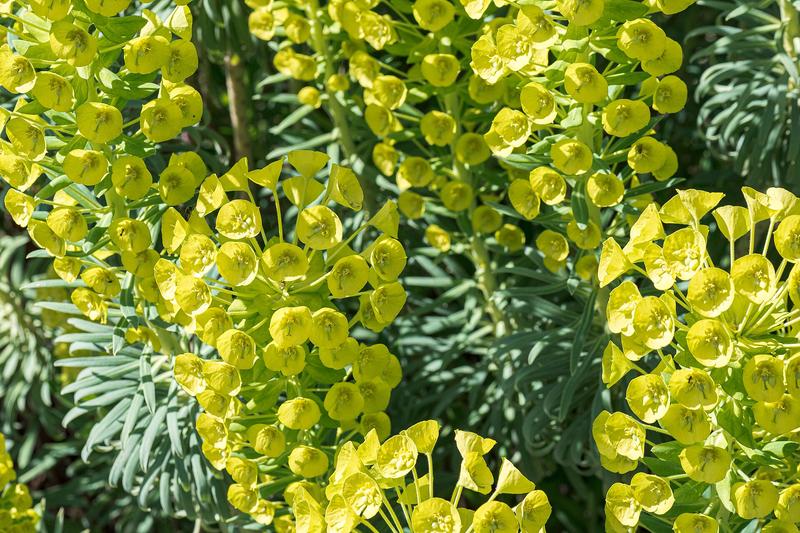
Quick facts
- Watering
- Fortnightly when establishing
- Sunlight
- Full sun
- Soil
- Well-drained, poor to moderate
- Humans
- Toxic
- Cats
- Toxic
- Dogs
- Toxic
- Height
- 90–120 cm
- Spread
- 90–120 cm
- Spacing
- 90–100 cm apart
- RHS recognition
- Award of Garden Merit
About Euphorbia
Euphorbia characias is a striking architectural evergreen perennial native to the Mediterranean region, prized for its bold presence in UK gardens. This robust plant forms substantial clumps of blue-green foliage topped with dramatic lime-yellow flower heads from late winter through spring. UK gardeners value it for year-round structure, drought tolerance once established, and its ability to thrive in challenging dry spots where other perennials struggle. The milky sap contains skin irritants, requiring careful handling during maintenance.
UK fact: Euphorbia characias subsp. wulfenii has received the RHS Award of Garden Merit and thrives particularly well in coastal British gardens, where its Mediterranean origins make it exceptionally tolerant of salt-laden winds and free-draining sandy soils.
Watering Euphorbia
Once established, euphorbia is remarkably drought-tolerant and rarely requires watering in the UK, relying on natural rainfall. During the first growing season, water fortnightly during dry spells to help roots establish deeply. Overwatering is the primary cause of failure, particularly on heavy soils, as these plants detest waterlogged conditions. In containers, allow compost to dry out between waterings.
Sunlight requirements
Euphorbia characias performs best in full sun, which encourages compact growth and the most vibrant flower colour. In the UK, a south or west-facing position is ideal, though it will tolerate light shade in southern counties. Avoid heavily shaded north-facing aspects where plants become leggy and flower poorly.
Soil and feeding
Euphorbia characias thrives in well-drained soil and actually performs better in poor to moderately fertile conditions rather than rich ground. It tolerates a wide pH range from slightly acidic to alkaline (pH 6.0-8.0), making it suitable for most UK gardens including chalky soils. On heavy clay, improve drainage by incorporating grit or plant on a slope or raised bed. Avoid enriching soil with organic matter, as overly fertile conditions produce lush growth prone to flopping.
Euphorbia requires minimal feeding and often performs better without supplementary fertiliser. If growing in very poor soil or containers, a single application of balanced slow-release fertiliser in early spring is sufficient. Avoid high-nitrogen feeds which encourage soft, floppy growth susceptible to winter damage.
Pruning Euphorbia
Prune spent flower stems back to the base in early summer (June) after flowering finishes, cutting just above emerging new shoots whilst wearing gloves to protect against the irritant sap. This encourages fresh foliage growth for the following year's display. Remove any dead or damaged stems in late winter before the flowering period begins, and cut out entirely any stems that have flowered for two consecutive years as they become unproductive.
Propagating Euphorbia
Propagate euphorbia from basal cuttings taken in spring (April-May) from non-flowering shoots, allowing the milky sap to seal before inserting into gritty compost. Seed can be sown in autumn in a cold frame, though seedlings may show variation from the parent plant. Division is possible but challenging due to the woody rootstock; it's generally more successful to take cuttings. Euphorbia self-seeds readily in favourable conditions, and seedlings can be transplanted when small.
Common problems
Euphorbia characias is generally trouble-free but can suffer from aphid infestations on young growth in spring, which are easily controlled by squashing or hosing off. Root rot and stem collapse occur in poorly drained soils or during prolonged wet winters, particularly on heavy clay. The milky sap causes skin irritation and eye damage in humans and is toxic if ingested, so always wear gloves when pruning and keep sap away from eyes. Older plants may become woody and bare at the base, requiring replacement every 5-7 years.
Spot a problem with your plant? Photograph the affected area using the Loam app and it will suggest the most likely cause and treatment.
Safety
- Humans
-
Toxic
The milky sap is a severe skin and eye irritant causing burns, blistering, and temporary blindness. Ingestion causes burning of the mouth, vomiting, and diarrhoea. Always wear gloves and eye protection when pruning.
- Cats
-
Toxic
Ingestion causes oral irritation, vomiting, drooling, and diarrhoea. The sap can cause severe skin and eye irritation. Keep cats away from cut stems.
- Dogs
-
Toxic
Ingestion causes oral irritation, excessive drooling, vomiting, and diarrhoea. The milky sap irritates skin and eyes. Prevent dogs from contact with cut or damaged stems.
Toxicity information is for general guidance only. If a person or pet has been exposed to this plant and you are concerned, seek advice from a medical professional or vet.
Seasonal care calendar
Monthly care guide for Euphorbia in the UK, based on average conditions.
| Month | Care tasks |
|---|---|
| January | No action needed; flower buds developing on stem tips. |
| February | Flower heads beginning to expand and show colour. |
| March | Peak flowering period; remove any winter-damaged stems. |
| April | Continue enjoying the floral display; take basal cuttings if propagating. |
| May | Flowering continues; monitor for aphids on new growth. |
| June | Cut back spent flowering stems to base after blooms fade. |
| July | Fresh foliage growth emerging; water young plants if very dry. |
| August | No action needed; plants building reserves for next year. |
| September | Collect seed if desired; allow self-sown seedlings to establish. |
| October | Transplant self-sown seedlings to desired positions. |
| November | No action needed; evergreen foliage provides winter structure. |
| December | No action needed; next year's flower buds forming. |
Frequently asked questions
- When should I cut back euphorbia after flowering?
- Cut back spent flowering stems to the base in early summer (June) after the blooms fade, wearing gloves to protect against the irritant sap. This encourages fresh foliage growth for the following year's display and maintains a tidy appearance throughout summer and autumn.
- Why is my euphorbia turning yellow and wilting?
- Yellowing and wilting typically indicate root rot from waterlogged soil or overwatering, especially on heavy clay. The Loam app can help you track watering schedules and diagnose problems early by monitoring your plant's specific growing conditions and sending timely care reminders.
- Is euphorbia characias evergreen in the UK?
- Yes, euphorbia characias is evergreen in the UK, retaining its attractive blue-green foliage throughout winter and providing valuable year-round structure in borders. The foliage looks best from summer through to the following spring's flowering period.
Got a question about growing Euphorbia that isn't covered here? Ask the Garden Advisor in the Loam app. It knows your saved plants and local conditions.
Related plants
This page was compiled with AI assistance and reviewed by our team. .