Tulip Tree
Liriodendron tulipifera
Trees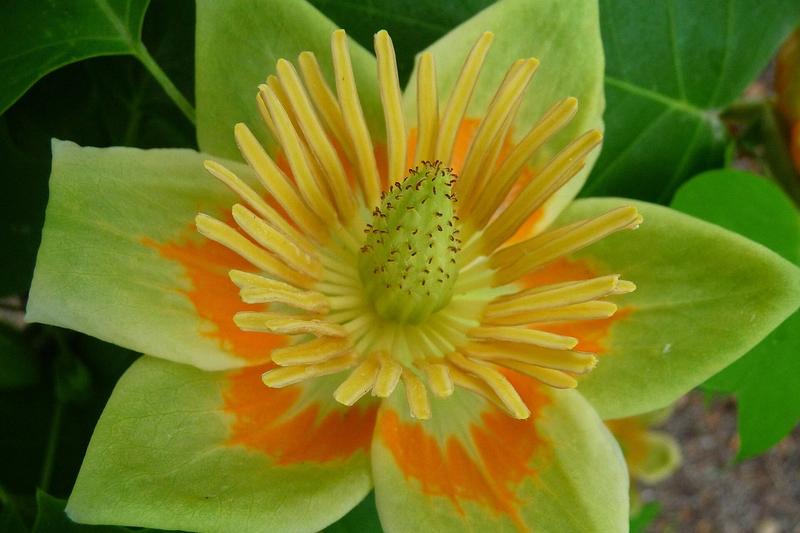
Quick facts
- Watering
- Weekly during establishment
- Sunlight
- Full sun to partial shade
- Soil
- Deep, moist, well-drained loam
- Humans
- Safe
- Cats
- Safe
- Dogs
- Safe
- Height
- 2000–3500 cm
- Spread
- 1000–1500 cm
- Spacing
- 1500–2000 cm apart
- RHS recognition
- Award of Garden Merit
About Tulip Tree
The Tulip Tree is a magnificent deciduous tree native to eastern North America, prized in UK gardens for its distinctive tulip-shaped flowers and uniquely lobed leaves. Reaching impressive heights, it produces greenish-yellow flowers with orange markings in early summer, followed by striking golden-yellow autumn colour. British gardeners value it as a stately specimen tree for large gardens and parkland, where it has been cultivated since the 17th century. Its fast growth rate and architectural form make it an excellent choice for creating impact in spacious landscapes.
UK fact: The Tulip Tree holds an RHS Award of Garden Merit and has been grown in Britain since around 1688, with some of the finest specimens found in historic estates such as Kew Gardens and Westonbirt Arboretum, where trees over 30 metres tall demonstrate its suitability to the British climate.
Watering Tulip Tree
Young Tulip Trees require regular watering during their first two to three years, particularly during dry spells in spring and summer. Water deeply once or twice weekly during establishment, applying 20-30 litres per session to encourage deep root development. Once established, mature trees are relatively drought-tolerant but benefit from supplementary watering during prolonged dry periods in the UK. Avoid waterlogging, which can lead to root problems.
Sunlight requirements
Tulip Trees perform best in full sun, which encourages the most prolific flowering and vibrant autumn colour. They will tolerate partial shade but may produce fewer flowers and develop a more open canopy. In the UK, plant in an open position away from buildings to allow the tree to develop its natural pyramidal shape, avoiding heavily shaded north-facing aspects.
Soil and feeding
Tulip Trees thrive in deep, fertile, moisture-retentive soil with good drainage, preferring slightly acidic to neutral pH (5.5-7.0). They perform best in loamy soils enriched with organic matter and struggle in shallow, chalky, or compacted ground. Before planting, incorporate well-rotted compost or leaf mould to improve soil structure and moisture retention. The tree's extensive root system requires ample soil depth, making it unsuitable for shallow soils over bedrock or heavy clay prone to waterlogging.
Apply a balanced slow-release fertiliser such as blood, fish and bone in early spring around the tree's drip line, using approximately 100g per square metre for young trees. Mature, established Tulip Trees rarely require feeding if growing in reasonably fertile soil, though a mulch of well-rotted compost or leaf mould applied annually in autumn will maintain soil health and provide gentle nutrition.
Pruning Tulip Tree
Tulip Trees require minimal pruning and naturally develop an attractive shape with a strong central leader. Prune only to remove dead, damaged, or crossing branches, carrying out work between late autumn and early spring whilst the tree is dormant to minimise sap bleeding. Avoid heavy pruning, as Tulip Trees do not respond well to hard cutting back and may struggle to compartmentalise large wounds. Young trees benefit from formative pruning to establish a clear trunk and balanced framework, removing lower branches gradually as the tree matures.
Propagating Tulip Tree
Tulip Trees are most commonly propagated from seed, which requires cold stratification for 60-90 days before sowing in spring. Collect seeds from the cone-like fruits in autumn, store in damp sand in the refrigerator over winter, then sow in deep pots or directly outdoors in a nursery bed. Germination can be erratic, and seedlings grow slowly in their first year before accelerating in subsequent seasons. Selected cultivars must be propagated by grafting onto seedling rootstocks, a technique best left to specialist nurseries.
Common problems
Tulip Trees are generally robust but can suffer from aphid infestations in spring, which produce honeydew and sooty mould on leaves. Verticillium wilt occasionally affects trees, causing branch dieback, though this is relatively uncommon in the UK. Young trees may experience leaf scorch during hot, dry summers or in exposed positions with drying winds. Chlorosis can occur in chalky or alkaline soils where iron becomes unavailable, manifesting as yellowing leaves with green veins.
Spot a problem with your plant? Photograph the affected area using the Loam app and it will suggest the most likely cause and treatment.
Safety
- Humans
- Safe
- Cats
- Safe
- Dogs
- Safe
Toxicity information is for general guidance only.
Seasonal care calendar
Monthly care guide for Tulip Tree in the UK, based on average conditions.
| Month | Care tasks |
|---|---|
| January | No action needed; tree fully dormant. |
| February | Prune dead or damaged branches if needed whilst dormant. |
| March | Apply slow-release fertiliser and refresh mulch around the base. |
| April | Monitor for aphids as new leaves emerge; water young trees if dry. |
| May | Continue watering during dry spells; watch for early flowers on mature trees. |
| June | Enjoy the tulip-shaped flowers; maintain regular watering for young specimens. |
| July | Water deeply during hot, dry weather; monitor for leaf scorch. |
| August | Continue watering young trees; seed cones begin to develop. |
| September | Collect seeds from mature cones for propagation if desired. |
| October | Enjoy spectacular golden-yellow autumn foliage; apply autumn mulch. |
| November | Leaves fall; clear away debris and check tree structure. |
| December | No action needed; tree entering dormancy. |
Frequently asked questions
- How long does it take for a Tulip Tree to flower in the UK?
- Tulip Trees typically take 15-20 years to produce their first flowers when grown from seed, though grafted specimens may flower slightly earlier at 10-15 years. Patience is essential, but the wait is rewarded with spectacular greenish-yellow blooms each summer once the tree matures.
- Why are my Tulip Tree's leaves turning yellow in summer?
- Summer yellowing often indicates chlorosis from alkaline soil, drought stress, or waterlogging. The Loam app can help you diagnose the specific cause by tracking your watering schedule, local rainfall, and soil conditions, then provide personalised care adjustments to restore your tree's health.
- Can I grow a Tulip Tree in a small garden?
- Tulip Trees are unsuitable for small gardens as they reach 20-35 metres tall with a 10-15 metre spread. They require substantial space to develop properly and their extensive root systems can interfere with buildings, paving, and underground services. Consider the compact cultivar 'Ardis' for more modest spaces, though even this reaches 12 metres.
Got a question about growing Tulip Tree that isn't covered here? Ask the Garden Advisor in the Loam app. It knows your saved plants and local conditions.
Related plants
This page was compiled with AI assistance and reviewed by our team. .