Foxglove Tree
Paulownia tomentosa
Trees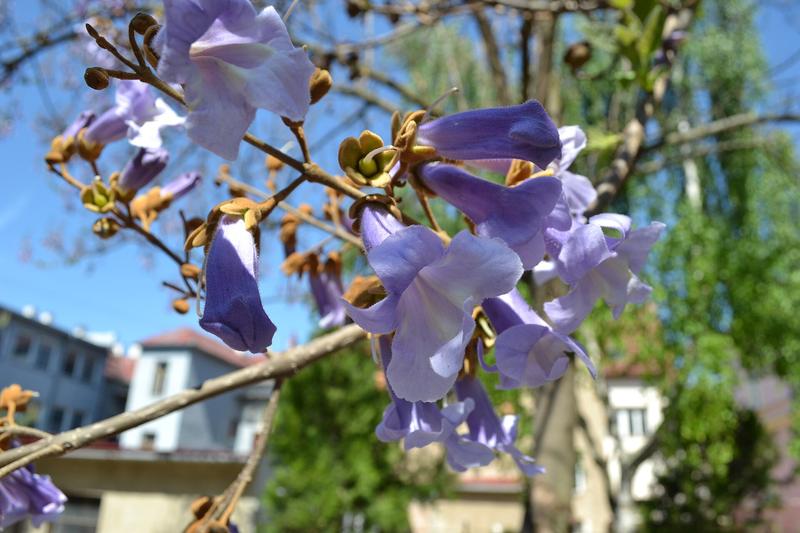
Quick facts
- Watering
- Weekly when young, fortnightly established
- Sunlight
- Full sun to partial shade
- Soil
- Well-drained, fertile, moisture-retentive
- Humans
- Unknown
- Cats
- Unknown
- Dogs
- Unknown
- Height
- 800–1200 cm
- Spread
- 600–900 cm
- Spacing
- 800–1000 cm apart
About Foxglove Tree
The Foxglove Tree is a fast-growing deciduous tree native to China, prized for its spectacular display of fragrant, tubular violet-blue flowers in late spring and enormous heart-shaped leaves. In the UK, it's grown both as a specimen tree for its exotic appearance and as a coppiced foliage plant, where annual hard pruning produces dramatic leaves up to 60cm across. Its rapid growth rate and architectural presence make it a popular choice for creating quick impact in new gardens, though it requires careful siting due to its eventual size and brittle wood.
UK fact: The Foxglove Tree was first introduced to British gardens in the 1830s and became a Victorian favourite for its exotic appearance, though severe winters can damage flower buds, meaning flowering is more reliable in southern England and sheltered urban locations than in northern or exposed gardens.
Watering Foxglove Tree
Young trees require regular watering during their first two growing seasons to establish a deep root system, particularly during dry spells between April and September. Once established, Foxglove Trees are reasonably drought-tolerant but benefit from weekly watering during prolonged dry periods in summer to prevent leaf scorch. Trees grown as coppiced specimens for foliage need more consistent moisture to support their vigorous leaf growth. Avoid waterlogging, which can lead to root rot, particularly on heavy clay soils.
Sunlight requirements
Performs best in full sun, which encourages the most prolific flowering and sturdy growth, though it tolerates partial shade reasonably well. In the UK, choose a south or west-facing position sheltered from strong winds, which can damage the large leaves and brittle branches. Urban gardens with warmer microclimates are ideal, as they protect developing flower buds from late frosts.
Soil and feeding
Thrives in deep, fertile, well-drained soil with good moisture retention, ideally a rich loam. Tolerates a wide pH range from slightly acidic to slightly alkaline (pH 5.5-7.5), making it adaptable to most UK garden soils. Improve poor or sandy soils with generous amounts of organic matter before planting to aid moisture retention and provide nutrients. Avoid shallow, chalky soils or heavy, waterlogged clay, though drainage can be improved with grit and organic matter incorporation.
Apply a balanced slow-release fertiliser such as blood, fish and bone in early spring around the root zone of young trees to support vigorous growth. Established trees rarely need feeding unless grown on very poor soils, though coppiced specimens benefit from an annual spring feed to fuel their dramatic foliage production. Mulch annually with well-rotted compost or manure to maintain soil fertility and moisture retention.
Pruning Foxglove Tree
For specimen trees, prune only to remove dead, damaged, or crossing branches in late winter or early spring before growth begins. To grow as a coppiced foliage plant with giant leaves, cut all stems back to within 15-30cm of ground level in March, which produces vigorous shoots with leaves up to 60cm across but prevents flowering. Remove any suckers from the base promptly. Avoid autumn or winter pruning as wounds are slow to heal and susceptible to disease.
Propagating Foxglove Tree
Propagate from root cuttings taken in winter, selecting pencil-thick roots, cutting them into 5-8cm sections, and inserting vertically into gritty compost with the top just below the surface. Alternatively, sow fresh seed in autumn in a cold frame, though seedlings are variable and may take several years to flower. Semi-ripe cuttings can be taken in summer, though success rates are lower than with root cuttings. Young plants grow rapidly and may need potting on several times before planting out in their final position after the last frosts.
Common problems
Generally pest and disease-free in the UK, though young growth can be affected by aphids in spring, which are usually controlled by natural predators. Late spring frosts can damage emerging leaves and destroy flower buds, significantly reducing or preventing flowering in colder regions or exposed sites. The brittle wood is susceptible to wind damage, particularly in exposed locations, so staking young trees is essential. Self-seeding can occur in mild areas, and the tree is considered invasive in some regions outside the UK, though this is rarely problematic in British gardens.
Spot a problem with your plant? Photograph the affected area using the Loam app and it will suggest the most likely cause and treatment.
Safety
- Humans
-
Unknown
No confirmed toxicity data available, though not considered edible. Avoid ingestion as a precaution.
- Cats
-
Unknown
No confirmed toxicity data available for cats. Monitor pets and contact a vet if plant material is consumed.
- Dogs
-
Unknown
No confirmed toxicity data available for dogs. Monitor pets and contact a vet if plant material is consumed.
Toxicity information is for general guidance only. If a person or pet has been exposed to this plant and you are concerned, seek advice from a medical professional or vet.
Seasonal care calendar
Monthly care guide for Foxglove Tree in the UK, based on average conditions.
| Month | Care tasks |
|---|---|
| January | No action needed; tree fully dormant. |
| February | Check stakes and ties on young trees after winter storms. |
| March | Prune coppiced specimens hard to ground level. Apply slow-release fertiliser and mulch around the base. |
| April | Watch for aphids on emerging growth. Plant container-grown specimens. |
| May | Enjoy the spectacular violet-blue flower display. Water young trees regularly as growth accelerates. |
| June | Water during dry spells, particularly coppiced specimens producing large leaves. |
| July | Continue watering during dry periods. Monitor for wind damage to large leaves. |
| August | Maintain watering regime. Take semi-ripe cuttings if propagating. |
| September | Reduce watering as growth slows. Seed pods develop and ripen. |
| October | Collect seed if desired. Leaves begin to turn yellow and drop. |
| November | Clear fallen leaves. Protect young trees from frost with fleece if severe weather forecast. |
| December | Take root cuttings for propagation. Check tree guards on young specimens. |
Frequently asked questions
- Why doesn't my Foxglove Tree flower in the UK?
- Flower buds form in autumn but are vulnerable to frost damage over winter, particularly in northern or exposed gardens. Severe frosts between November and April can kill the buds, preventing flowering even though the tree remains healthy. Choose a sheltered, south-facing position in a warm microclimate, or grow in southern England where flowering is more reliable.
- Should I grow my Foxglove Tree as a standard tree or coppice it for foliage?
- This depends on your garden goals and space. Standard trees produce beautiful flowers but need considerable space and sheltered conditions. Coppicing annually creates dramatic foliage up to 60cm across in a smaller space but prevents flowering. The Loam app can help you track growth patterns and decide which approach suits your garden best based on your specific conditions.
- How quickly does a Foxglove Tree grow in UK conditions?
- Foxglove Trees are among the fastest-growing trees in the UK, capable of growing 2-3 metres per year in ideal conditions when young. This rapid growth makes them excellent for creating quick impact in new gardens, though growth slows as the tree matures. Coppiced specimens can produce 3-metre shoots with giant leaves in a single growing season.
Got a question about growing Foxglove Tree that isn't covered here? Ask the Garden Advisor in the Loam app. It knows your saved plants and local conditions.
Related plants
This page was compiled with AI assistance and reviewed by our team. .