Sweet Gum
Liquidambar styraciflua
Trees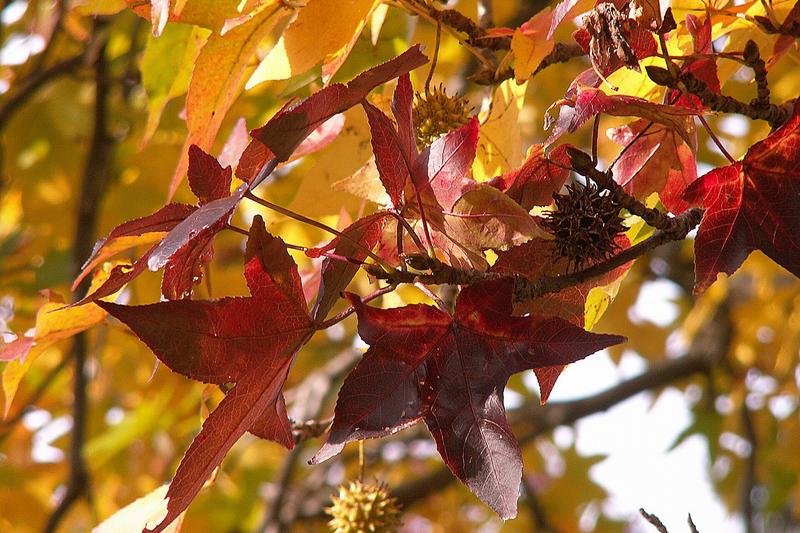
Quick facts
- Watering
- Weekly when young, occasional when established
- Sunlight
- Full sun to partial shade
- Soil
- Moist, acidic to neutral, well-drained
- Humans
- Unknown
- Cats
- Unknown
- Dogs
- Unknown
- Height
- 1500–2500 cm
- Spread
- 800–1200 cm
- Spacing
- 1000–1500 cm apart
- RHS recognition
- Award of Garden Merit
About Sweet Gum
Sweet Gum is a magnificent deciduous tree native to North America, prized in UK gardens for its spectacular autumn colour display. The distinctive star-shaped leaves turn brilliant shades of purple, red, orange, and yellow from October onwards, making it one of the finest trees for autumn interest. Mature specimens develop attractive corky bark and a pyramidal to rounded crown, whilst the spiky seed balls add winter structure. UK gardeners value this tree as a striking specimen for larger gardens and parks, where it provides year-round architectural interest.
UK fact: Sweet Gum has been awarded the RHS Award of Garden Merit and thrives particularly well in the milder, wetter regions of western Britain, where the climate suits its preference for moisture-retentive soils and the autumn colour is often more intense than in drier eastern counties.
Watering Sweet Gum
Young trees require regular watering during their first two to three years, particularly during dry spells from May to September. Water deeply once or twice weekly during establishment, applying 20-30 litres per session to encourage deep root development. Established trees are reasonably drought-tolerant but perform best with consistent moisture, so water during prolonged dry periods in summer. Mulching around the base helps retain soil moisture and reduces watering frequency.
Sunlight requirements
Sweet Gum performs best in full sun, which produces the most vibrant autumn colour, though it tolerates partial shade. In UK gardens, position away from strong prevailing winds and avoid frost pockets where late spring frosts may damage emerging foliage. South or west-facing positions are ideal, and the tree benefits from shelter in exposed northern gardens.
Soil and feeding
Sweet Gum thrives in fertile, moisture-retentive soil with good drainage and prefers acidic to neutral pH (5.5-7.0). It performs exceptionally well in deep loamy soils and tolerates clay if not waterlogged. Avoid shallow chalky soils, as the tree may develop chlorosis in alkaline conditions. Incorporate plenty of organic matter such as well-rotted compost or leaf mould when planting to improve soil structure and moisture retention.
Apply a balanced slow-release fertiliser such as blood, fish and bone in early spring at 100g per square metre around the root zone. Established trees benefit from an annual mulch of well-rotted compost or leaf mould in March, which provides nutrients and improves soil structure. Avoid high-nitrogen feeds after midsummer, as this can promote soft growth vulnerable to frost damage.
Pruning Sweet Gum
Sweet Gum requires minimal pruning and is best left to develop its natural shape. Remove any dead, diseased, or crossing branches between November and March whilst the tree is dormant, avoiding pruning during the growing season when sap flow is heavy. Young trees may need formative pruning to establish a clear central leader and well-spaced framework branches. Never prune heavily, as this can spoil the tree's natural pyramidal form and reduce autumn colour.
Propagating Sweet Gum
Sweet Gum is typically propagated from seed sown in autumn in a cold frame, though germination can be slow and erratic. Stratify seeds for 60-90 days at 1-5°C to improve germination rates. Semi-ripe cuttings taken in late summer (July-August) can be rooted with bottom heat and hormone rooting powder, though success rates are variable. Layering is possible but impractical for such a large tree. Most UK gardeners purchase container-grown specimens from nurseries, as cultivars such as 'Worplesdon' must be grafted to maintain their characteristics.
Common problems
Sweet Gum is generally trouble-free in UK gardens but may suffer from leaf spot diseases in wet summers, causing brown patches on foliage. Chlorosis (yellowing leaves) can occur on alkaline soils due to iron deficiency, remedied by applying sequestered iron or improving soil with ericaceous compost. The spiky seed balls can be a nuisance on lawns and paths, though cultivars like 'Rotundiloba' are fruitless. Young trees may be damaged by late spring frosts, and coral spot fungus can affect dead wood, so remove any dieback promptly.
Spot a problem with your plant? Photograph the affected area using the Loam app and it will suggest the most likely cause and treatment.
Safety
- Humans
-
Unknown
The spiky seed balls may cause physical injury if stepped on, and the sap can cause mild skin irritation in some individuals.
- Cats
-
Unknown
No confirmed toxicity data available, though ingestion of plant material is not recommended.
- Dogs
-
Unknown
No confirmed toxicity data available, though the spiky seed balls may cause mouth irritation if chewed.
Toxicity information is for general guidance only. If a person or pet has been exposed to this plant and you are concerned, seek advice from a medical professional or vet.
Seasonal care calendar
Monthly care guide for Sweet Gum in the UK, based on average conditions.
| Month | Care tasks |
|---|---|
| January | No action needed; tree fully dormant. |
| February | Check stakes and ties on young trees after winter gales. |
| March | Apply balanced fertiliser and refresh mulch around the base. Prune if necessary before buds break. |
| April | Watch for emerging foliage and protect young trees from late frosts if forecast. |
| May | Begin regular watering of young trees. Monitor for pest damage on new growth. |
| June | Continue watering during dry spells. Check for leaf spot and remove affected foliage. |
| July | Maintain watering schedule. Take semi-ripe cuttings if propagating. |
| August | Water deeply during dry periods to support autumn colour development. |
| September | Reduce watering as temperatures cool. Early autumn colour may begin to show. |
| October | Enjoy peak autumn colour display. Collect and compost fallen leaves. |
| November | Remove dead or damaged branches once leaves have fallen. Plant new specimens. |
| December | No action needed; appreciate winter bark and structure. |
Frequently asked questions
- Why is my Sweet Gum not turning red in autumn?
- Poor autumn colour is usually caused by insufficient sunlight, alkaline soil, or excessive nitrogen feeding. Ensure your tree is in full sun, growing in acidic to neutral soil, and avoid high-nitrogen fertilisers after midsummer. Trees in shade or on chalky soils rarely develop the vibrant reds and purples. Consider cultivars like 'Worplesdon' or 'Lane Roberts' which are selected for reliable UK autumn colour.
- How can I tell if my Sweet Gum needs more water?
- Wilting or browning leaf edges during summer indicate water stress, particularly in young trees. The Loam app can send you personalised watering reminders based on your local weather and soil conditions, helping you maintain the consistent moisture Sweet Gum needs for healthy growth and vibrant autumn colour.
- Can I grow Sweet Gum in a small garden?
- Sweet Gum is a large tree reaching 15-25 metres, making it unsuitable for small gardens. It needs space to develop its full crown and root system without interfering with buildings or utilities. For smaller spaces, consider compact alternatives like Japanese Maples or the smaller cultivar 'Gumball', which reaches only 3-4 metres but is harder to source in the UK.
Got a question about growing Sweet Gum that isn't covered here? Ask the Garden Advisor in the Loam app. It knows your saved plants and local conditions.
Related plants
This page was compiled with AI assistance and reviewed by our team. .