Alder
Alnus glutinosa
Trees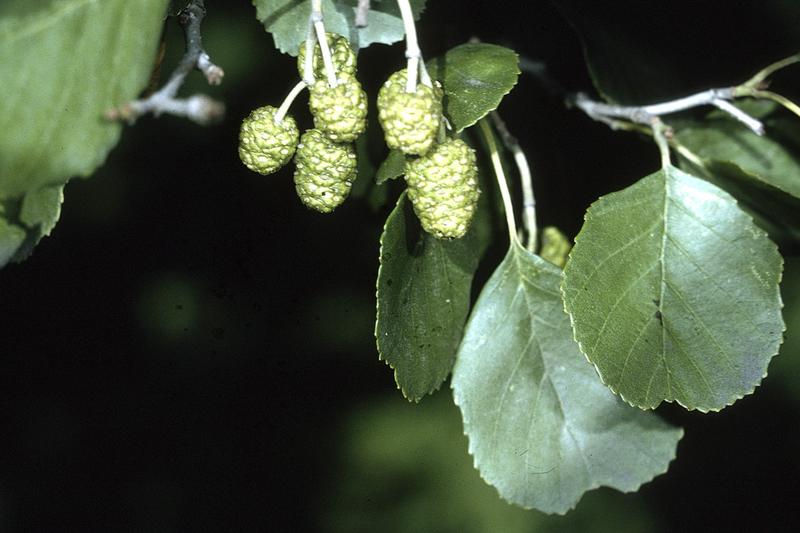
Quick facts
- Watering
- Rarely (naturally moisture-loving)
- Sunlight
- Full sun to partial shade
- Soil
- Moist to waterlogged, any pH
- Humans
- Safe
- Cats
- Safe
- Dogs
- Safe
- Height
- 1500–2500 cm
- Spread
- 600–1000 cm
- Spacing
- 800–1200 cm apart
About Alder
Alder is a fast-growing native British deciduous tree with dark green, rounded leaves and distinctive woody cones that persist through winter. Naturally found along riverbanks and wetlands throughout the UK, it thrives in waterlogged conditions where few other trees will grow. UK gardeners value it for wildlife habitat, nitrogen-fixing properties that enrich poor soils, and its ability to stabilise wet ground. The tree develops attractive catkins in early spring and provides food for numerous native insects and birds.
UK fact: Alder wood was historically prized in Britain for its water-resistant properties and was used extensively for underwater foundations, including the piles supporting medieval bridges and Venice-style structures in fenland areas.
Watering Alder
Alder is exceptionally tolerant of waterlogged conditions and rarely requires watering once established, even during typical UK droughts. Young trees benefit from weekly watering during their first summer if planted in drier soils, but established specimens thrive in permanently wet ground where other trees would fail. In fact, alder grows best in boggy, poorly-drained sites and along pond margins. Only water newly planted trees during extended dry spells in their first two years.
Sunlight requirements
Alder performs best in full sun but tolerates partial shade, particularly in its natural woodland edge habitat. In UK gardens, position where it receives at least four to six hours of direct sunlight daily. South or west-facing positions are ideal, though the tree is adaptable and will grow successfully on north-facing sites provided the soil remains moist.
Soil and feeding
Alder thrives in heavy, wet, poorly-drained soils that would prove fatal to most trees, making it invaluable for problem waterlogged areas. It tolerates a wide pH range from acidic to alkaline (pH 4.5-7.5) and grows in clay, loam, or sandy soils provided moisture levels remain high. The tree's root nodules host nitrogen-fixing bacteria, allowing it to colonise nutrient-poor soils and actually improve soil fertility over time. Avoid planting in dry, free-draining soils where the tree will struggle and grow poorly.
Alder requires no supplementary feeding due to its nitrogen-fixing ability, which allows it to manufacture its own nutrients from atmospheric nitrogen. In fact, the tree enriches surrounding soil as its nitrogen-rich leaves decompose, benefiting neighbouring plants. Avoid fertilisers entirely, as they are unnecessary and may disrupt the beneficial bacterial relationship in the root nodules.
Pruning Alder
Prune alder between late summer and midwinter (August to December) to avoid bleeding sap, which occurs if cut during the active growing season. Remove dead, diseased, or crossing branches to maintain a clear crown structure, and thin overcrowded growth to improve air circulation. Young trees benefit from formative pruning to establish a strong central leader and well-spaced framework. Mature alders require minimal pruning beyond removing damaged wood, though coppicing every 10-15 years can rejuvenate overgrown specimens and provide sustainable timber.
Propagating Alder
Alder propagates readily from seed collected from the woody cones in autumn and sown immediately in cold frames, as germination requires winter chilling. Seeds germinate freely in spring without pre-treatment if sown outdoors in autumn. Softwood cuttings taken in early summer root successfully under mist or in a humid propagator, whilst hardwood cuttings taken in winter can be inserted directly into moist ground. Suckers occasionally appear around the base of mature trees and can be detached with roots in autumn for transplanting.
Common problems
Alder is relatively trouble-free but can be affected by Phytophthora alni, a serious disease causing dieback, bleeding cankers, and eventual tree death, particularly in southern England. Alder leaf beetle occasionally defoliates trees in late spring, though damage is usually cosmetic and trees recover. Aphids may colonise young shoots, causing sticky honeydew and sooty mould, but rarely warrant treatment. Waterlogged roots are not a problem for this species, but conversely, drought stress in dry soils causes premature leaf drop and poor growth.
Spot a problem with your plant? Photograph the affected area using the Loam app and it will suggest the most likely cause and treatment.
Safety
- Humans
- Safe
- Cats
- Safe
- Dogs
- Safe
Toxicity information is for general guidance only.
Seasonal care calendar
Monthly care guide for Alder in the UK, based on average conditions.
| Month | Care tasks |
|---|---|
| January | Inspect for storm damage and remove broken branches. Hardwood cuttings can still be taken. |
| February | Male catkins begin to elongate and shed pollen. Check for signs of Phytophthora cankers on the trunk. |
| March | Female catkins develop into small green cones. Plant bare-root specimens before bud break. |
| April | Fresh foliage emerges. Water newly planted trees if conditions are dry. |
| May | Monitor for alder leaf beetle damage. Leaves reach full size. |
| June | Take softwood cuttings for propagation. Ensure young trees receive adequate moisture. |
| July | Cones begin to develop and mature. Continue watering young specimens during dry spells. |
| August | Pruning window opens. Remove dead or damaged wood as needed. |
| September | Cones ripen to brown and begin releasing seeds. Collect for propagation if desired. |
| October | Leaves turn yellow and fall. Plant container-grown or bare-root trees. Sow collected seed outdoors. |
| November | Continue planting. Take hardwood cuttings. Woody cones persist on bare branches. |
| December | Final month for pruning before sap rises. Tree fully dormant. |
Frequently asked questions
- Can I grow alder in waterlogged soil?
- Yes, alder is one of the few trees that thrives in permanently waterlogged, boggy soil where most other species would fail. It's an excellent choice for wet areas, pond margins, and poorly-drained clay soils throughout the UK.
- Why are my alder's leaves turning brown in summer?
- Brown leaves in summer often indicate drought stress or Phytophthora alni disease. The Loam app can help you diagnose the cause through photo analysis and provide tailored treatment advice based on your tree's specific symptoms and growing conditions.
- How quickly does alder grow in the UK?
- Alder is a fast-growing native tree, typically adding 40-60 cm in height annually once established. In ideal wet conditions, young trees can grow even more vigorously, reaching 6-8 metres within 10 years, making it excellent for quick screening or wildlife habitat establishment.
Got a question about growing Alder that isn't covered here? Ask the Garden Advisor in the Loam app. It knows your saved plants and local conditions.
Related plants
This page was compiled with AI assistance and reviewed by our team. .