Elder
Sambucus nigra
Trees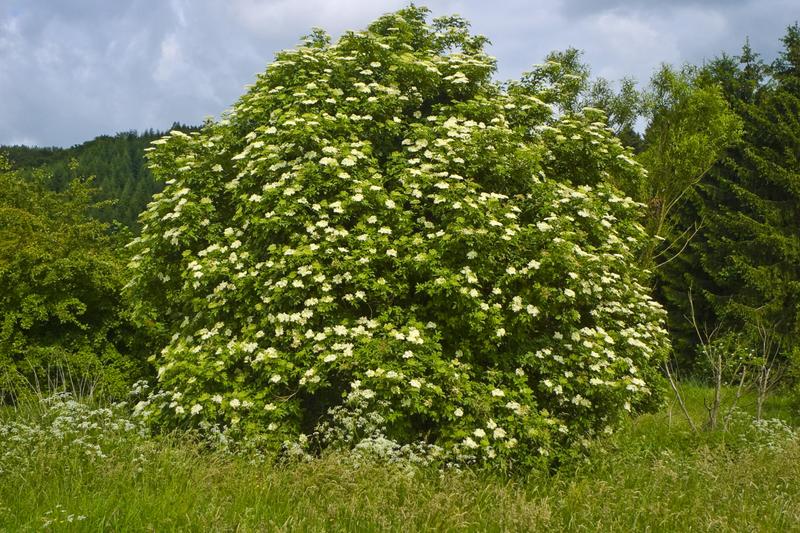
Quick facts
- Watering
- Weekly when young, then minimal
- Sunlight
- Full sun to partial shade
- Soil
- Moist, fertile, well-drained
- Humans
- Toxic
- Cats
- Toxic
- Dogs
- Toxic
- Height
- 400–600 cm
- Spread
- 300–500 cm
- Spacing
- 300–400 cm apart
About Elder
Elder is a fast-growing deciduous shrub or small tree native to the UK, reaching 6 metres tall with pinnate leaves and clusters of creamy-white flowers in early summer. The fragrant blooms are followed by drooping bunches of glossy black berries in autumn, both of which have been used for centuries in British cordials, wines, and preserves. It thrives in hedgerows, woodland edges, and wild gardens across Britain, tolerating a wide range of conditions. UK gardeners value elder for its wildlife benefits, edible flowers and fruit, and rapid establishment in informal planting schemes.
UK fact: Elder has deep roots in British folklore and was traditionally planted near cottages to ward off evil spirits, whilst its flowers and berries have been used in British kitchens for elderflower cordial and elderberry wine for generations.
Watering Elder
Newly planted elders require weekly watering during dry spells in their first year, particularly from April to September. Once established, elder develops a deep root system and rarely needs supplementary watering, even during typical UK summers. In prolonged drought, an occasional deep soak will support better fruiting. Avoid waterlogging, though elder tolerates damp soil better than most trees.
Sunlight requirements
Plant elder in full sun for the best flower and fruit production, though it will grow happily in partial shade with slightly reduced yields. In the UK, a south or west-facing position is ideal, but elder is adaptable and will establish in north-facing spots or beneath the dappled canopy of larger trees. Avoid deep shade, which can lead to leggy growth and poor flowering.
Soil and feeding
Elder is remarkably unfussy and will grow in almost any soil, from heavy clay to light sand, though it performs best in fertile, moisture-retentive loam. It tolerates both acidic and alkaline conditions (pH 5.5–8.0) and is often found on chalky soils in the wild. Good drainage is beneficial but not essential, as elder copes well with damp ground and is often found growing near streams and ditches across the British countryside. Enrich poor soils with compost or well-rotted manure at planting time.
Feed elder in March with a general-purpose granular fertiliser such as Growmore or blood, fish, and bone, scattering it around the base and watering in. Alternatively, mulch annually with a 5–7 cm layer of garden compost or well-rotted manure, which feeds the soil and suppresses weeds. Established elders are not heavy feeders, but an annual feed improves flower and fruit yields, particularly on poorer soils.
Pruning Elder
Elder flowers on the current season's growth, so prune between November and March whilst dormant. Remove dead, damaged, or crossing branches, and thin out congested growth to improve air circulation. For a more compact shape or to rejuvenate an old specimen, cut back hard to 30–60 cm from the ground in late winter; elder responds vigorously with strong new shoots. Avoid pruning after April, as this removes the developing flower buds and reduces your harvest of flowers and berries.
Propagating Elder
Take hardwood cuttings in November or December from healthy, pencil-thick stems of the current year's growth. Cuttings should be 20–30 cm long, cut just below a bud at the base and just above a bud at the top. Insert two-thirds of each cutting into a trench filled with sharp sand or gritty compost in a sheltered spot outdoors, and they will root by spring. Alternatively, elder self-seeds freely, and seedlings can be transplanted, though they may not come true to cultivar forms.
Common problems
Elder is generally trouble-free but can be affected by aphids, which cluster on young shoots in spring and may cause leaf distortion; spray with an organic insecticide or encourage natural predators. Powdery mildew can appear on leaves in dry summers, particularly in sheltered spots with poor air circulation; improve spacing and avoid overhead watering. Elderberry gall midge occasionally causes swollen, distorted shoots, which should be pruned out and destroyed. Birds are attracted to the ripe berries and may strip the plant before you can harvest, so netting may be necessary if you want to preserve the crop.
Spot a problem with your plant? Photograph the affected area using the Loam app and it will suggest the most likely cause and treatment.
Safety
- Humans
-
Toxic
Raw berries, leaves, stems, and roots contain cyanogenic glycosides and can cause nausea and vomiting. Flowers and cooked berries are safe and widely used in traditional British recipes.
- Cats
-
Toxic
All parts except cooked berries are toxic to cats and can cause vomiting, diarrhoea, and lethargy if ingested.
- Dogs
-
Toxic
Raw berries, leaves, and stems are toxic to dogs and may cause vomiting, diarrhoea, and weakness. Keep pets away from uncooked plant material.
Toxicity information is for general guidance only. If a person or pet has been exposed to this plant and you are concerned, seek advice from a medical professional or vet.
Seasonal care calendar
Monthly care guide for Elder in the UK, based on average conditions.
| Month | Care tasks |
|---|---|
| January | Prune to shape and remove dead or damaged wood whilst fully dormant. |
| February | Complete any hard pruning or rejuvenation before buds break. Take hardwood cuttings if not done in winter. |
| March | Apply a balanced fertiliser or mulch with compost. Buds begin to swell and new growth emerges. |
| April | Water newly planted specimens weekly. Watch for aphids on fresh shoots and treat if necessary. |
| May | Foliage fully developed. Monitor for pests and ensure young plants are well watered during dry spells. |
| June | Creamy-white flower clusters appear. Harvest flowers for cordials and fritters on dry, sunny mornings. |
| July | Flowers fade and small green berries begin to form. Continue watering young plants in dry weather. |
| August | Berries ripen from green to glossy black. Net if necessary to protect from birds. |
| September | Harvest ripe elderberries for wine, jams, and syrups. Leave some for wildlife. |
| October | Foliage begins to yellow and drop. Clear fallen leaves if desired, or leave as natural mulch. |
| November | Plant bare-root elders. Take hardwood cuttings for propagation. Begin winter pruning if needed. |
| December | Continue winter pruning and taking hardwood cuttings. Elder is fully dormant. |
Frequently asked questions
- How do I prune elder to keep it compact?
- Prune elder hard in late winter (February to early March) before new growth begins. You can coppice it annually by cutting all stems down to 15-30 cm from the ground, which encourages vigorous new growth and keeps the plant compact. Elder flowers on the current season's wood, so winter pruning won't affect flowering. For a less drastic approach, remove about one-third of the oldest stems each year.
- Why are my elder leaves turning yellow?
- Yellowing elder leaves can indicate several issues including waterlogging, nutrient deficiency, or pest problems such as aphids. Check soil drainage and ensure the plant isn't sitting in water. Elder prefers moist but well-drained soil. If you're unsure what's causing the problem, the Loam app can help diagnose leaf issues through photos and provide personalised care advice based on your specific growing conditions.
- Can I grow elder from cuttings?
- Yes, elder is very easy to propagate from hardwood cuttings taken in late autumn or winter. Cut 20-30 cm lengths of pencil-thick stems, remove the soft tip, and push them into the ground or pots of compost with at least two buds below the surface. Keep moist and they should root by spring. Elder also grows readily from semi-ripe cuttings in summer.
Got a question about growing Elder that isn't covered here? Ask the Garden Advisor in the Loam app. It knows your saved plants and local conditions.
Related plants
This page was compiled with AI assistance and reviewed by our team. .