Poached Egg Plant
Limnanthes douglasii
Annuals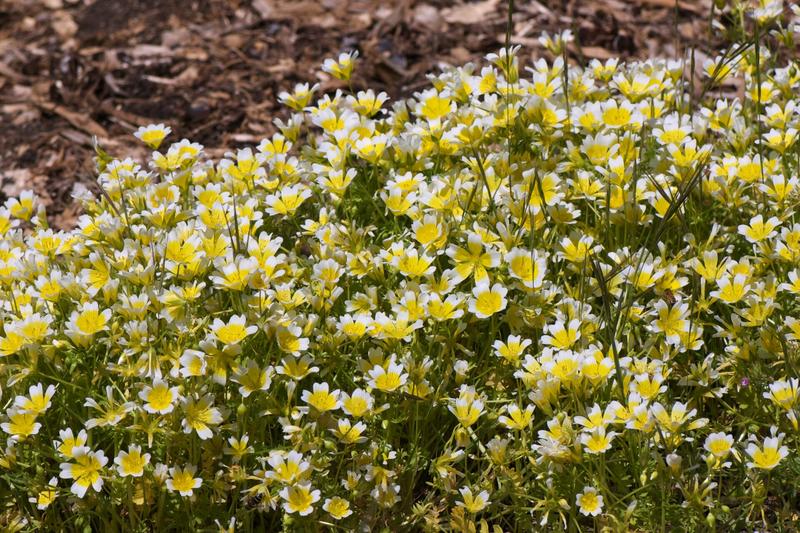
Quick facts
- Watering
- Weekly during dry spells
- Sunlight
- Full sun
- Soil
- Well-drained, moderately fertile
- Humans
- Safe
- Cats
- Safe
- Dogs
- Safe
- Height
- 10–15 cm
- Spread
- 15–30 cm
- Spacing
- 10–15 cm apart
- RHS recognition
- Award of Garden Merit
About Poached Egg Plant
The Poached Egg Plant is a charming hardy annual from California, named for its distinctive white-edged yellow flowers that resemble poached eggs. Growing to just 15cm tall, it forms low spreading mats of feathery foliage smothered in cheerful blooms from late spring through summer. UK gardeners prize it as an excellent pollinator plant, attracting bees and hoverflies in abundance, and for its ability to self-seed reliably in borders, rock gardens, and between paving. Its compact habit and long flowering season make it ideal for edging paths or filling gaps in cottage garden schemes.
UK fact: The Poached Egg Plant holds an RHS Award of Garden Merit and has become a favourite in British wildlife gardens, with studies showing it attracts over 20 species of beneficial insects including hoverflies whose larvae consume aphids, making it a valuable companion plant in organic vegetable plots.
Watering Poached Egg Plant
Once established, Poached Egg Plant is remarkably drought-tolerant and requires minimal watering in typical British conditions. Water weekly during prolonged dry spells in summer, particularly for plants in containers or free-draining soils. Seedlings need consistent moisture until established, so water every few days if spring weather is dry. Avoid overwatering as this can lead to root rot and reduced flowering; the plant actually performs better in slightly dry conditions once mature.
Sunlight requirements
Poached Egg Plant performs best in full sun, producing the most prolific flowering when receiving at least six hours of direct sunlight daily. In the UK, south-facing or west-facing positions are ideal, though it will tolerate light shade in southern regions during the hottest part of summer. Avoid heavily shaded north-facing spots where flowering will be significantly reduced and plants may become leggy.
Soil and feeding
Poached Egg Plant thrives in well-drained soil and actually prefers moderately fertile to poor conditions, flowering more profusely when not overfed. It tolerates a wide pH range from slightly acidic to slightly alkaline (pH 6.0-7.5) and performs particularly well in sandy or gravelly soils. Heavy clay soils should be improved with grit or sharp sand to enhance drainage. The plant is ideal for dry, sunny banks and gravel gardens where richer soils might encourage excessive foliage at the expense of flowers.
Poached Egg Plant requires little to no feeding and actually flowers better in lean soils. Avoid fertilising established plants as this promotes leafy growth rather than blooms. If growing in very poor soil or containers, a single application of dilute liquid feed in early summer is sufficient.
Pruning Poached Egg Plant
Deadheading is not necessary and can actually be counterproductive if you wish the plant to self-seed for next year's display. Allow spent flowers to develop seed pods, which will ripen and scatter naturally by midsummer. If plants become untidy or you want to prevent self-seeding, cut back after the main flowering flush in July. The plant will often produce a second, smaller flush of flowers if cut back and watered during dry weather.
Propagating Poached Egg Plant
Poached Egg Plant is grown from seed sown directly where it is to flower, as it dislikes root disturbance. Sow seeds thinly in March to May, or in September for earlier flowering the following year (autumn sowings often produce stronger plants). Barely cover seeds with soil as they need some light to germinate, which typically takes 14-21 days. Thin seedlings to 10-15cm apart once large enough to handle. The plant self-seeds freely in favourable conditions, often appearing in cracks in paving and gravel, where seedlings can be left to naturalise or carefully transplanted when very small.
Common problems
Poached Egg Plant is remarkably trouble-free with few pest or disease problems in UK gardens. Slugs and snails may occasionally damage young seedlings in spring, so protect with organic slug pellets or barriers until plants are established. Aphids can sometimes cluster on flower buds but are usually controlled by the hoverflies and other beneficial insects the plant attracts. In very wet summers or poorly drained soils, root rot may occur, causing plants to collapse; this is best prevented by ensuring good drainage. Powdery mildew can appear in late summer but rarely causes significant damage to this short-lived annual.
Spot a problem with your plant? Photograph the affected area using the Loam app and it will suggest the most likely cause and treatment.
Safety
- Humans
- Safe
- Cats
- Safe
- Dogs
- Safe
Toxicity information is for general guidance only.
Seasonal care calendar
Monthly care guide for Poached Egg Plant in the UK, based on average conditions.
| Month | Care tasks |
|---|---|
| January | No action needed. |
| February | Prepare seed beds in mild regions by weeding and raking soil to a fine tilth. |
| March | Sow seeds directly outdoors where plants are to flower, in well-drained soil in full sun. |
| April | Continue sowing for succession. Thin March-sown seedlings to 10-15cm apart. Protect from slugs. |
| May | Final sowings for late summer flowers. Water seedlings during dry spells until established. |
| June | Enjoy the main flowering display. Water containers weekly. Allow flowers to set seed if self-seeding is desired. |
| July | Flowering continues. Cut back untidy plants to encourage a second flush. Seeds begin to ripen and scatter. |
| August | Flowering winds down. Collect ripe seed pods for sowing elsewhere or sharing. Self-sown seedlings may appear. |
| September | Sow seeds directly for stronger plants and earlier flowers next spring. Clear spent plants from borders. |
| October | Thin autumn-sown seedlings if overcrowded. Protect from slugs over winter. |
| November | Autumn-sown seedlings establish root systems. No action needed. |
| December | No action needed. |
Frequently asked questions
- When should I sow Poached Egg Plant seeds in the UK?
- Sow Poached Egg Plant seeds directly outdoors from March to May for summer flowering, or in September for earlier, stronger plants the following spring. Autumn sowings often produce the best results in UK gardens, flowering from late April onwards.
- Why isn't my Poached Egg Plant flowering well?
- Poor flowering is usually caused by too much shade, overly rich soil, or excessive feeding which promotes leaves over blooms. The Loam app can help diagnose your specific growing conditions and provide personalised advice based on your garden's aspect and soil type.
- Will Poached Egg Plant come back every year?
- Poached Egg Plant is an annual so individual plants die after flowering, but it self-seeds prolifically in UK gardens. Allow seed pods to ripen and scatter naturally, and you'll have new plants appearing each spring without any effort, often in delightful unexpected places like gravel paths and paving cracks.
Got a question about growing Poached Egg Plant that isn't covered here? Ask the Garden Advisor in the Loam app. It knows your saved plants and local conditions.
Related plants
This page was compiled with AI assistance and reviewed by our team. .