Nigella
Nigella damascena
Annuals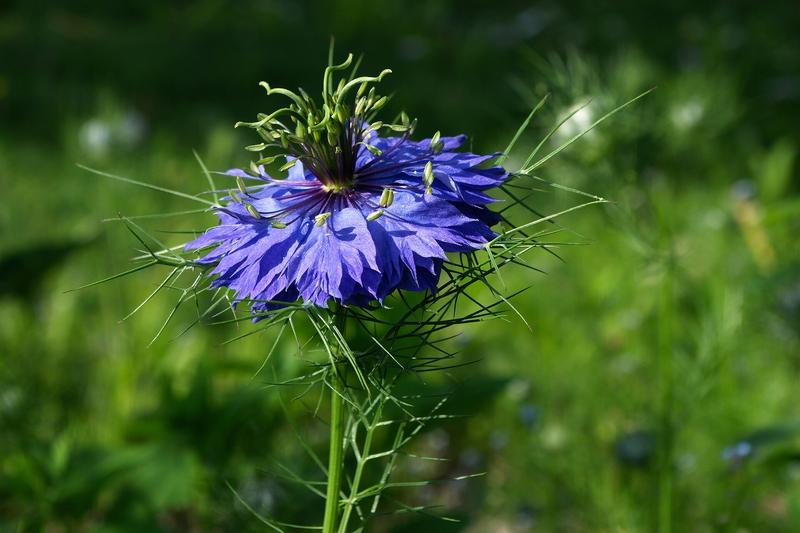
Quick facts
- Watering
- Minimal once established
- Sunlight
- Full sun
- Soil
- Well-drained, moderately fertile
- Humans
- Unknown
- Cats
- Unknown
- Dogs
- Unknown
- Height
- 40–60 cm
- Spread
- 20–30 cm
- Spacing
- 20–25 cm apart
About Nigella
Nigella is a charming hardy annual native to southern Europe and North Africa, beloved in British cottage gardens for its delicate sky-blue flowers nestled in feathery, thread-like foliage. The blooms appear from early summer onwards, followed by distinctive inflated seed pods that are prized for dried flower arrangements. UK gardeners value nigella for its ease of cultivation, self-seeding habit, and ability to fill gaps in borders with minimal fuss. Its ethereal appearance and long-lasting seed heads make it a favourite for both cutting gardens and naturalistic planting schemes.
UK fact: Nigella has been grown in British gardens since the 16th century and was a staple of Elizabethan herb gardens, where the seeds were used as a pepper substitute and the plant was known as 'devil-in-a-bush' due to its intricate bracts.
Watering Nigella
Water seedlings regularly until they're well established, typically for the first three to four weeks after germination. Once mature, nigella is remarkably drought-tolerant and rarely needs supplementary watering in most UK regions, relying on natural rainfall. During exceptionally dry summers, water deeply once a week rather than little and often, allowing the soil to dry between waterings. Overwatering can lead to weak growth and increased susceptibility to fungal issues, so err on the side of caution with this Mediterranean native.
Sunlight requirements
Plant nigella in a sunny spot that receives at least six hours of direct sunlight daily for optimal flowering. In the UK, south-facing or west-facing borders are ideal, though it will tolerate light dappled shade in the hottest part of the day. Avoid heavily shaded areas, as plants become leggy and produce fewer flowers with weak stems unsuitable for cutting.
Soil and feeding
This annual thrives in well-drained soil with a neutral to slightly alkaline pH of 6.5 to 7.5, making it well-suited to chalky or limestone soils common in parts of southern England. Avoid heavy clay that retains moisture, as this can cause root rot and poor germination; if your soil is clay-based, incorporate horticultural grit or sharp sand to improve drainage. Nigella actually flowers more profusely in moderately fertile soil, so there's no need to enrich the ground with compost or manure. Excessively rich soil produces lush foliage at the expense of flowers and can cause plants to flop.
As a hardy annual adapted to poor Mediterranean soils, nigella needs no feeding throughout its growing season. Applying fertiliser, particularly nitrogen-rich feeds, encourages excessive leafy growth and weak, floppy stems whilst reducing flower production. The plant's natural preference for lean conditions makes it ideal for low-maintenance gardens and wildlife-friendly planting schemes.
Pruning Nigella
Nigella requires no formal pruning, but you can deadhead faded flowers to encourage a longer flowering period from June through August. However, many UK gardeners prefer to leave the distinctive inflated seed pods to develop, as they're highly ornamental and excellent for cutting and drying. Allow some seed heads to mature and split naturally if you want plants to self-seed for the following year. Cut stems for fresh or dried arrangements in the morning when flowers are fully open or when seed pods have turned pale brown but before they split completely.
Propagating Nigella
Sow nigella seeds directly into the ground in March to May for summer flowering, or in September for earlier blooms the following year. Autumn sowings often produce stronger plants with better flowers, though some seedlings may be lost in harsh winters in colder regions. Nigella dislikes root disturbance and transplants poorly, so avoid sowing in modules or pots. Once established, plants self-seed freely, creating naturalistic drifts that return year after year with minimal intervention.
Common problems
Nigella is remarkably trouble-free and suffers from few pests or diseases in UK gardens. Aphids may occasionally colonise young growth in spring, but these are easily controlled by squashing or spraying with water, and rarely cause significant damage. Powdery mildew can appear on foliage in late summer, particularly in dry conditions, but this is usually after flowering has finished and doesn't affect the plant's performance. The main cultural problem is overwatering or planting in heavy, poorly drained soil, which can cause damping off in seedlings or root rot in mature plants.
Spot a problem with your plant? Photograph the affected area using the Loam app and it will suggest the most likely cause and treatment.
Safety
- Humans
-
Unknown
Nigella damascena seeds contain small amounts of alkaloids and should not be consumed. The seeds of Nigella sativa (black cumin) are edible, but N. damascena is grown ornamentally and is not considered a food plant.
- Cats
-
Unknown
No specific toxicity data available for cats. Keep pets from chewing plants as a precaution.
- Dogs
-
Unknown
No specific toxicity data available for dogs. Prevent pets from ingesting plant material as a general precaution.
Toxicity information is for general guidance only. If a person or pet has been exposed to this plant and you are concerned, seek advice from a medical professional or vet.
Seasonal care calendar
Monthly care guide for Nigella in the UK, based on average conditions.
| Month | Care tasks |
|---|---|
| January | No action needed. Plan where to sow nigella in spring borders and cutting gardens. |
| February | Prepare soil in sunny borders by weeding and raking to a fine tilth ready for March sowing. |
| March | Sow seeds directly outdoors from mid-March onwards in well-drained soil. Make successive sowings every 2-3 weeks for continuous flowering. |
| April | Continue sowing until mid-April. Thin earlier sowings to 20-25cm apart. Water seedlings during dry spells. |
| May | Thin remaining seedlings. Insert twiggy supports around plants in exposed positions. First flowers may appear on autumn-sown plants. |
| June | Enjoy the main flowering period. Cut flowers for fresh arrangements in the morning. Deadhead to prolong blooming or leave for seed pods. |
| July | Continue cutting flowers and developing seed pods. Water only during prolonged drought. Allow some seed heads to mature for drying. |
| August | Harvest seed pods for dried arrangements when they turn pale brown. Leave some to self-seed for next year's display. |
| September | Sow seeds directly outdoors for earlier, stronger flowering next year. Clear spent plants or leave to self-seed naturally. |
| October | Autumn-sown seedlings will emerge. Ensure good drainage to prevent winter losses in heavy soil. |
| November | Autumn-sown seedlings establish slowly over winter. No intervention needed in most UK regions. |
| December | No action needed. Autumn-sown plants remain as small rosettes through winter. |
Frequently asked questions
- When should I sow nigella seeds in the UK?
- In the UK, you can sow nigella seeds in spring (March-April) for flowers from June onwards, or in autumn (September) for earlier, more prolific blooms in May-June. Spring sowings are more reliable and easier for beginners, whilst autumn sowings produce stronger plants but some seedlings may be lost over winter in cold, wet regions. Try both timings to extend your flowering season from late spring through summer.
- Why are my nigella plants leggy and weak?
- Leggy, weak nigella growth is typically caused by insufficient sunlight, overly rich soil, or overcrowding. Nigella requires at least six hours of direct sun daily and performs poorly in shade. Overly fertile soil or too much nitrogen encourages soft, floppy stems rather than sturdy growth. If you're struggling to diagnose what's affecting your plants, the Loam app can help identify problems and provide personalised care advice based on your specific growing conditions.
- Does nigella need deadheading?
- Nigella doesn't require deadheading unless you want to prevent self-seeding or prolong flowering slightly. The distinctive inflated seed pods are highly ornamental and a key feature of the plant, excellent for dried arrangements. If you deadhead spent flowers, you'll sacrifice the decorative seedheads. For continuous blooms, make successive sowings every 3-4 weeks rather than deadheading. Allow final sowings to set seed naturally for next year's display.
Got a question about growing Nigella that isn't covered here? Ask the Garden Advisor in the Loam app. It knows your saved plants and local conditions.
Related plants
This page was compiled with AI assistance and reviewed by our team. .