Cornflower
Centaurea cyanus
Annuals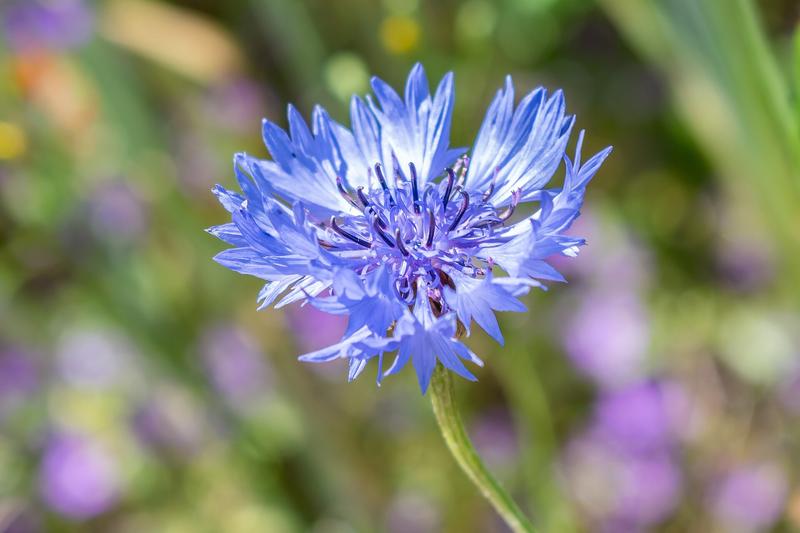
Quick facts
- Watering
- Weekly during dry spells
- Sunlight
- Full sun
- Soil
- Well-drained, moderately fertile
- Humans
- Safe
- Cats
- Safe
- Dogs
- Safe
- Height
- 30–90 cm
- Spread
- 15–30 cm
- Spacing
- 15–23 cm apart
About Cornflower
Cornflower is a charming hardy annual renowned for its vivid blue flowers, though pink, white, and purple cultivars are also available. Native to European meadows and once a common sight in British cornfields, it has become a cottage garden favourite prized for its long flowering season and excellent cutting qualities. UK gardeners value cornflowers for their ease of cultivation, ability to attract pollinators, and nostalgic appeal in wildflower meadows and informal borders. These slender plants with grey-green foliage bring a touch of traditional countryside charm to modern gardens.
UK fact: Cornflower was once so abundant in British wheat fields that it became an agricultural weed, but modern farming practices have made it scarce in the wild, leading to its inclusion in conservation wildflower seed mixes across the UK.
Watering Cornflower
Once established, cornflowers are remarkably drought-tolerant and rarely need watering in typical UK conditions. Water young seedlings regularly until they develop strong root systems, then only provide supplementary water during prolonged dry periods in summer. Overwatering can lead to weak, floppy growth and increased susceptibility to fungal diseases. Allow the soil to dry out between waterings, as cornflowers prefer slightly drier conditions to constantly moist soil.
Sunlight requirements
Cornflowers perform best in full sun, requiring at least six hours of direct sunlight daily to produce abundant blooms. In the UK, position them in south or west-facing borders where they'll receive maximum light. They tolerate partial shade but will become leggy and produce fewer flowers in shadier spots.
Soil and feeding
Cornflowers thrive in well-drained soil of average fertility and actually perform better in poorer soils than in overly rich conditions. They tolerate a wide pH range from slightly acidic to alkaline (pH 6.0-8.0), making them suitable for most UK gardens. Heavy clay soils should be improved with grit or sharp sand to enhance drainage, as waterlogged conditions can cause root rot. Avoid highly fertile or freshly manured soil, which encourages excessive foliage growth at the expense of flowers.
Cornflowers require minimal feeding and often perform best without supplementary fertiliser. If growing in very poor soil, a single application of balanced liquid feed in early summer may encourage flowering, but avoid high-nitrogen fertilisers which promote leafy growth. Overfed plants become tall and weak, requiring staking.
Pruning Cornflower
Deadhead spent blooms regularly throughout summer to prolong flowering and prevent self-seeding if desired. Cut flowers for indoor arrangements freely, as this encourages more blooms and helps keep plants tidy. Allow some flowers to set seed at the end of the season if you want plants to self-sow for next year. No other pruning is necessary for these annuals.
Propagating Cornflower
Cornflowers are grown from seed sown directly where they are to flower, as they dislike root disturbance. In the UK, sow outdoors in March to May for summer flowering, or in September for earlier blooms the following year (autumn-sown plants are sturdier and flower longer). Scatter seeds thinly on prepared soil, barely covering them with 5mm of soil, and thin seedlings to 15-23cm apart once large enough to handle. Cornflowers self-seed readily in favourable conditions, providing free plants year after year.
Common problems
Cornflowers are generally trouble-free but can occasionally suffer from powdery mildew in humid conditions or when overcrowded, appearing as white powder on leaves. Aphids may colonise young growth in spring, though these are easily controlled by squirting with water or encouraging natural predators. Slugs and snails can damage young seedlings, so protect with organic pellets or barriers until plants are established. In very wet UK summers, plants may become leggy and require support with twiggy sticks or canes.
Spot a problem with your plant? Photograph the affected area using the Loam app and it will suggest the most likely cause and treatment.
Safety
- Humans
- Safe
- Cats
- Safe
- Dogs
- Safe
Toxicity information is for general guidance only.
Seasonal care calendar
Monthly care guide for Cornflower in the UK, based on average conditions.
| Month | Care tasks |
|---|---|
| January | No action needed. Plan where to sow cornflowers in spring. |
| February | Prepare beds by removing weeds and raking soil to a fine tilth for March sowing. |
| March | Sow seeds directly outdoors in prepared soil from mid-March onwards in milder regions. |
| April | Continue sowing until late April. Thin March-sown seedlings to 15-23cm spacing. |
| May | Final sowings for late summer flowers. Water young plants during dry spells. |
| June | Flowering begins. Deadhead regularly and cut flowers for arrangements to encourage more blooms. |
| July | Peak flowering period. Continue deadheading and cutting. Water only during prolonged drought. |
| August | Maintain deadheading. Allow some flowers to set seed if you want self-sown plants next year. |
| September | Sow seeds for early flowering next year. Collect ripe seed from current plants for storage. |
| October | Clear spent plants onto the compost heap. Thin autumn-sown seedlings if overcrowded. |
| November | No action needed. Autumn-sown seedlings will overwinter as small rosettes. |
| December | No action needed. Order seeds for spring sowing if desired. |
Frequently asked questions
- When should I sow cornflower seeds in the UK?
- Sow cornflower seeds directly outdoors from March to May for summer flowering, or in September for earlier, sturdier plants the following year. Autumn-sown cornflowers typically perform better and flower longer than spring-sown ones in UK conditions.
- Why are my cornflowers falling over and how can I prevent it?
- Cornflowers become leggy and flop over when grown in shade, overfed with nitrogen, or overcrowded. The Loam app can help you track sunlight levels in your garden and set reminders for proper spacing and minimal feeding to keep plants sturdy.
- Can I grow cornflowers in pots?
- Yes, dwarf varieties like 'Blue Ball' grow well in containers at least 20cm deep filled with well-drained compost. Choose a sunny spot and avoid overwatering. Taller varieties are better suited to borders as they need more root space and may require staking in pots.
Got a question about growing Cornflower that isn't covered here? Ask the Garden Advisor in the Loam app. It knows your saved plants and local conditions.
Related plants
This page was compiled with AI assistance and reviewed by our team. .