Ageratum
Ageratum houstonianum
Annuals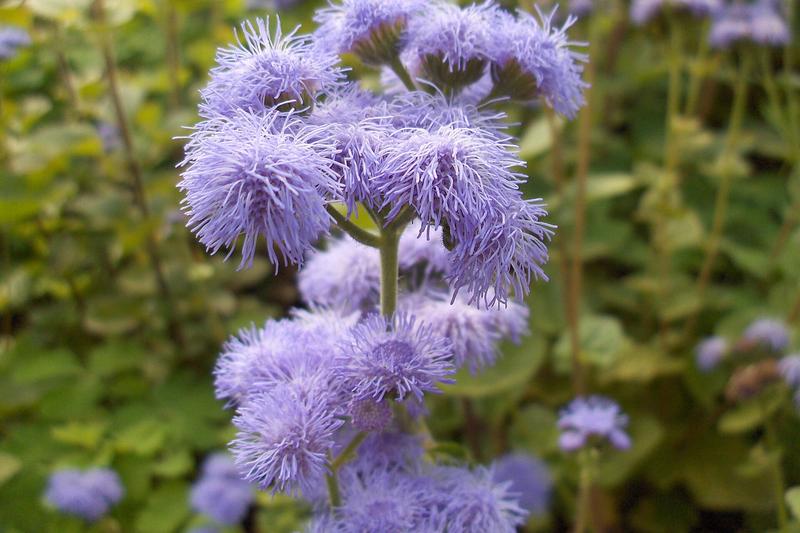
Quick facts
- Watering
- Twice weekly in dry weather
- Sunlight
- Full sun to partial shade
- Soil
- Well-drained, moderately fertile
- Humans
- Toxic
- Cats
- Toxic
- Dogs
- Toxic
- Height
- 15–60 cm
- Spread
- 15–30 cm
- Spacing
- 15–23 cm apart
- RHS recognition
- Award of Garden Merit
About Ageratum
Ageratum is a charming half-hardy annual native to Central America, prized for its fluffy, powder-puff blooms in shades of blue, pink, and white. Growing 15–60 cm tall depending on variety, it produces dense clusters of flowers from early summer until the first frosts. UK gardeners value ageratum for its long flowering season, compact habit, and ability to fill gaps in borders, containers, and bedding schemes with reliable colour.
UK fact: Several ageratum cultivars have received the RHS Award of Garden Merit, including 'Blue Horizon' and 'Blue Danube', recognising their exceptional performance in British gardens and their reliability in our unpredictable summer weather.
Watering Ageratum
Keep soil consistently moist but not waterlogged, particularly during establishment and flowering. In typical UK summers, water twice weekly, increasing frequency during dry spells or for container-grown plants. Ageratum is moderately drought-tolerant once established but flowers best with regular moisture. Avoid overhead watering to prevent powdery mildew, directing water at the base of plants instead.
Sunlight requirements
Ageratum performs best in full sun, producing the most abundant flowers and compact growth. In the UK, it tolerates partial shade, particularly in southern regions during hot summers, though flowering may be slightly reduced. Plant in south or west-facing borders for optimal results, or use in containers on sunny patios.
Soil and feeding
Ageratum thrives in well-drained soil enriched with organic matter, tolerating a wide pH range from slightly acidic to neutral (6.0–7.0). Improve heavy clay soils with compost or grit to ensure adequate drainage, as waterlogged conditions can lead to root rot. For containers, use a quality multipurpose compost with added perlite for drainage. Avoid excessively rich soils, which promote foliage at the expense of flowers.
Feed container-grown ageratum fortnightly with a balanced liquid fertiliser from June through September to maintain continuous flowering. Plants in the ground require less feeding; a single application of slow-release fertiliser at planting time is usually sufficient. Avoid high-nitrogen feeds, which encourage leafy growth rather than blooms.
Pruning Ageratum
Deadhead spent flowers regularly throughout summer to encourage continuous blooming and maintain a tidy appearance. Pinch out growing tips of young plants in late May to promote bushier, more compact growth. Remove any yellowing or damaged foliage promptly. As a frost-tender annual, ageratum will be killed by the first autumn frosts and should be cleared away in October or November.
Propagating Ageratum
Sow ageratum seeds indoors from February to April at 18–21°C, barely covering the fine seeds with compost as they need light to germinate. Seedlings typically emerge within 7–14 days and should be pricked out when large enough to handle. Harden off gradually in a cold frame before planting out after all risk of frost has passed, typically late May in most of the UK. Alternatively, purchase young plants from garden centres in spring for immediate planting.
Common problems
Ageratum is relatively trouble-free but can be affected by powdery mildew in humid conditions, particularly if planted too closely or watered overhead. Aphids may colonise young growth in early summer; control with insecticidal soap or encourage natural predators. Slugs and snails can damage young plants after planting out; use organic controls or barriers. Overwatering or poorly drained soil can lead to root rot, causing plants to wilt and collapse despite moist soil.
Spot a problem with your plant? Photograph the affected area using the Loam app and it will suggest the most likely cause and treatment.
Safety
- Humans
-
Toxic
Ageratum contains pyrrolizidine alkaloids which can be toxic if ingested, potentially causing liver damage. Keep away from children.
- Cats
-
Toxic
Contains pyrrolizidine alkaloids which are toxic to cats if ingested. Keep plants out of reach.
- Dogs
-
Toxic
Contains pyrrolizidine alkaloids which are toxic to dogs if ingested. Plant in areas inaccessible to pets.
Toxicity information is for general guidance only. If a person or pet has been exposed to this plant and you are concerned, seek advice from a medical professional or vet.
Seasonal care calendar
Monthly care guide for Ageratum in the UK, based on average conditions.
| Month | Care tasks |
|---|---|
| January | No action needed. |
| February | Sow seeds indoors in a heated propagator at 18–21°C. |
| March | Continue sowing seeds. Prick out February-sown seedlings into individual pots. |
| April | Final sowings indoors. Begin hardening off earlier sowings in a cold frame. |
| May | Plant out hardened-off plants after last frosts. Pinch out growing tips to encourage bushiness. |
| June | Water regularly and begin fortnightly feeding of container plants. Deadhead spent flowers. |
| July | Continue deadheading and watering. Monitor for aphids and powdery mildew. |
| August | Maintain regular watering and feeding. Deadhead to prolong flowering into autumn. |
| September | Continue deadheading. Reduce feeding frequency as growth slows. |
| October | Plants may continue flowering until first frosts. Clear away after frost damage. |
| November | Remove spent plants and add to compost heap. |
| December | No action needed. |
Frequently asked questions
- When should I plant ageratum outside in the UK?
- Plant ageratum outdoors after all risk of frost has passed, typically from late May onwards in most of the UK. In milder southern and coastal regions, you may plant from mid-May, but always harden off plants gradually first and be prepared to protect them if late frosts are forecast.
- Why is my ageratum not flowering well?
- Poor flowering is usually caused by insufficient light, overly rich soil, or irregular deadheading. The Loam app can help you track your plant's conditions and set reminders for deadheading to maximise blooms throughout summer.
- Can ageratum survive winter in the UK?
- No, ageratum is a half-hardy annual that will be killed by the first autumn frosts. It cannot survive UK winters outdoors and must be replanted each year from seed or purchased plants. Some gardeners save seed from their plants to sow the following spring.
Got a question about growing Ageratum that isn't covered here? Ask the Garden Advisor in the Loam app. It knows your saved plants and local conditions.
Related plants
This page was compiled with AI assistance and reviewed by our team. .